Menopause and joint pain: what causes it and how to manage it

Written byH&B editorial team

Reviewed byHeeral Tomlinson

Feeling achy during menopause? Here's why – plus the exercises, tips and supplements that could help
Summary
1What causes joint pain in menopause?
In perimenopause, your levels of oestrogen fluctuate, then they drop significantly during and after menopause.
2How to help ease menopause joint pain
The stronger your bones and the less inflamed your joints are, the more comfortable and active you can be.
3Is it arthritis or menopause?
Menopausal joint pain may feel more achy rather than sharp or grating. It's most common in the knees, hands and hips.
Finding yourself googling ‘menopause and aching limbs’ or ‘menopause hip pain’? You’re not alone. There are a handful of famous menopause symptoms: night sweats and hot flashes, anyone? But menopause is a huge hormonal change and can affect pretty much your whole body. If you're noticing joint pain, don't rule it out as just part of getting older. Menopause takes a toll on your bones, putting you at higher risk of osteoporosis... or you might just feel achier day-to-day.1
Sound like you? There's no way to guarantee healthy joints and bones for life, but some small changes may help you stay moving smoothly and help maintain as much bone strength as possible. Let's find out more...
What causes joint pain in menopause?
In perimenopause, your levels of oestrogen fluctuate, then they drop significantly during and after menopause.2 Oestrogen plays a role in maintaining bone strength, so your bones could become weaker after menopause. This happens dramatically at first – it's thought you could lose up to 10-20% of your total bone mass in the first five years post-menopause – and then gradually slows down.3
Lower oestrogen is thought to contribute to increased joint pain and stiffness, but the mechanism isn't fully understood.4 You might notice discomfort doing your usual activities or find that they take longer. Your joint pain can be anywhere in your body, but common places include the knees, hands, hips and back. These changes aren’t necessarily a sign of arthritis – and they don’t mean you’ll develop it – but it’s a good idea to look after your joints and bones anyway. New, severe, swollen or persistent joint pain should always be assessed by a healthcare professional, rather than assuming it's menopause.
How to help ease menopause joint pain
The stronger your bones and the less inflamed your joints are, the more comfortable and active you can be. The tips below aren't quick fixes, but they could help relieve everyday aches and play a role in maintaining your overall bone strength in the long term.
1. Keep stretching
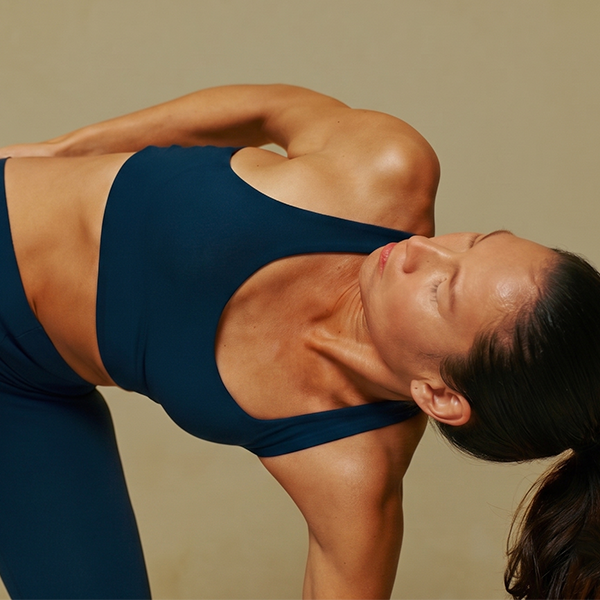
It's OK if an intense workout isn't on the cards. Gentle movement and stretching are some of the best ways to keep joints and bones flexible as you age. Weight-bearing activities, like walking and resistance training, can also help maintain bone density and ease pain.6 Try to keep low-impact exercises like walking, swimming or yoga in your routine. Yoga is a great exercise for the whole body and, according to anecdotal evidence, may help alleviate some other symptoms of menopause like low mood or sleep disruption too.
That said, you shouldn't have to slow down your routine if it's still working for you. Just be sure your posture's on point to reduce your risk of sports injuries and enjoy a mix of lower- and higher-intensity activities.
2. Consider strength training
When you think of weight-bearing exercise, it might conjure up ideas of trying to build muscle in the gym. But resistance training isn’t just about dumbbells. This kind of exercise plays an important role in preserving bone density, improving joint function and maintaining muscle mass to help you stay moving smoothly as you get older.
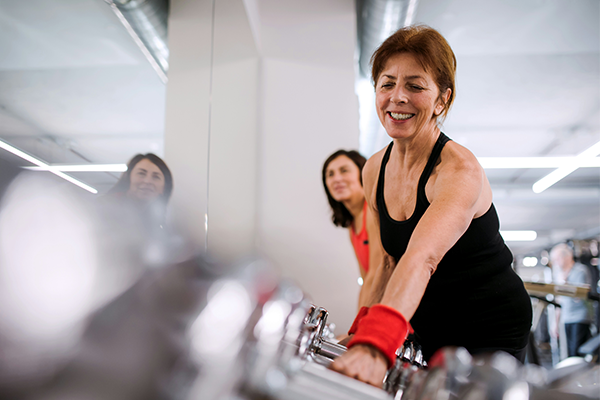
Resistance training is any kind of exercise that works muscles against an external force – that could include weights, gravity or resistance equipment. If you don’t want to use weights, consider squats, lunges, planks or using resistance bands. The NHS also has some video tutorials on strength and resistance exercises to do at home.
3. Focus on your nutrition...
As with so many areas of your health, good nutrition helps build the foundation for healthy muscles and bones. A balanced, colourful diet is the best way forwards, but you could pay particular attention to foods rich in:
- calcium: postmenopausal women may need more calcium, since declining oestrogen speeds up bone loss. Prioritise calcium-rich foods like dairy products, certain green veg (including okra and curly kale), fish where you eat the bones (such as sardines and pilchards), and fortified plant milks7
- vitamin D: this can be hard to get through your diet, but some foods – including oily fish, egg yolks, red meat and UV-exposed mushrooms – provide some vitamin D.8 The NHS recommends everyone take a 10μg vitamin D supplement every day in the autumn and winter8
- protein: getting enough protein is crucial for maintaining muscle and supporting bones – though most people in the UK already eat enough protein through foods like meat, dairy, beans, nuts and eggs.9 You can use our protein calculator to help work out how much protein is right for you. Make sure you’re doing resistance exercise to support your muscles alongside your protein intake, too
4. ...and consider a Mediterranean diet
A ‘Mediterranean diet’ is said to be one of the best diets to follow, especially for its anti-inflammatory benefits.10,11 Primarily plant-based, it includes daily intakes of whole grains, olive oil, fruit and vegetables, beans and other legumes, nuts, herbs and spices. Proteins are lean and focus mainly on fish.12
The Mediterranean diet is one of the most studied diets and has also been found to have positive effects on many other areas that might influence your joints. For example, it’s been associated with a reduction in belly fat: this may help keep your weight at a healthy level and avoid additional strain on your joints and bones.13,14
5. Manage your weight, if you need to
Menopause might feel like a limitation, but it’s also a good opportunity to start good health habits including changes in your diet, exercise and limiting habits like smoking and drinking alcohol.
You might experience more joint pain if you're overweight, as carrying more body weight may place a greater load on weight-bearing joints. Plus, it's common to gain additional body fat (especially around the middle) around menopause as your hormones change. Being very underweight may also affect how strong your bones are. As a result, keeping within a healthy weight range is a good idea if you can – not only for your overall wellbeing but for minimising joint and bone aches.
Menopause joint pain FAQs
Menopausal joint pain may feel more achy rather than sharp or grating. It's most common in the knees, hands and hips, and your limbs might also ache or feel heavy.15 Types of arthritis, like osteoarthritis, also tend to come with swelling, tenderness or crackling in the joints.15 Either way, you should see a doctor if you're experiencing joint pain to get the appropriate diagnosis and help you get the best treatment.
For some people, menopausal joint pain goes away, but for others it may last longer. See your GP if symptoms like joint pain are lasting for a while or impacting your daily life.
The final say
Menopause can be tough to navigate... and aching limbs or joints don't make it any easier. But with some lifestyle changes, you can help relieve your joint pain and give your body its best chance at staying strong. Just be sure to check in with your GP if you’re unsure about anything or if any of your symptoms persist. While you're here, why not browse our ultimate guide to supporting your bones or shop 10 of our menopause must-haves?
Disclaimer – This article provides informational advice and is not a substitute for medical care. Working with experts for accuracy, we take great care to ensure the information is up-to-date and relevant. However, you should always consult your GP or healthcare professional before using supplements or alternative products, particularly if you have medical conditions or are under supervision.
1. NHS Inform. After the menopause [Internet]. NHS Inform [reviewed 2026 Mar 26; cited 2026 Aug 17]. Available from: https://www.nhsinform.scot/healthy-living/womens-health/later-years-around-50-years-and-over/menopause-and-post-menopause-health/after-the-menopause/
2. Royal Osteoporosis Society (ROS). What’s the menopause got to do with bone health? [Internet]. ROS [reviewed 2021 Mar 22; cited 2026 Aug 17]. Available from: https://theros.org.uk/blog/whats-the-menopause-got-to-do-with-bone-health/
3. Ji MX, Yu Q. Primary osteoporosis in postmenopausal women. Chronic Dis Transl Med [Internet]. 2015 Mar 21 [cited 2026 Aug 17]; 1(1): 9-13. Available from: https://pmc.ncbi.nlm.nih.gov/articles/PMC5643776/
4. Harding AT, Heaton NS. The Impact of Estrogens and Their Receptors on Immunity and Inflammation during Infection. Cancers (Basel) [Internet]. 2022 Feb 12 [cited 2026 Aug 17]; 14(4): 909. Available from: https://pmc.ncbi.nlm.nih.gov/articles/PMC8870346/
5. Arthritis Action. Menopause and Arthritis [Internet]. Arthritis Action [reviewed 2025 Dec; cited 2026 Aug 17]. Available from: https://arthritisaction.org.uk/living-with-arthritis/resource-centre/menopause-and-arthritis/
6. NHS. Osteoporosis – Prevention [Internet]. NHS [reviewed 2022 Oct 13; cited 2026 Aug 17]. Available from: https://www.nhs.uk/conditions/osteoporosis/prevention/
7. NHS. Calcium [Internet]. NHS [reviewed 2020 Aug 3; cited 2026 Aug 17]. Available from: https://www.nhs.uk/conditions/vitamins-and-minerals/calcium/
8. NHS. Vitamin D [Internet]. NHS [reviewed 2020 Aug 3; cited 2026 Aug 17]. Available from: https://www.nhs.uk/conditions/vitamins-and-minerals/vitamin-d/
9. British Nutrition Foundation (BNF). Protein [Internet]. BNF [reviewed 2023 Oct; cited 2026 Aug 17]. Available from: https://www.nutrition.org.uk/nutritional-information/protein/
10. Ventriglio A et al. Mediterranean Diet and its Benefits on Health and Mental Health: A Literature Review. Clin Pract Epidemiol Ment Health [Internet]. 2020 Jul 30 [cited 2026 Aug 17]; 16(Suppl-1): 156-64. Available from: https://pmc.ncbi.nlm.nih.gov/articles/PMC7536728/
11. Tsigalou C et al. Mediterranean Diet as a Tool to Combat Inflammation and Chronic Diseases. An Overview. Biomedicines [Internet]. 2020 Jul 8 [cited 2026 Aug 17]; 8(7): 201. Available from: https://pmc.ncbi.nlm.nih.gov/articles/PMC7400632/
12. Daley SF, Hinson MR. Mediterranean Diet. StatPearls [Internet]. 2026 Jun 19 [cited 2026 Aug 17]. Available from: https://pubmed.ncbi.nlm.nih.gov/32491665/
13. Guasch‐Ferré M, Willett WC. The Mediterranean diet and health: a comprehensive overview. Journal of Internal Medicine [Internet]. 2021 Aug 23; 290(3): 549-66. Available from: https://onlinelibrary.wiley.com/doi/full/10.1111/joim.13333
14. Neufingerl N, Eilander A. Nutrient intake and status in adults consuming plant-based diets compared to meat-eaters: A systematic review. Nutrients [Internet]. 2021 Dec 23; 14(1): 29. Available from: https://pmc.ncbi.nlm.nih.gov/articles/PMC8746448/
15. NHS. Osteoarthritis [Internet]. NHS [reviewed 2023 Mar 20; cited 2026 Aug 17]. Available from: https://www.nhs.uk/conditions/osteoarthritis/
Related to this article