20% off €45 or 15% off €35
 Track an order
 Manage account
 Buy It Again
 Favourites
 Rewards
 Find a store
Rosacea: causes, symptoms and management
Written byNatalie Beastall

Reviewed byGeorgia Whalley, Nutrition Consultant
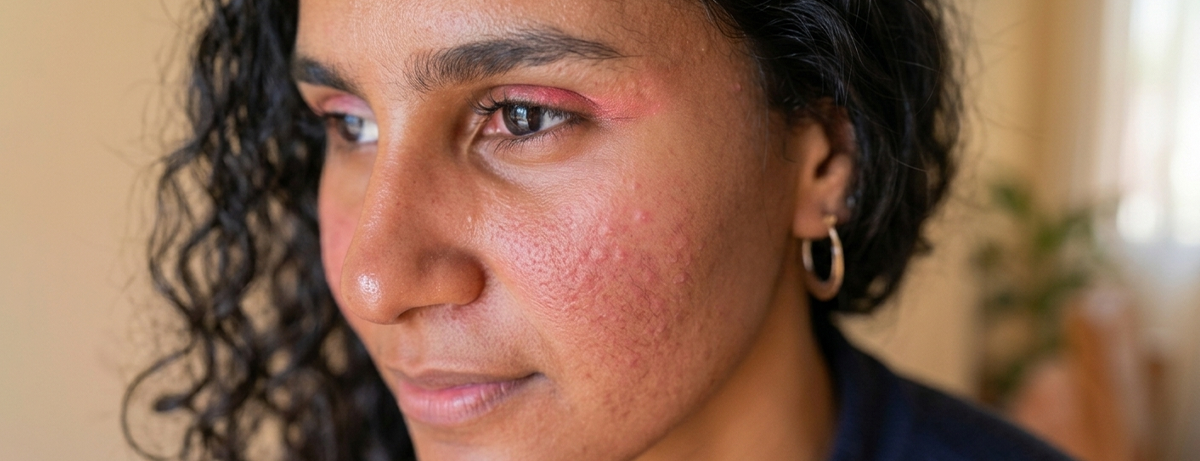
Redness that won't quit? Learn how to spot the signs of rosacea, uncover common rosacea triggers and explore ways to help keep flare-ups under control
Summary
1What is rosacea?
Rosacea is a common, long-term skin condition that mainly affects the face, causing persistent redness and visible blood vessels.
2What does rosacea look like?
Rosacea doesn't look the same for everyone but for many people, one of the first signs is that their face flushes more easily than usual.
3What causes rosacea?
The exact cause of rosacea is still unclear, but researchers believe it develops through a mix of genetics.
If you've found yourself searching for answers to questions like ‘what is rosacea?’ or ‘how to get rid of rosacea permanently’, you're not alone. From persistent red skin on cheeks and unexpected redness on the face to flare-ups that seem to appear out of nowhere, rosacea can leave you wondering what’s happening beneath the surface.1
The good news? While there's no single cure, understanding your rosacea triggers, recognising the early symptoms of rosacea and finding the right rosacea treatment can make a real difference. So don’t worry, we’re here to help by breaking down what causes rosacea, the signs to look out for and the everyday habits and expert-backed approaches that can help you better manage your skin – so you can feel more confident the next time your complexion decides to flush.
What is rosacea?
Ever wondered why your skin seems to blush long after everyone else's has settled? Or why redness appears out of nowhere and refuses to fade? If that sounds familiar, rosacea could be the reason.1 Rosacea is a common, long-term skin condition that mainly affects the face, causing persistent redness, visible blood vessels and, for some people, acne-like bumps. It often follows a cycle of flare-ups and calmer periods.
Unlike temporary flushing, rosacea can be driven by inflammation and changes in the tiny blood vessels beneath the skin, which is why redness can become more noticeable over time.3 Although it's most often seen in people with fair skin, rosacea can affect all skin tones and types.4 While rosacea can't be cured, understanding what's happening beneath your skin is the first step towards managing flare-ups and finding a routine that helps keep symptoms under control.
What does rosacea look like? Spot rosacea symptoms
Rosacea doesn't look the same for everyone, which is one reason it's often mistaken for sunburn, irritated skin or even adult acne. For many people, one of the first signs is that their face flushes more easily than usual. You might notice your face becoming red after exercise, a hot drink or a glass of wine, but unlike normal blushing, the colour can linger long after the trigger has passed.1
As rosacea progresses, the redness may become more persistent, particularly across the cheeks, nose, forehead and chin. You might notice a constant rosy appearance, while other people experience flare-ups that come and go before eventually becoming more frequent.1,2
So, if you've noticed persistent redness on the face, particularly a rosacea face that seems to flare without warning, it’s not just you. Rosacea symptoms can vary, but there are several tell-tale signs that can help distinguish rosacea from other skin conditions:1,2,4,5
- persistent facial redness: one of the hallmark signs of rosacea is ongoing red skin on cheeks, across the forehead, chin or a rosacea nose. This redness may come and go at first, before becoming more noticeable over time
- flushing episodes: many people experience sudden flushing, where the skin feels warm or hot and rosacea cheeks become noticeably red – almost like your skin’s turning up the thermostat. But don’t worry, these episodes usually last for several minutes before settling
- visible blood vessels: also known as telangiectasia, these tiny, enlarged blood vessels can become visible beneath the skin, contributing to overall redness on the face
- sensitive, dry or irritated skin: rosacea can leave skin feeling tight, dry or easily irritated, with some people experiencing burning or stinging after using skincare products
- acne-like bumps and pimples: rosacea can cause inflamed bumps and pus-filled spots that resemble acne, but they're part of the condition rather than a typical breakout
- eye irritation (ocular rosacea): rosacea doesn't only affect the skin. Some people develop red, watery or gritty eyes (called ocular rosacea)
- thickened skin: in rarer cases, the skin – usually around the nose, which you might see called rosacea nose – can gradually become thicker and more textured
Understanding the early signs of rosacea can help you seek the right advice and manage flare-ups more effectively. If you regularly experience a rosacea face, persistent red skin on cheeks or ongoing redness on the face, it's worth speaking to a healthcare professional for an accurate diagnosis.
What causes rosacea?
The exact cause of rosacea is still unclear, but researchers believe it develops through a mix of genetics, immune system activity, changes in the skin’s blood vessels, microbes and everyday triggers.1,4,6 It's also worth remembering that rosacea isn't simply caused by one thing. Everyday factors such as stress, sun exposure and even skin mites (which we all have but have sometimes been linked to rosacea) can all contribute to a flare-up.1,4,7,8 So, it’s more like several factors working together beneath the surface.
Does food play a role in rosacea?
Food is one of the most talked-about rosacea triggers, but the science is still evolving. Current research suggests diet may influence rosacea through several routes, including the gut-skin connection.9,10 However, experts also stress that there’s still a lack of high-quality controlled studies proving a direct cause-and-effect relationship between diet and rosacea.11
Some of the better-recognised dietary triggers include hot drinks, alcohol and spicy foods.1 Histamine-rich foods, which are any that’ve been fermented for example, and ingredients such as cinnamon, tomatoes and chocolate may also be triggers for some people, although reactions vary widely.10-12
Interestingly, not every commonly blamed food appears to increase rosacea risk. One large review noted that spicy foods may worsen symptoms such as flushing, stinging and burning, rather than the condition itself.11 Research has also found a more complex picture around coffee: while hot drinks can trigger flushing, caffeine from coffee has been linked with a lower risk of rosacea in women in one large cohort study.13 But more research in this area is needed to draw a conclusion.
So, rather than cutting out whole food groups, the most helpful approach is usually to identify your own triggers. Whenever you notice flare-ups, try tracking them alongside what you’ve just eaten or drunk. That way, you can make targeted changes without making your diet more restrictive than it needs to be.
Who gets rosacea?
Rosacea can affect anyone, but it's most commonly diagnosed in people between the ages of 30 and 50.4 While women are more likely to develop it, men can sometimes experience more severe symptoms when they do.1 Your genes may also have a say. If a close family member has rosacea, you could be more likely to develop it yourself.4
Although rosacea is often associated with fair skin, it can affect people of every skin tone. In deeper skin tones, however, the condition may be harder to recognise, meaning it's sometimes overlooked or diagnosed later.1,4,14
Are there any rosacea treatments?
If you're wondering how to treat rosacea, while there's currently no cure, there are plenty of ways to manage the condition. The right rosacea treatment can help reduce redness, calm inflammation and make flare-ups less frequent, allowing you to feel more confident in your skin. Treatment will depend on your symptoms and how severe they are. Some people may benefit from speaking to a GP or dermatologist for more options outside of dietary adjustments treatments.15
It's important to remember that rosacea treatment isn't one-size-fits-all. Finding the approach that works best for you may take time, but with the right combination of treatment, like skincare and trigger management, many people are able to keep symptoms well under control.
How to manage rosacea and reduce flare-ups
If you've been searching for ‘how to get rid of rosacea’, it's important to know that while there's currently no permanent cure, there are plenty of ways to help manage symptoms and reduce the frequency of flare-ups. For many people, small, consistent changes to their skincare routine and everyday habits can make a noticeable difference.16-18
Build a rosacea-friendly skincare routine
When it comes to managing rosacea, less is often more. A simple, gentle routine can help support your skin barrier, reduce irritation and keep redness under control.4,16,17 Try to:
- cleanse gently: choose a mild, fragrance-free cleanser and avoid scrubbing or exfoliating harshly, which can worsen redness
- moisturise daily: a gentle moisturiser can help your skin barrier, lock in hydration and reduce sensitivity
- wear SPF every day: sun exposure is one of the most common rosacea triggers, so support your skin with a broad-spectrum SPF50. Mineral sunscreens containing zinc oxide or titanium dioxide are often better tolerated
Identify your personal triggers
Rosacea triggers vary from person to person, which is why keeping a symptom diary can be so helpful. Over time, you may notice patterns that make flare-ups more likely. Common rosacea triggers can include:1
- sunshine and hot weather
- hot drinks
- spicy foods
- alcohol
- stress
- strenuous exercise
- sudden changes in temperature
Avoiding every trigger isn't always realistic, but recognising yours can help you make informed choices without feeling like you have to give everything up.
Everyday habits that may help
Looking after your overall wellbeing can also play a part in managing rosacea. You might find it helpful to:4,18
- practise stress-management techniques such as mindfulness, meditation or yoga if stress tends to trigger your symptoms
- avoid overheating where possible by seeking shade or dressing in lightweight clothing
- wash your face with lukewarm, rather than hot, water
- choose fragrance-free skincare and cosmetics designed for delicate skin
Can anything else help rosacea triggers?
Some people find that simple cooling measures help soothe uncomfortable flare-ups, although these approaches won't treat the underlying condition. You could try:19,20
- a cool compress – applying a cool, damp cloth to the face may help temporarily ease feelings of heat and reduce discomfort during a flare-up
- aloe vera gel – some people find pure aloe vera gel soothing. While evidence for its effectiveness in rosacea is limited, that doesn’t mean it won’t feel good on your skin. Make sure to patch test first, as some ingredients can irritate skin
If your symptoms are persistent, worsening or affecting your quality of life, speak to your GP or dermatologist. They can help identify the most appropriate rosacea treatment for your skin and recommend the next steps.
Rosacea FAQs
Rosacea doesn’t usually go away on its own. Symptoms can often come and go, with periods of flare-ups followed by times when the skin is calmer. Identifying your personal triggers, following a gentle skincare routine and using the right treatments can help reduce flare-ups and keep symptoms under control.1,2,4
There's no one-size-fits-all rosacea treatment. The best approach depends on your symptoms and how severe they are. Many people benefit from a combination of gentle skincare, daily sun protection and avoiding known triggers. If that's not enough, your GP or dermatologist may recommend other treatments to help reduce redness, inflammation and visible blood vessels.15
Rosacea triggers vary from person to person, but some of the most common include sun exposure, hot weather, spicy foods, alcohol, hot drinks, stress, strenuous exercise and sudden changes in temperature.1 Keeping a symptom diary can help you identify your own triggers and make small changes that could reduce the likelihood of flare-ups.
Rosacea is a long-term (chronic) skin condition, so it doesn't usually go away completely. But don't worry too much as it can often be managed successfully. While there's currently no permanent cure, the right skincare routine, lifestyle adjustments and further treatment where needed may help keep symptoms well controlled and reduce the frequency and severity of flare-ups.1,2,4
The final say
Living with rosacea isn't just about managing redness – it's about understanding your skin and giving it the support it needs. While rosacea flare-ups can sometimes feel unpredictable, knowing your triggers, building a skin-friendly routine and seeking advice when you need it can all help you feel more in control.
Remember, everyone's rosacea is different, so what works for one person may not work for another. Be patient with your skin, introduce new products gradually and don't be afraid to speak to your GP or dermatologist if symptoms change or begin to affect your confidence or everyday life.
Want to continue your skincare journey? If your skin is itchy – discover causes and how to manage it. Or interested in skincare ingredients? Learn about how to use niacinamide in your skincare routine.
Disclaimer – This article provides informational advice and is not a substitute for medical care. Working with experts for accuracy, we take great care to ensure the information is up-to-date and relevant. However, you should always consult your GP or healthcare professional before using supplements or alternative products, particularly if you have medical conditions or are under supervision.
1. NHS. Rosacea [Internet]. [cited 2024 Dec 18]. Available from: https://www.nhs.uk/conditions/rosacea
2. National Institute of Arthritis and Musculoskeletal and Skin Diseases. Rosacea [Internet]. [cited 2024 Dec 18]. Available from: https://www.niams.nih.gov/health-topics/rosacea
3. Del JQ. Advances in Understanding and Managing Rosacea: Part 1: Connecting the Dots Between Pathophysiological Mechanisms and Common Clinical Features of Rosacea with Emphasis on Vascular Changes and Facial Erythema. The Journal of Clinical and Aesthetic Dermatology [Internet]. 2012 Mar [cited 2026 July 15];5(3):16. Available from: https://pmc.ncbi.nlm.nih.gov/articles/PMC3315879/
4. Farshchian M, Daveluy S. Rosacea. Treasure Island (FL): StatPearls Publishing; 2023. Available from: https://www.ncbi.nlm.nih.gov/books/NBK557574/
5. Dick MK, Patel BC. Rhinophyma [Internet]. PubMed. Treasure Island (FL): StatPearls Publishing; 2021. Available from: https://www.ncbi.nlm.nih.gov/books/NBK544373/
6. Geng RSQ, et al. Rosacea: Pathogenesis and therapeutic correlates. J Cutan Med Surg. 2024;28(2):178–89. https://doi.org/10.1177/12034754241229365
7. Wei F, et al. Evidence for the clinical association between Demodex and rosacea: A review. Dermatology. 2023;240(1):95–102. https://doi.org/10.1159/000534245
8. Chang YS, Huang YC. Role of Demodex mite infestation in rosacea: A systematic review and meta-analysis. J Am Acad Dermatol [Internet]. 2017 Sep [cited 2025 Sep 8]; 77(3): 441-7. Available from: https://pubmed.ncbi.nlm.nih.gov/28711190/
9. Alia E, Feng H. Rosacea pathogenesis, common triggers, and dietary role: The cause, the trigger, and the positive effects of different foods. Clin Dermatol. 2021;40(2):122–7. https://doi.org/10.1016/j.clindermatol.2021.10.004
10. Searle T, et al. Rosacea and diet: What is new in 2021? J Clin Aesthet Dermatol. 2021;14(12):49–54. https://pmc.ncbi.nlm.nih.gov/articles/PMC8794493/
11. Manfredini M, Barbieri M, Milandri M, Longo C. Probiotics and Diet in Rosacea: Current Evidence and Future Perspectives. Biomolecules. 2025 Mar 13;15(3):411.
12. Factors That May Trigger Rosacea Flare-Ups [Internet]. Rosacea.org. Available from: https://www.rosacea.org/patients/rosacea-triggers/factors-that-may-trigger-rosacea-flare-ups
13. Li S, et al. Association of caffeine intake and caffeinated coffee consumption with risk of incident rosacea in women. JAMA Dermatol. 2018;154(12):1394–1400. https://doi.org/10.1001/jamadermatol.2018.3301
14. Alexis AF, et al. Global epidemiology and clinical spectrum of rosacea, highlighting skin of color: Review and clinical practice experience. J Am Acad Dermatol. 2019;80(6):1722–1729.e7. https://doi.org/10.1016/j.jaad.2018.08.049
15. NICE. Scenario: Rosacea [Internet]. [cited 2024 Dec 18]. Available from: https://cks.nice.org.uk/topics/rosacea/management/rosacea/
16. Baldwin H, et al. Evidence of barrier deficiency in rosacea and the importance of integrating OTC skincare products into treatment regimens. J Drugs Dermatol. 2021;20(4):384–92. Available from: https://pubmed.ncbi.nlm.nih.gov/33852244/
17. Nowicka D, et al. Skincare in rosacea from the cosmetologist’s perspective: A narrative review. J Clin Med. 2022;12(1):115. https://doi.org/10.3390/jcm12010115
18. NHSInform. Rosacea [Internet]. [cited 2024 Dec 18]. Available from: https://www.nhsinform.scot/illnesses-and-conditions/skin-hair-and-nails/rosacea
19. Semenescu I, et al. Recent advances in the management of rosacea through natural compounds. Pharmaceuticals. 2024;17(2):212. https://doi.org/10.3390/ph17020212
20. Q&A: Skin Sensitivity & Ice Cubes | Rosacea.org [Internet]. Rosacea.org. 2016 [cited 2026 July 20]. Available from: https://www.rosacea.org/rosacea-review/2016/spring/q-a-skin-sensitivity-ice-cubes
Related to this article