20% off €45 or 15% off €35
 Track an order
 Manage account
 Buy It Again
 Favourites
 Rewards
 Find a store


Packing a serious punch, energy gels help fuel the body in endurance sports so you can perform at your best. Find out how they work and how to take them
Summary
1What are energy gels?
Energy gels are designed to give endurance athletes a quick, convenient source of energy while they’re training.
2How do energy gels work?
Energy gels work by providing a concentrated source of carbohydrates for fuel during prolonged exercise.
3What are the potential benefits of energy gels?
Energy gels come with plenty of potential benefits which can make them a great way to refuel.
Energy gels (also called running gels) are all the rage with professional and amateur endurance athletes alike. These squeezy sachets are ideal for a burst of energy in a pinch, whether you’re training for a marathon, on a long hike or you’re a hill-loving cyclist. So, are they for you? We explore the pros and cons of energy gels, plus how they work and when to use them. Ready, set, go...
What are energy gels?
Energy gels are designed to give endurance athletes a quick, convenient source of energy while they’re training. This energy source usually comes from carbohydrates but may sometimes have other ingredients like creatine, caffeine or added vitamins. They come in edible gel form, in sachets that can be taken without water to help athletes take them on the go.
How do energy gels work?
Energy gels work by providing a concentrated source of carbohydrates that can be quickly absorbed into the bloodstream and used as fuel during prolonged exercise. Your body needs carbohydrates, fat or protein to create adenosine triphosphate (ATP), a molecule that allows your body to use and store energy.1 If you’re taking part in endurance exercise or any type of exercise over 60 minutes, your energy levels will begin to drop as you burn through the carbohydrates in your body. Topping up your levels with a source of carbs can give your body the energy boost it needs to keep going – and that’s where energy gels come in.2
Sometimes containing electrolytes, some energy gels can also help to replace essential minerals lost through sweat (such as sodium, potassium, calcium and magnesium) to help regulate your nerve and muscle function and maintain hydration during prolonged exercise.3,4
Depending on the brand, they can also contain caffeine – a stimulant that may have a positive effect on physical performance especially for aerobic-type exercises, according to emerging research.5,6 So, if you’re looking for a convenient way to support your energy levels during extended periods of exercise, energy gels could be worth adding to your training vest.
What are the potential benefits of energy gels?
Energy gels come with plenty of potential benefits which can make them a great way to refuel. These may include:5,6,7
- convenience: the pocket-sized individual sachets are easy to consume on the go. They’re easier to carry than energy drinks and some people find them simpler to take
- fast action: because they contain easily digestible simple carbs (i.e. glucose), they reach the bloodstream quickly
- versatility: they're available in all kinds of flavours, making your workout a little tastier too
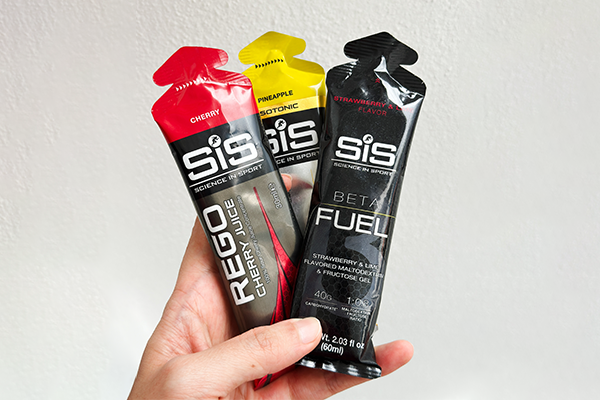
Many gels are suitable for vegetarians and vegans plus they’re often gluten-free – just make sure to check the label on the one you choose.
While you’ll still need to drink water during your workout, energy gels don’t need to be mixed into anything to take. Unlike energy drinks, you can control your carbs and hydration separately – ideal if you want to keep your carbs steady but you’re prone to chugging your drink.
Are there any downsides of energy gels?
Despite the possible benefits of energy gels, they might come with some downsides too. Depending on which brand you buy and how you use them, they may:8,9,10
- in caffeine-containing energy gels, you may experience jitters
- cause stomach upset because they're digested so quickly, some people find running gels more likely to cause stomach troubles than slower-digesting options like energy chews
- be expensive
- be sticky and messy to handle
When and how to use energy gels
Energy gels can be helpful if you’re taking part in moderate to high-intensity events, like long-distance cycling, a marathon or a triathlon.11,12 They can be used during practice and main events, but it’s always best to start taking gels during training so you can get used to them and figure out how they work best for you.11 The perfect time to take a running gel can vary. Sports nutrition recommendations suggest you should aim to consume 30-60g of carbohydrates per hour for prolonged endurance exercise or sport that lasts more than 60 minutes.1
One gel usually contains around 25g of carbohydrates, so having two energy gels per hour should provide you with the right amount of carbs you need to refuel.1 However, always follow the instructions on the product you use. It’s also worth bearing in mind any extra ingredients in your gel, such as caffeine – this might affect how many you decide to take.
Timing your energy gels based on the terrain you’re tackling can also be a good tactic. For example, emerging research suggests that if you know you’re about to face a big hill climb while cycling, having your gel 10 to 15 minutes before you reach the top can give your body a chance to process the carbs and create the energy you need.8
Energy gel FAQs
There’s no hard and fast rule, but typically people find it helpful to take energy gels during exercise or just beforehand. However, you can see what works for you. If you know you’ve got a big effort coming up (for example, a hill) it might be a good idea to time your energy gel around 10 to 15 minutes before this.8 Follow the instructions on the product you choose for the best results.
Yes, marathons are a good time to use energy gels as they involve endurance running. They're suitable for activities like half-marathons and other longer runs too. Even though they’re sometimes called ‘running gels’, they’re ideal for other endurance events like cycling and hikes too.
Sometimes, so check the label on the individual sachet you choose. You can easily find energy gels both with and without caffeine.
It depends on the type of gel. More concentrated (hypertonic) gels are typically best taken with water. While water isn’t required for the carbs to be absorbed, many manufacturers and sports nutrition guidelines recommend taking these gels with water to support comfort and tolerance during exercise.
Energy gels aren’t necessarily for certain skill levels; it's more about the kind of exercise you do. If your exercise sessions are under an hour, they may not be necessary as long as you’ve eaten enough to keep your body fuelled beforehand. But if you’re new to trying energy gels, it’s a good idea to take them little and often and towards the end of your workout to see how you react to them.
The final say
Whether you’re a cyclist, runner or triathlon enthusiast, research so far shows that energy gels can be an easy, fast and effective way to help give your body the nutrients and energy it needs to see you over the finish line.
Raring to go? If you’ve got a marathon coming up, get advice from five-time marathon baddie Jenny Mannion on what she wishes she’d known. Alternatively, shop our favourite running gel picks...
Disclaimer – This article provides informational advice and is not a substitute for medical care. Working with experts for accuracy, we take great care to ensure the information is up-to-date and relevant. However, you should always consult your GP or healthcare professional before using supplements or alternative products, particularly if you have medical conditions or are under supervision.
1. Alghannam AF, Ghaith MM, Alhussain MH. Regulation of Energy Substrate Metabolism in Endurance Exercise. International Journal of Environmental Research and Public Health [Internet]. 2021 May 7 [cited 2026 Jun 22]; 18(9): 4963. Available from: https://www.ncbi.nlm.nih.gov/pmc/articles/PMC8124511/
2. Naderi A et al. Carbohydrates and endurance exercise: A narrative review of a food first approach. Nutrients [Internet]. 2023 Mar 10 [cited 2026 Jun 22]; 15(6): 1367. Available from: https://doi.org/10.3390/nu15061367
3. MSD Manual. Overview of Electrolytes [Internet]. [reviewed 2025 Jul; cited 2026 Jun 22]. Available from: https://www.msdmanuals.com/en-gb/home/hormonal-and-metabolic-disorders/electrolyte-balance/overview-of-electrolytes
4. Oxford Reference. Electrolyte Drink [Internet]. [cited 2026 Jun 22]. Available from: https://www.oxfordreference.com/display/10.1093/oi/authority.20110803095746103
5. Guest NS et al. International Society of Sports Nutrition position stand: Caffeine and exercise performance. J Int Soc Sports Nutr [Internet]. 2021 [cited 2026 Jun 22]; 18(1):1. Available from: https://doi.org/10.1186/s12970-020-00383-4
6. Muljadi JA et al. Effect of caffeine on delayed-onset muscle soreness: A meta-analysis of RCT. Bull Natl Res Cent [Internet]. 2021 Nov 18 [cited 2026 Jun 22]; 45(1): 197. Available from: https://doi.org/10.1186/s42269-021-00660-5
7. Hurley CF, Hatfield DL, Riebe DA. The effect of caffeine ingestion on delayed onset muscle soreness. J Strength Cond Res [Internet]. 2013 Nov [cited 2026 Jun 22]; 27(11): 3101-9. Available from: https://doi.org/10.1519/JSC.0b013e3182a99477
8. British Cycling. Nutrition Guide [Internet]. [cited 2026 Jun 22]. Available from: https://www.britishcycling.org.uk/zuvvi/media/bc_files/membership/Book_Final.pdf
9. Marie Curie. Cycling nutrition guide: fuel your engine [Internet]. [cited 2026 Jun 22]. Available from: https://www.mariecurie.org.uk/get-involved/charity-events/cycling/cycling/cycling-nutrition-guide
10. Karahanoğlu A. Psychological effects of energy gels: An investigation into runners’ energy gel choice and consumption strategies in marathon running. International Journal of Food Design [Internet]. 2022 Apr 1 [cited 2026 Jun 22]; 7(1): 59-78. Available from: https://intellectdiscover.com/content/journals/10.1386/ijfd_00036_1
11. Wilson PB. Does Carbohydrate Intake During Endurance Running Improve Performance? A Critical Review. Journal of Strength and Conditioning Research [Internet]. 2016 Dec [cited 2026 Jun 22]; 30(12): 3539-59. Available from: https://journals.lww.com/nsca-jscr/FullText/2016/12000/Does_Carbohydrate_Intake_During_Endurance_Running.33.aspx
12. Schubert MM, Astorino TA. A Systematic Review of the Efficacy of Ergogenic Aids for Improving Running Performance. Journal of Strength and Conditioning Research [Internet]. 2013 Jun [cited 2026 Jun 22]; 27(6): 1699-707. Available from: https://journals.lww.com/nsca-jscr/fulltext/2013/06000/A_Systematic_Review_of_the_Efficacy_of_Ergogenic.30.aspx