

Films and fairy tales haven’t given warts a great reputation. But they’re harmless and easy to get rid of – here’s how
Summary
1How to identify a wart
If you suspect that you or someone in your family might have a wart, it’s easy to picture the stereotypical round (and maybe hairy) lump…
2What causes warts?
Warts are caused by a type of virus called human papillomavirus (HPV), which infects the top layer of your skin, triggering cell replication…
3Preventing warts
Warts are contagious and can easily spread from person to person or through contact with contaminated surfaces…
If you’ve spotted what you suspect might be a wart, don’t worry. These small, harmless lumps are super common – in fact, almost everyone gets one at some point in their life.1,2
While warts aren’t dangerous, you might find them annoying or even embarrassing. But the good news is it’s fine to leave them alone or try some simple home remedies to keep them at bay.1
What does a wart look like?
Warts come in all shapes and sizes. So how do you know if you’ve got one?
Warts often:1,2
- feel rough and firm
- are raised from your skin
- appear as one lump or a cluster over an area of skin
- match your skin tone, though they may appear darker on black or brown skin (some types of warts might even look yellow)
- have small black dots
Warts can sometimes be mistaken for corns or calluses. These are also hard, thick areas of skin that can appear on your hands or feet.3 They’re caused by repeated friction – whether from wearing shoes that aren’t the right size or even from playing a musical instrument.3 Calluses won’t have small black dots or change the pattern of this skin like warts do.4
Another imposter is the skin tag. Unlike warts, they’re rarely found on the hands and feet. Instead, skin tags often grow in the folds of your skin, in areas where skin rubs together, such as your neck, underarms or beneath the breasts.5 These growths look like they’re hanging off the skin, which is how they got their name.5
Types of warts
As we’ve seen, warts don’t always look the same. In fact, there are several different types…
Closest to the ‘stereotypical wart’, common warts tend to grow on hands, especially around areas where the skin is more likely to be broken, like near the fingernails. They usually feel like rough bumps.2
Flat warts are smoother and smaller than other types and tend to appear in clusters of up to a hundred. They can develop anywhere – though children typically get them on their faces, men in the beard area and women on their legs.2
Filiform warts are characterised by thin, finger-like projections or threads that stick out from the wart. They most often grow on the face, particularly around the eyes, nose or mouth.2
If the wart is on your foot, you’re likely dealing with a plantar wart, also known as a verruca.6 While it’s still a wart, it goes by a different name.
Verrucas may appear as a singular growth or in clusters.6 If they’re on the soles of your feet, they don’t grow outwards, as they’re pushed in when you walk.7 They might be uncomfortable, especially when you put weight on them.
Genital warts are different kinds of warts transmitted through sexual contact. They look like small, rough lumps and can appear around the vagina, penis, anus or skin around your genitals.7
If you think you have genital warts, it’s important to visit a sexual health clinic.8
What causes warts?
Warts are caused by a type of virus called human papillomavirus (HPV), which infects the top layer of your skin, triggering cell replication.9,10 It’s easier for the virus to enter through a cut or scrape, which is why children are especially prone to them. You’re also putting yourself at risk if you bite your nails or pick at hangnails.11
Warts can spread from person to person. You can catch them by touching a wart on someone else’s body or even by coming into contact with something a wart has touched, like a towel or the swimming pool floor. It often takes a few months for warts to grow large enough to see, so it’s hard to pinpoint exactly where you may have contracted them.11
Anyone can get warts, but children and teens, people with a weakened immune system and those who bite their nails or have hangnails are more at risk.11
How to manage warts naturally
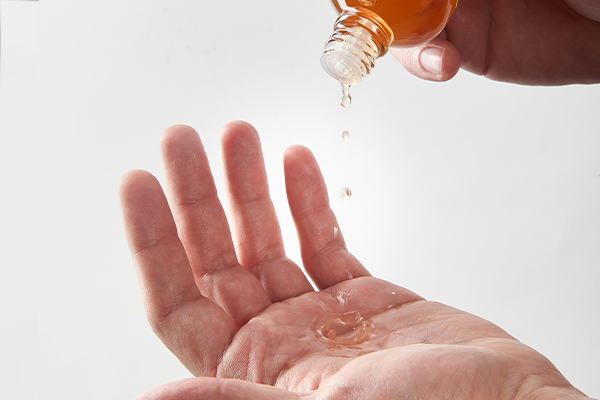
Warts usually go away on their own, but this may take months or even years.1 Here are some natural methods you can try in the meantime.
One common at-home treatment for warts is salicylic acid, which helps to destroy the wart and trigger an immune response.12 It comes in different forms, like gels, liquids or plasters (pads) and should be applied to the wart every day. Before application, soak the wart in warm water and gently rub off the top layer of dead skin with a pumice stone or emery file.13,14
Salicylic acid shouldn’t cause pain. If your skin starts to feel sore, stop treatment for a while. Stay persistent, though – it can take weeks or even months to see results.13,14
Some research indicates that applying tea tree oil may help to clear warts, though more studies are needed to understand its efficacy.15
When someone has a healthy immune system, a wart will often go away on its own.7,16 Keep your body at its best by getting plenty of sleep, eating a varied diet and exercising regularly.
Preventing warts
Warts are contagious and can easily spread from person to person or through contact with contaminated surfaces.11
To prevent warts from spreading within your family:1,16
- don’t scratch or pick at your wart
- don’t touch someone else’s wart
- don’t share towels, socks, shoes, razors or other personal items if you have a wart
- don’t bite your nails or suck fingers with warts on
- don’t shave over a wart to prevent spreading it to other areas of skin
- don’t walk barefoot in public places if you have a verruca
- do wash your hands thoroughly after touching your wart
The final say
If your wart is still stubborn, you can explore other methods to treat warts or speak to your pharmacist. They can recommend some creams, plasters or sprays that might help.1
You should see a GP if:
- you're worried about a growth on your skin
- you have a wart or verruca that keeps coming back
- you have a very large or painful wart or verruca
- you have a wart that bleeds or changes in how it looks
- you have a wart on your face or genitals
But ‘normal’ warts are harmless and can sometimes take months to disappear. So stay patient and remember to embrace yourself, warts and all…
Disclaimer - This article provides informational advice and is not a substitute for medical care. Curated by experts for accuracy, we take great care to ensure the information is up-to-date and relevant. However, you should always consult your GP or healthcare professional before using supplements or alternative products, particularly if you have medical conditions or are under supervision.
1. NHS. Warts and verrucas [Internet]. [cited 2025 Jan 2]. Available from: https://www.nhs.uk/conditions/warts-and-verrucas/
2. American Academy of Dermatology. Warts: Signs and symptoms [Internet]. [cited 2025 Jan 2]. Available from: https://www.aad.org/public/diseases/a-z/warts-symptoms
3. NHS. Corns and calluses [Internet]. [cited 2025 Jan 2]. Available from: https://www.nhs.uk/conditions/corns-and-calluses/
4. Bristow I. Paediatric Cutaneous Warts and Verrucae: An Update. Int J Environ Res Public Health. 2022;19(24):16400. https://doi.org/10.3390/ijerph192416400
5. NHS. Skin tags [Internet]. [cited 2025 Jan 2]. Available from: https://www.nhs.uk/conditions/skin-tags/
6. British Skin Foundation. Plantar warts (verrucas) [Internet]. [cited 2025 Jan 2]. Available from: https://knowyourskin.britishskinfoundation.org.uk/condition/plantar-warts-verrucas/
7. National Institutes of Health. Overview: Warts [Internet]. [cited 2025 Jan 2]. Available from: https://ncbi.nlm.nih.gov/books/NBK279586/
8. NHS. Genital warts [Internet]. [cited 2025 Jan 2]. Available from: https://www.nhs.uk/conditions/genital-warts/
9. American Academy of Dermatology. Warts: Overview [Internet]. [cited 2025 Jan 2]. Available from: https://www.aad.org/public/diseases/a-z/warts-overview
10. Luria L, Cardoza-Favarato G. Human Papillomavirus. StatPearls [Internet]. 2023 Jan 16 [cited 2025 Sep 8]. Available from: https://www.ncbi.nlm.nih.gov/books/NBK448132/
11. American Academy of Dermatology. Warts: Who gets and causes [Internet]. [cited 2025 Jan 2]. Available from: https://www.aad.org/public/diseases/a-z/warts-causes
12. Kore VB, Anjankar A. A Comprehensive Review of Treatment Approaches for Cutaneous and Genital Warts. Cureus. 2023;15(10):e47685. https://doi.org/10.7759/cureus.47685
13. American Academy of Dermatology. Warts: Tips for managing [Internet]. [cited 2025 Jan 2]. Available from: https://www.aad.org/public/diseases/a-z/warts-self-care
14. NHS Scotland. The Long House Surgery. Warts [Internet]. [cited 2025 Jan 2]. Available from: https://www.longhousesurgery.scot.nhs.uk/clinics-and-services/warts/
15. Boopalan D, et al. Topical application of tea tree oil for the treatment of verruca vulgaris. JMIR Dermatol. 2023;6:e47107. https://doi.org/10.2196/47107
16. American Academy of Dermatology. Warts: How to heal warts more quickly and prevent new ones [Internet]. [cited 2025 Jan 2]. Available from: https://www.aad.org/public/diseases/a-z/warts-heal
17. American Academy of Dermatology. Warts: Diagnosis and treatment [Internet]. [cited 2025 Jan 2]. Available from: https://www.aad.org/public/diseases/a-z/warts-treatment
Related to this article