20% off €45 or 15% off €35
Are there foods that boost metabolism? Here's what an expert says

Written byOlivia Rosenvinge

Reviewed byHeeral Tomlinson

Running a marathon or taking a nap, your body burns calories during it all. This is metabolism – but do certain foods help you burn more? Get top tips from our nutritionist on metabolism support
Summary
1What is metabolism?
People generally use the word ‘metabolism’ in relation to burning fat. But it refers to all kinds of processes happening around your body.
2Are there actually foods that boost your metaboli
Some foods take more energy to break down than others – this is known as the ‘thermic effect of food’ (TEF).
3Foods for energy support: Olivia’s top tips
No food can ‘boost’ energy expenditure or permanently speed it up. But you can still include foods that support satiety and energy balance.
Maybe you’ve heard a ‘fast metabolism’ is the secret to staying lean. Or perhaps that certain foods are good at burning fat. But is this actually true? And what else can you do to look after your metabolism? With insight from H&B Nutritionist Olivia Rosenvinge, let’s learn whether certain foods can support metabolism and how much difference it actually makes...
What is metabolism?
People generally use the word ‘metabolism’ in relation to burning fat. But metabolism refers to all kinds of processes happening around your body to keep you alive, even when you’re resting – from breathing to breaking down food for energy and repairing damaged cells. These processes require energy, which we get from food (fat and carbohydrates are the most energy-dense).1 The more calories your body burns during these processes, the ‘faster’ or ‘higher’ your metabolism, or energy expenditure, is. A large proportion of the calories you burn each day comes from your resting metabolic rate, which is influenced by factors like body size, muscle mass, age and genetics.2
Are there actually foods that boost your metabolism?
Some foods take more energy to break down than others – highly refined carbohydrate foods (like a doughnut) are generally digested and absorbed more quickly than foods rich in protein, fibre and healthy fats.3 A handful of nuts, on the other hand (rich in protein and fibre) will take more time and effort – and subsequently energy – for your body to digest. This is known as the ‘thermic effect of food’ (TEF).4
“Protein has the highest thermic effect, carbohydrates are moderate and fat has the lowest,” explains Olivia.5 You might think that foods with a larger TEF are better for your metabolism because they burn more calories to digest. However the effect is very small: it’s something that occurs in your body and isn’t to 'hack' or worry about.5
Why might people want a faster metabolism?
People might want to speed up their metabolism to make it easier to lose weight and decrease their chance of developing risk factors like insulin resistance. A faster metabolism might also result in more sustained energy. However, energy expenditure that’s too fast can make it difficult to gain weight.
Do any foods increase your metabolism?
Not significantly. As Olivia explained, TEF has a minimal impact on the calories you’ll burn day-to-day. “Some foods, like caffeine, green tea, spicy foods and high-protein foods, may produce small short-term increases in energy expenditure, but these effects are generally minor and inconsistent between people.” 4,6,7 So any diet asking you to consume large amounts of these to ‘boost’ your metabolism is a fad and we don’t recommend them.

For example, caffeine increases metabolism by triggering hormones like adrenaline. This increases your heart rate and burns more calories. But the increase in calorie expenditure from a typical coffee is likely to be very small and unlikely to meaningfully affect body weight.8 So, if you already enjoy a cuppa, that’s great – but there’s very little point taking it up for the sake of your metabolism.
“No food dramatically increases energy expenditure or causes meaningful fat loss on its own. Sustainable weight management is driven mainly by overall calorie intake, diet quality, physical activity, sleep and long-term habits.” 4,6,7
Foods for energy support: Olivia’s top tips
So, no food can ‘boost’ energy expenditure or permanently speed it up. But you can still include foods that support satiety and energy balance in your overall diet to support – not transform – your overall wellness:
- get lean protein in: “Protein is the most evidence-supported nutrient for increasing the thermic effect of food (TEF) and helping preserve lean mass during weight loss. Research shows that higher-protein diets can modestly increase energy expenditure and feelings of fullness, although the effects remain relatively small compared with overall calorie balance,” says Olivia.9 Be sure to focus on lean protein, like tofu, lentils, beans, skinless chicken or turkey, egg whites, white fish and low-fat Greek yoghurt, as regularly choosing fattier sources, like fatty cuts of meat, processed meats or cheese may contribute to excess calorie intake
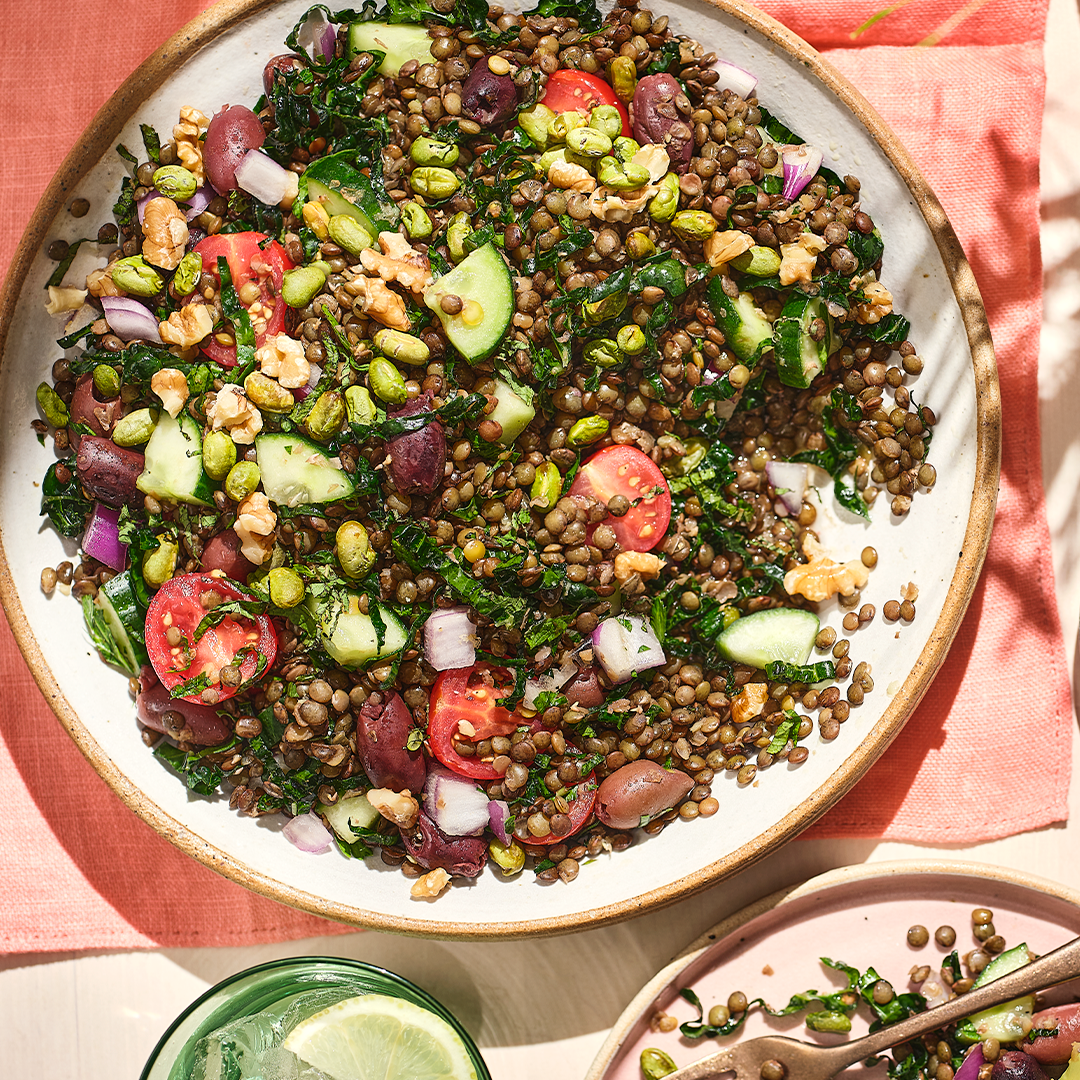
- add legumes and whole grains: as a great source of fibre and complex carbs, these are worth adding to your plate. There’s emerging evidence to show that complex carbohydrates and fibrous foods slow digestion and absorption rate, which leads to reduced sugar absorption and may support blood glucose regulation and satiety.7 Add beans, lentils or chickpeas into curries or swap your pasta and rice for wholegrain versions
- keep your body moving: combining a balanced diet with moderate exercise to create a safe calorie deficit is your best option for long-term weight loss and metabolic support. “Evidence suggests that exercise may modestly support resting metabolic rate by helping maintain lean body mass,” says Olivia. Whether it’s a daily stroll or taking up resistance training to support muscle maintenance, the best exercise is something that feels comfortable and enjoyable for you – that way you’re more likely to keep at it
- get enough sleep: you might have heard that your metabolism slows down when you’re asleep. While this is true, getting good-quality rest far outweighs this small decline. Poor sleep is linked to higher instances of insulin resistance and reduced glucose and fat metabolism – plus you’re less likely to have the energy for exercise and balanced dietary choices when you’re tired 10
Metabolism FAQs
You can’t ‘trick’ your body into burning significant amounts of calories. As Olivia says, “Some foods may support appetite control, satiety, exercise performance or slightly higher energy expenditure, but they should be viewed as helpful components of an overall healthy lifestyle rather than metabolism ‘hacks’.”
Metabolic syndrome is a group of conditions that increases your risk of type 2 diabetes and certain heart conditions. Insulin resistance, where your body can’t use insulin as effectively, is thought to play a central role in metabolic syndrome.10 You may be at higher risk of metabolic syndrome if you’re overweight or have obesity, if you eat high amounts of saturated fats or if you smoke or drink alcohol. Some ethnic groups, including South Asian and Hispanic populations, may also have a higher risk.11 Metabolic syndrome isn’t the same as a slow metabolism – a slow metabolism is just the speed your body burns calories, while metabolic syndrome is a long-term health condition. According to the NHS, the best way to prevent metabolic syndrome, to treat it and prevent complications is through a healthy lifestyle.11
To gain weight with a fast metabolism, you’ll need to eat a long-term surplus of calories (more than your body burns). Try to do this by adding protein and fats to your meals (such as cheese, nuts, seeds, beans, eggs and lean meats) rather than increasing your sugar intake.11
Eating little and often may help if you find it difficult to eat large amounts at a time. Strength training can also help you build and maintain muscle which in turn will increase your body weight.12
The final say
The verdict? “Research consistently shows that overall dietary pattern, calorie balance and physical activity have a far greater impact on body weight than any individual food,” Olivia says.4,6,7 So, no need to chow down on mustard, chillies or other allegedly ‘metabolism-boosting’ ingredients right now. Instead, why not try our fibre-rich miso butterbeans or learn the link between gut health and weight loss...
Disclaimer – This article provides informational advice and is not a substitute for medical care. Working with experts for accuracy, we take great care to ensure the information is up-to-date and relevant. However, you should always consult your GP or healthcare professional before using supplements or alternative products, particularly if you have medical conditions or are under supervision.
1. Sánchez López de Nava A, Raja A. Physiology, Metabolism. StatPearls [Internet]. 2022 Sep 12 [cited 2026 Jun 1]. Available from: https://www.ncbi.nlm.nih.gov/books/NBK546690/
2. Judge A, Dodd MS. Metabolism [Internet]. Essays Biochem [Internet]. 2020 Aug 24 [cited 2026 Jun 1]; 64(4): 607-47. Available from: https://pmc.ncbi.nlm.nih.gov/articles/PMC7545035/
3. Bhupathiraju SN, Hu F. Carbohydrates, Proteins and Fats. MSD Manual [Internet]. 2025 Nov [citeed 2026 Jun 1]. Available from: https://www.msdmanuals.com/home/disorders-of-nutrition/overview-of-nutrition/carbohydrates-proteins-and-fats#Fats_v60557909
4. Calcagno M et al. The Thermic Effect of Food: A Review. J Am Coll Nutr [Internet]. 2019 Aug [cited 2026 Jun 1]; 38(6): 547-51. Available from: https://pubmed.ncbi.nlm.nih.gov/31021710/
5. Quatela A, Callister R, Patterson A, MacDonald-Wicks L. The Energy Content and Composition of Meals Consumed after an Overnight Fast and Their Effects on Diet Induced Thermogenesis: A Systematic Review, Meta-Analyses and Meta-Regressions. 2016 Oct 25 [cited 2026 Jun 1]; 8(11): 670. Available from: https://pubmed.ncbi.nlm.nih.gov/27792142/
6. Almeida MMA et al. Impact of Individuals' Biological and Meals' Nutritional Characteristics on the Thermic Effect of Food in Humans: Meta-Regression of Clinical Trials. Nutr Rev [Internet]. 2025 Apr 1 [cited 2026 Jun 1]; 83(4): 597-608. Available from: https://pubmed.ncbi.nlm.nih.gov/39514684/
7. Guarneiri LL et al. Effects of Varying Protein Amounts and Types on Diet-Induced Thermogenesis: A Systematic Review and Meta-Analysis. Adv Nutr [Internet]. 2024 Dec [cited 2026 Jun 1]; 15(12). Available from: https://pubmed.ncbi.nlm.nih.gov/39486625/
8. Nutritionist Resource. The truth about thermogenics [Internet]. Nutritionist Resource [reviewed 2024 Dec 11; cited 2026 Jun 1]. Available from: https://www.nutritionist-resource.org.uk/articles/the-truth-about-thermogenics-aka-fat-burners
9. Karl JP et al. Substituting whole grains for refined grains in a 6-wk randomized trial favorably affects energy-balance metrics in healthy men and postmenopausal women. Am J Clin Nutr [Internet]. 2017 Feb 8 [cited 2026 Jun 1]; 105(3): 589-99. Available from: https://pmc.ncbi.nlm.nih.gov/articles/PMC5320410/
10. Westerterp-Plantenga MS. Sleep, circadian rhythm and body weight: parallel developments. Proceedings of the Nutrition Society [Internet]. 2016 Apr 27 [cited 2026 Jun 1]; 75(4). Available from: https://www.cambridge.org/core/journals/proceedings-of-the-nutrition-society/article/sleep-circadian-rhythm-and-body-weight-parallel-developments/72AB313DB902E28EA300324E9C181FEC
11. NHS. Metabolic syndrome [Internet]. NHS [reviewed 2023 No 16; cited 2026 Jun 1]. Available from: https://www.nhs.uk/conditions/metabolic-syndrome/
12. NHS. Healthy ways to gain weight [Internet]. NHS [reviewed 2023 Mar 28; cited 2026 Jun 1]. Available from: https://www.nhs.uk/live-well/healthy-weight/managing-your-weight/healthy-ways-to-gain-weight/
Related to this article