20% off €45 or 15% off €35
 Track an order
 Manage account
 Buy It Again
 Favourites
 Rewards
 Find a store
How to gain weight and muscle safely

Written byJodi M Johnson

Reviewed byMolly Arnold, MSc Nutritionist

Fuel your body, build muscle and feel strong day to day with simple, healthy habits that fit into your lifestyle – and with tips from a nutritionist
Summary
1What is a healthy weight?
A healthy weight looks different for everyone. Factors like your height, age and overall health all play a part.
2Why build muscle?
Whether your goal is health, confidence or appearance, building muscle comes with a whole range of benefits.
3Eat more of the right foods
While it might sound simple, what you eat makes a big difference when it comes to healthy, sustainable weight gain.
Our bodies naturally change over time. Your weight and muscle mass can shift because of illness, lifestyle changes or even something as simple as a change in appetite – and that’s completely normal. Looking after a healthy weight and muscle mass plays an important role in everyday life, from how strong you feel to how much energy you have. You might be looking to gain weight or build muscle to support your health, your confidence or to simply feel more like yourself again.
The key is knowing how to do it safely and sustainably. With the right approach – including regular movement and a nourishing, balanced diet – you can make positive changes that support your body. With help of our nutritionist, Molly Arnold, we’ve got practical tips and supportive advice to help you gain weight and build muscle in a safe, healthy way.
“Checking your current weight can give you a clearer picture, but remember – a healthy weight looks different for everyone”
What is a healthy weight?
Before you begin your weight-gain journey, it’s helpful to understand where you’re starting from. Checking your current weight can give you a clearer picture, but remember – a healthy weight looks different for everyone. Factors like your height, age and overall health all play a part. One simple way to get an idea of where you sit is by using our BMI calculator, which shows your body mass index (BMI). In general, a BMI below 18.5 may suggest that your weight is on the lower side.1 That said, BMI doesn’t tell the whole story. It doesn’t take muscle mass into account – and because muscle weighs more than fat, people with more muscle may appear to fall into a higher BMI category even if they have low body fat. BMI should therefore be considered alongside other factors, including strength, energy levels and overall wellbeing rather than used in isolation.
That’s why it’s always a good idea to speak to a doctor before starting any weight-gain plan. A medical professional can help identify any underlying reasons for your weight, guide you towards a plan that’s right for you and offer personalised advice on nutrition, activity and overall wellbeing.
Why gaining weight or muscle can feel difficult
Many different factors can influence your weight and muscle mass and often it’s not just one thing. For some people, a combination of these factors can make gaining weight or building muscle feel challenging, while others may find it harder to lose weight instead. Either way, it’s important to remember that healthy change takes time. Your body, your lifestyle and even your circumstances all play a role.2 These can include:
- your overall health2
- how much (and how regularly) you eat3
- how much sleep you get2
- stress, anxiety or ongoing worry2
- your genetics2
- your age4
- certain medications2
- how physically active you are2
Why build muscle?
Whether your goal is health, confidence or appearance, building muscle comes with a whole range of benefits. Increasing muscle mass contributes to overall metabolic function, as muscle tissue is metabolically active and plays a role in how your body uses energy.5 Muscle gain can help strengthen your muscles, bones and tendons, which can help reduce the risk of injury and make things like opening a stubborn jar easier. Building strength, especially in your core, can also improve your balance and coordination. Over time, this can help you feel more stable, confident and capable in how you move through everyday life.5
“Healthy weight gain is most effective when calorie increases come from nutrient-dense foods”
How to gain weight and muscle healthily
Here are four lifestyle changes you can make to encourage weight gain in a safe and healthy way:
1. Eat more of the right foods
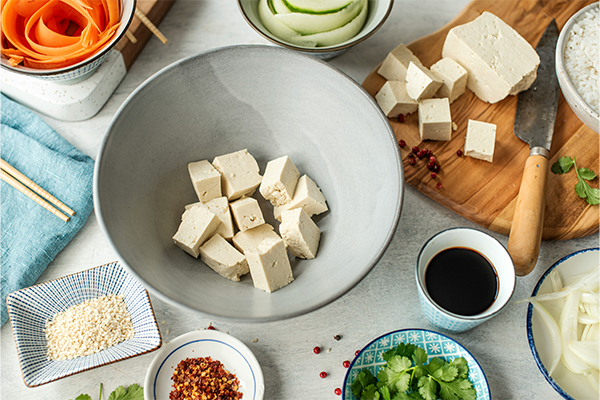
While it might sound simple, what you eat makes a big difference when it comes to healthy, sustainable weight gain. A balanced, nourishing diet that provides enough calories for your height, age and activity level can help you reach a healthy weight and supports muscle gain when combined with resistance exercise. As a general guide, the average adult woman needs around 2,000 calories a day to maintain weight, while the average adult man needs about 2,500 calories.6
As Molly explains, “Healthy weight gain is most effective when calorie increases come from nutrient-dense foods (think fish, chicken, eggs, turkey, tofu, oats, rice, nuts, fruit and vegetables) rather than highly processed foods that are high in saturated fat and added sugars – and may contribute excess energy without the same nutritional value.”7,8,9
2. Increase your protein intake
If your goal is to build lean body mass, increasing your protein intake can make a real difference. Protein plays a vital role in the body – it helps repair tissues and supports muscle maintenance and development and contributes to normal bone structure as part of a balanced diet.10 When it comes to gaining weight and building muscle in a healthy way, Molly explains that, “Strategic timing of protein and carbohydrate intake, particularly after exercise, can increase muscle protein synthesis and support muscle recovery.”10
As well as from food, protein shakes, powders and bars can also be an easy way to top up your protein intake – especially when you’re on the go. It’s good to remember that, “although protein gets most of the attention when it comes to building muscle, micronutrients such as magnesium and iron play essential roles in muscle contraction,” says Molly. “B vitamins also contribute to normal energy yielding metabolism, which plays an important role in supporting the body’s energy needs during physical activity.”11
3. Start strength training
Strength and resistance training play a key role in building muscle, while also helping you feel stronger and healthier overall. These types of exercises work by challenging your muscles against resistance, encouraging them to grow and adapt over time.12 You can build strength in lots of different ways, both at home and in the gym. This might include:
- lifting free weights
- using resistance bands4
- bodyweight exercises such as push-ups4
- stationary weight machines
- strength-based fitness classes
When starting out, choose weights that feel challenging but still manageable and aim to increase them gradually each week. Muscle growth happens when your muscles stay under tension, so focusing on controlled, steady movements – rather than rushing through each rep – can be especially effective.13,14 While strength training is important, cardio still has a place in your routine. Activities like walking, running, cycling or swimming support heart health, help warm up your body and can reduce the risk of injury while supporting overall muscle function.15 Rest days are essential for muscle repair, recovery and reducing the risk of injury – and they can actually help you progress faster in the long run.16
4. Build healthy habits
Whether you’re aiming to gain or lose weight, the habits you build day to day can have a big impact on your progress. Small, consistent changes can really add up over time – and the key is finding what works best for you. Here are a few simple lifestyle habits that can help support healthy weight and muscle gain:
- avoid drinking water right before meals: this can make you feel fuller and may make it harder to reach your calorie intake17
- eat smaller meals more often: this can help prevent hunger, make it easier to hit your calorie goals and manage appetite11
- use larger plates at mealtimes: smaller plates can unintentionally encourage you to eat less18
- prioritise good-quality sleep: proper rest is essential for muscle growth, recovery and overall health19
- drink milk: it’s a simple way to stay hydrated while adding extra calories20
- keep a diary: tracking your food, habits and progress can help you stay focused, motivated and aware of what’s working for you
Weight and muscle gain FAQs
“Training and nutrition are most effective when supported by adequate sleep and recovery. Poor sleep has been shown to negatively impact muscle growth and may increase the risk of injury,” says Molly.16
Strength exercises. These use your body weight or work against some form of resistance. Aim for at least two sessions a week to keep your muscles strong and healthy. Examples you could try at home include:21
- lifting weights
- using resistance bands
- heavy gardening, like digging or shovelling
- climbing stairs
- bodyweight exercises such as push-ups, sit-ups and squats
- yoga
There are many different supplements that can support muscle building, each working in its own unique way. We’ve got a round-up of our favourites over in the best supplements for building muscle.
The final say
Gaining weight and building muscle in a healthy way is a gradual journey, but with the right combination of diet, exercise and consistency, it’s achievable. Alongside your training and nutrition plan, don’t overlook the impact of proper hydration and sustained energy on your results – that’s why we asked an expert on the link between hydration and sports performance. You can also discover helpful support for busy training days in our top products to support your energy. Before starting any weight or muscle programme, it’s important to check in with your doctor. They can help ensure your plan is safe and provide advice tailored to your body and goals.
Disclaimer – This article provides informational advice and is not a substitute for medical care. Curated by experts for accuracy, we take great care to ensure the information is up-to-date and relevant. However, you should always consult your GP or healthcare professional before using supplements or alternative products, particularly if you have medical conditions or are under supervision.
1. NHS. Healthy ways to gain weight [Internet]. nhs.uk. 2021. Available from: https://www.nhs.uk/live-well/healthy-weight/managing-your-weight/healthy-ways-to-gain-weight/
2. National Institute of Diabetes and Digestive and Kidney Diseases. Factors Affecting Weight & Health [Internet]. National Institute of Diabetes and Digestive and Kidney Diseases. 2019. Available from: https://www.niddk.nih.gov/health-information/weight-management/adult-overweight-obesity/factors-affecting-weight-health
3. How timing of eating affects metabolism and weight gain [Internet]. National Institutes of Health (NIH). 2022. Available from: https://www.nih.gov/news-events/nih-research-matters/how-timing-eating-affects-metabolism-weight-gain
4. National Institute on Aging. How can strength training build healthier bodies as we age? [Internet]. National Institute on Aging. 2022. Available from: https://www.nia.nih.gov/news/how-can-strength-training-build-healthier-bodies-we-age
5. July/August 2015 - Volume 19 - Issue 4 : ACSM’s Health & Fitness Journal [Internet]. Lww.com. 2026 [cited 2026 Mar 2]. Available from: https://journals.lww.com/acsm-healthfitness/abstract/2015/07000/build_muscle
6. NHS. Understanding Calories [Internet]. nhs.uk. 2023. Available from: https://www.nhs.uk/live-well/healthy-weight/managing-your-weight/understanding-calories/7. Hall KD. Ultra-Processed Diets Cause Excess Calorie Intake and Weight Gain: An Inpatient Randomized Controlled Trial of Ad Libitum Food Intake. Cell Metabolism. 2019 Jul 2;30(1).
8. Nicklas TA, Drewnowski A, O’Neil CE. The nutrient density approach to healthy eating: challenges and opportunities. Public Health Nutrition. 2014 Aug 28;17(12):2626–36.
9. Lichtenstein AH, Appel LJ, Vadiveloo M, Hu FB, Kris-Etherton PM, Rebholz CM, et al. 2021 Dietary Guidance to Improve Cardiovascular Health: A Scientific Statement From the American Heart Association. Circulation [Internet]. 2021 Nov 2;144(23):472–87. Available from: https://www.ahajournals.org/doi/10.1161/CIR.0000000000001031
10. Jäger R. International Society of Sports Nutrition Position Stand: Protein and Exercise. Journal of the International Society of Sports Nutrition [Internet]. 2017 Jun 20;14(1). Available from: https://jissn.biomedcentral.com/articles/10.1186/s12970-017-0177-8
11. Bellisle F, McDevitt R, Prentice AM. Meal frequency and energy balance. The British Journal of Nutrition [Internet]. 1997 Apr 1 [cited 2020 Jul 8];77 Suppl 1:S57-70. Available from: https://pubmed.ncbi.nlm.nih.gov/9155494/
12. Loenneke JP, Dankel SJ, Bell ZW, Buckner SL, Mattocks KT, Jessee MB, et al. Is muscle growth a mechanism for increasing strength? Medical Hypotheses. 2019 Apr;125:51–6.
13. Oranchuk DJ, Storey AG, Nelson AR, Cronin JB. Isometric training and long-term adaptations: Effects of muscle length, intensity, and intent: A systematic review. Scandinavian Journal of Medicine & Science in Sports [Internet]. 2019 Jan 13;29(4):484–503. Available from: https://onlinelibrary.wiley.com/doi/full/10.1111/sms.13375
14. Burd NA, Andrews RJ, West DWD, Little JP, Cochran AJR, Hector AJ, et al. Muscle time under tension during resistance exercise stimulates differential muscle protein sub-fractional synthetic responses in men. The Journal of Physiology. 2012 Jan 15;590(2):351–62.
15. Konopka AR, Harber MP. Skeletal Muscle Hypertrophy After Aerobic Exercise Training. Exercise and Sport Sciences Reviews [Internet]. 2014 Apr;42(2):53–61. Available from: https://www.ncbi.nlm.nih.gov/pmc/articles/PMC4523889/
16. Dattilo M, Antunes HKM, Medeiros A, Mônico Neto M, Souza HS, Tufik S, et al. Sleep and muscle recovery: Endocrinological and molecular basis for a new and promising hypothesis. Medical Hypotheses [Internet]. 2011 Aug;77(2):220–2. Available from: https://www.sciencedirect.com/science/article/pii/S0306987711001800
17. Jeong JN. Effect of pre-meal water consumption on energy intake and satiety in non-obese young adults. Clinical Nutrition Research [Internet]. 2018;7(4):291. Available from: https://www.ncbi.nlm.nih.gov/pmc/articles/PMC6209729/
18. Peng M. How does plate size affect estimated satiation and intake for individuals in normal-weight and overweight groups? Obesity Science & Practice. 2017 Jun 27;3(3):282–8.
19. Lamon S, Morabito A, Arentson‐Lantz E, Knowles O, Vincent GE, Condo D, et al. The effect of acute sleep deprivation on skeletal muscle protein synthesis and the hormonal environment. Physiological Reports. 2021 Jan;9(1).
20. Milk [Internet]. THE NUTRITIONAL COMPOSITION OF DAIRY PRODUCTS. 2021. Available from: https://milk.co.uk/nutritional-composition-of-dairy/milk/
21. NHS . Exercise [Internet]. NHS. 2019. Available from: https://www.nhs.uk/live-well/exercise/how-to-improve-strength-flexibility/