Track an order
 Manage account
 Buy It Again
 Favourites
 Rewards
 Find a store
How does age affect fertility? What the science says about your biological clock

Written byMedico Digital


Maybe you’re worried about the “clock ticking” - but how does age actually affect your fertility? We’ll explain when fertility peaks, plus your chances of pregnancy by age
Summary
1What age are women most fertile?
If you’re thinking of trying for a baby, it’s helpful to understand the factors that affect your chances of getting pregnant…
2What age are men most fertile?
Unlike women (who are born with all the eggs they’ll ever have) men aren’t born with their sperm...
3What's the peak fertility age?
Generally speaking, your chances of getting pregnant decrease as you move through the decades. But remember...
Like it or not, we all get older and you might start seeing changes in your skin, hair and muscles – but what you can’t see is what’s going on inside your body.
Unfortunately, as our outsides get older, so do our insides, and this can have an impact on our fertility. If you want to start a family or have another baby, knowing how age affects your chances of getting pregnant could help you make some important, time-critical decisions.
So, here’s the lowdown on how age affects fertility for both men and women, and what it means for your chances of conceiving…
What age are women most fertile?
If you’re thinking of trying for a baby, it’s helpful to understand the factors that affect your chances of getting pregnant.
One thing to consider is age. Unfortunately, the older you get, the more your fertility declines.1,2 But that doesn’t necessarily mean it’ll be a struggle.
Let’s explore when this fertility decline starts, how it progresses with age and how it affects your chances of getting pregnant.
A baby girl is born with around 1 to 2 million oocytes (developing eggs) in her ovaries, and won’t produce any more for the rest of her life.3 So, if you’re pregnant or have been pregnant, you’ve had that egg since you were born.
As girls and women get older, the number of oocytes declines. At puberty (around 11 years old), approximately 300,000 to 500,000 oocytes remain.2-4
While this may seem like a huge drop, only around 400 to 500 eggs are released during a woman’s reproductive life (one each month of the menstrual cycle).1,3
Due to the steady decline in the number of eggs, a woman’s peak reproductive years are typically from their late teens to late twenties.5
By the age of 37, a woman’s egg count drops to around 25,000. This number continues to decrease, reaching around 1000 by menopause (when your periods stop).2,3,6 For women in the UK, menopause usually occurs between the ages of 45 and 55, but it can also happen earlier.7
It’s all well and good knowing how many eggs you may have at any given age, but what does this mean in real terms?
Data from The National Institute for Health and Care Excellence (NICE) outlines the probability of conceiving within a year (12 cycles):8
- age 19 to 26: 92%
- age 27 to 29: 87%
- age 30 to 34: 86%
- age 35 to 39: 82%
From this, we can see that fertility starts to decline in your thirties – gradually at first, but faster once you reach your mid-thirties.5,6,9
One thing that’s important to remember is that while the number of eggs decreases, their quality also plays a role.2 These factors combined can make conception and a healthy pregnancy more challenging as you get older, but more on this later.2,3
After menopause, it’s very rare to be able to get pregnant naturally.10
What age are men most fertile?
Unlike women – who are born with all the eggs they’ll ever have – men aren’t born with their sperm.1,6 Instead, sperm production begins daily from the start of puberty, around age 12.4,6,11
As men age, their testosterone levels begin to decrease, which can cause a decline in the quality and quantity of their sperm.1
Some research suggests that sperm quality can start to steadily decline from 35 years old.1 This includes a decrease in volume and motility (sperm’s ability to move through the female reproductive tract to fertilise an egg) and an increase in abnormal morphology (shape, size and structure).1
After 40, sperm are much more likely to have DNA damage.1,6 More research and evidence is needed, but these factors suggest it may take longer for a couple to get pregnant as a man ages.1
While male fertility does decline with age, the decrease is generally less severe than that experienced by women.12
What's the peak fertility age?
Generally speaking, your chances of getting pregnant decrease as you move through the decades. But remember, it’s a gradual process rather than a sudden drop with each birthday. Around age 37, however, this decline does tend to become more rapid.2,6
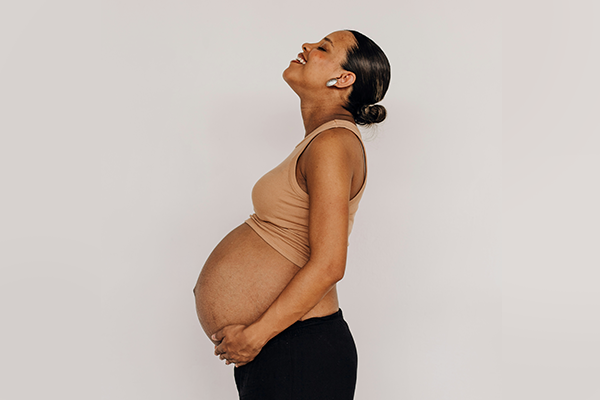
All this can feel overwhelming if you’re planning on conceiving in your late thirties, but remind yourself that between the ages of 35 to 39, you still have an 82% chance of getting pregnant within one year of trying.8
It may take a little longer, but it’s also possible to have a baby in your 40s, all the way up until menopause.12
How age might affect you and your baby
As we now know, the older you are, the longer it may take you to get pregnant.11 But there are also other important factors to take into account when deciding the best time to try for a baby.
As well as having fewer eggs as you age, their quality also declines. This means that as you get older, your eggs are more likely to have abnormal chromosomes or genetics. This can increase the risk of miscarriage and of your baby being born with health conditions.1,5
As you get older, you’re also more likely to develop health conditions and pregnancy complications such as pre-eclampsia, early or late delivery, miscarriage, high blood pressure and diabetes.2,5,13
With men, the outlook is similar. As you age, the likelihood of your sperm having chromosomal defects increases, which can raise the risk of certain conditions and congenital defects in a baby.14,15
If you’re worried about your fertility or the potential impact of your age, it’s best to reach out to your doctor. They’ll be able to offer you personalised advice and arrange fertility tests if necessary.
The final say
Unfortunately, when it comes to fertility, age isn’t always just a number. But remember that there’s a lot of hope, and everyone’s path to pregnancy is unique.
With the right planning and support, you can maximise your chances of conceiving, having a healthy pregnancy and delivering a healthy baby.
We’re here to support you every step of the way, from pre-conception and pregnancy to life after birth. Learn how to prepare your body and mind for pregnancy, plus why what you eat may be important to your fertility.
Disclaimer - This article provides informational advice and is not a substitute for medical care. Curated by experts for accuracy, we take great care to ensure the information is up-to-date and relevant. However, you should always consult your GP or healthcare professional before using supplements or alternative products, particularly if you have medical conditions or are under supervision.
1. Sharma R, et al. Lifestyle factors and reproductive health: taking control of your fertility. Reprod Biol Endocrinol. 2013;11:66. https://doi.org/10.1186/1477-7827-11-66
2. Owen A, et al. Age-related fertility decline. Treasure Island (FL): StatPearls Publishing; 2024. Available from: http://www.ncbi.nlm.nih.gov/books/NBK576440/
3. Woodruff T. Making eggs: is it now or later? Nat Med [Internet]. 2016 Dec 2 [cited 2025 Sep 4]; 14(11): 1190-91. Available from: https://pmc.ncbi.nlm.nih.gov/articles/PMC5134835/
4. NHS. Early or delayed puberty? [Internet]. [cited 2024 Nov 13]. Available from: https://www.nhs.uk/conditions/early-or-delayed-puberty/
5. Owen A, Carlson K, Sparzak PB. Age-Related Fertility Decline. StatPearls [Internet]. 2024 Feb 2 [cited 2025 Sep 4]. Available from: https://www.ncbi.nlm.nih.gov/books/NBK576440/
6. British Fertility Society. At what age does fertility begin to decrease? [Internet]. [cited 2024 Nov 13]. Available from: https://www.britishfertilitysociety.org.uk/fei/at-what-age-does-fertility-begin-to-decrease/
7. NHS. Menopause [Internet]. [cited 2024 Nov 13]. Available from: https://www.nhs.uk/conditions/menopause/
8. NICE. Fertility problems: Assessment and treatment [Internet]. [cited 2024 Nov 13]. Available from: https://www.nice.org.uk/guidance/cg156/chapter/figures-and-tables-to-support-chances-of-conception-and-embryo-quality-recommendations
9. The American College of Obstetricians and Gynecologists Committee on Gynecologic Practice. Female Age-Related Fertility Decline: Committee opinion, Number 589; March 2014, Reaffirmed 2020. Available from: https://www.acog.org/clinical/clinical-guidance/committee-opinion/articles/2014/03/female-age-related-fertility-decline
10. NHS. Menopause symptoms [Internet]. NHS [cited 2024 Nov 13]. Available from: https://www.nhs.uk/conditions/menopause/symptoms/
11. Suede SH, et al. Histology, spermatogenesis. Treasure Island (FL): StatPearls Publishing; 2024. Available from: http://www.ncbi.nlm.nih.gov/books/NBK553142/
12. Tommy’s. How age affects fertility [Internet]. [cited 2024 Nov 13]. Available from: https://www.tommys.org/pregnancy-information/planning-a-pregnancy/fertility-and-causes-of-infertility/how-age-affects-fertility
13. Shirasuna K, et al. Effect of aging on the female reproductive function. Contracept Reprod Med. 2017;2:23. https://doi.org/10.1186/s40834-017-0050-9
14. Bray I, et al. Advanced paternal age: How old is too old? J Epidemiol Community Health. 2006;60(10):851–3. https://doi.org/10.1136/jech.2005.045179
15. Jimbo M, et al. Fertility in the aging male: A systematic review. Fertil Steril. 2022;118(6):1022–34. https://doi.org/10.1016/j.fertnstert.2022.10.035