20% off €45 or 15% off €35
 Track an order
 Manage account
 Buy It Again
 Favourites
 Rewards
 Find a store


You want magnesium... but which kind suits you best? From glycinate to sprays, our expert-backed guide explains the different magnesium types and helps you choose the format that you’ll love most
Summary
1Types of magnesium
Magnesium is a mineral that binds to another substance to form different compounds, such as citrate, oxide, glycinate or chloride.
2Oral vs topical magnesium
Oral supplements are the go-to if you want to top up your intake, while topical products are more about relaxation.
3Choosing the right magnesium for you
The best magnesium is the one that suits your goal, your routine and the format you’ll actually stick with.
You might think magnesium is just one thing, but it actually comes in a range of different forms – from citrate and glycinate to chloride and sulphate. Think of them as your favourite girl band: each has a different personality, but they’re all part of the same fabulous group. That matters, because the form of magnesium can influence the kind of product it appears in and how you might choose to use it.
What are the different types of magnesium?
Magnesium is a mineral that binds to another substance to form different compounds, such as citrate, oxide, glycinate or chloride. These combinations can affect things like solubility, formulation and how suitable a form is for different products.1,2
Magnesium citrate
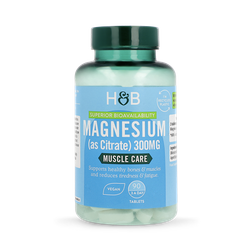
Magnesium citrate is magnesium bound to citric acid. It’s one of the most popular forms in supplements and is commonly found in tablets, capsules and powders.1,2 Magnesium citrate can contribute to normal muscle function, normal energy-yielding metabolism, electrolyte balance, the maintenance of normal bones and a reduction in tiredness and fatigue.³
Magnesium oxide
Magnesium oxide is made by combining magnesium with oxygen. It’s commonly used in tablets and capsules and has a white, powdery appearance.4 Just like magnesium citrate, it can contribute to normal muscle function, nervous system function and the reduction of tiredness and fatigue.3
Magnesium glycinate
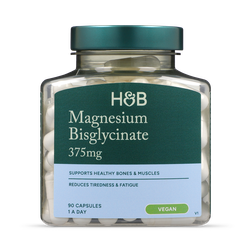
You might’ve heard of magnesium glycinate thanks to its rise in popularity as an ingredient in the ‘sleepy girl mocktail’ that’s all over social media. Magnesium glycinate – also known as magnesium bisglycinate – is made by combining magnesium with glycine, an amino acid that acts as a neurotransmitter (or chemical messenger), sending messages around the body.5 Magnesium citrate, oxide and glycinate each play a role in supporting electrolyte balance, normal muscle function and bone health – while also helping to reduce tiredness and fatigue.3 Quite the multitasker.
Magnesium malate
Magnesium malate is magnesium bound to malic acid – a naturally occurring acid found in certain fruits, such as apples, pears and cherries.6 Like other magnesium forms, it can help contribute to normal energy-yielding metabolism and the reduction of tiredness and fatigue.3
Magnesium sulphate
You may know magnesium sulphate better as Epsom salts. It’s made by combining magnesium with sulphuric acid and is commonly sold as bath salts or flakes.7 Epsom salts are widely used in baths and foot soaks, especially after exercise or long days on your feet. While many people enjoy them as part of a winding-down ritual, more research is needed before drawing firm conclusions about how much magnesium is absorbed by the body this way.7,8 The bottom line? Don’t rely on topical products like bath salts or creams for any kind of actual magnesium intake.
Magnesium chloride
Magnesium chloride is made by binding magnesium with hydrochloric acid. It’s a highly soluble form, which is why it often appears in liquid supplements and topical products such as sprays, oils, lotions and bath flakes.9
It’s also the form most often associated with the question: does topical magnesium work? The honest answer is that topical magnesium products are popular and can be appealing if you don’t love swallowing tablets, but the evidence for meaningful magnesium absorption through the skin is still limited and mixed.8 So while topical magnesium may have a place in your routine, it shouldn’t automatically be treated as a like-for-like replacement for oral magnesium if your goal is increasing magnesium intake.8
Magnesium spray vs tablets: what’s the difference?
If you’re comparing magnesium sprays and tablets, the biggest difference is where the product is designed to work.
Oral magnesium – including tablets, capsules, gummies and powders – goes through the digestive system and is generally the format used if you want to supplement magnesium intake. Different magnesium compounds may vary in solubility and bioavailability, but oral supplements are the main route studied for supporting your nutritional magnesium levels.2
Topical magnesium – including sprays, oils, creams, gels and bath products – is applied to the skin. These can feel convenient, especially if you dislike tablets or want a product that fits into your evening routine. But current evidence doesn’t clearly show that topical magnesium raises magnesium levels in the same way oral supplements can.8
So, if your main goal is supporting your magnesium intake, tablets, capsules or powders are the more evidence-backed place to start. But if you’re just looking to build a relaxing wind-down routine, topical magnesium might suit your needs instead.
Topical magnesium: does it work?
If you’re looking for a magnesium-based product to be a pleasant part of your bedtime routine, then yes, absolutely – many people enjoy sprays, oils and flakes because they’re fuss-free additions to their wind-down ritual.
But can magnesium be reliably absorbed through the skin in amounts that noticeably improve magnesium levels? The evidence is still limited and researchers have said more robust studies are needed.8 Topical magnesium isn’t necessarily pointless – but it also shouldn’t be thought of as a shortcut to correcting low intake. If you’re not getting enough magnesium, or think your levels may be low, an oral supplement is usually the recommended option. It’s a good idea to speak to your doctor about checking your magnesium levels before taking any new supplements.
How to choose the best magnesium for you
The best magnesium for you depends on what matters most to you: your goal, your preferred format and what you’ll actually remember to take consistently.
You might prefer:
- as a tablet or capsule if you want a simple, measured daily supplement
- a powder if you’d rather stir it into a drink
- a spray or cream if you don’t enjoy swallowing supplements and nutritional intake is not your goal
- bath flakes or Epsom salts if you want to build magnesium into a relaxing ritual
It’s also worth checking how much elemental magnesium you’re getting per serving and whether the product fits easily into your day. Sometimes the ‘best’ supplement isn’t the fanciest one – it’s the one you’ll genuinely use.
Are you getting enough magnesium?
Magnesium deficiency isn’t always obvious, so it can be tricky to tell whether you’re getting enough from food alone. The NHS says men aged 19-64 need 300mg of magnesium a day, while women aged 19-64 need 270mg a day.10
Your intake might roughly look like this:
- a banana: 32mg11
- a cup of skimmed milk: 29.5mg12
- a baked potato with half a tin of tuna: 76.5mg13,14
- a serving of cashews (18 nuts): 83mg15
- 3 squares of 70-85% dark chocolate (30g): 68mg16
That adds up to approximately 289mg of magnesium.11-16
Types of magnesium FAQs
Not necessarily – it depends on what you want it to do. If your goal is supplementing magnesium intake, oral formats like tablets, capsules and powders are usually the more established option. If your goal is ease, convenience or a topical format you enjoy using, a spray may still suit you better.2,8
The current evidence is limited and mixed. Researchers have called for better-quality studies before firm conclusions can be made about how effective magnesium that’s applied to the skin really is.8
We’ll say it straight: no, it can’t. Always check with a doctor before taking oral supplements, but oral magnesium is the recommended route for supplementation when you’re looking to up your levels.2,8
You’ve got options. Powders, liquids, gummies and topical products can all be easier to fit into your routine, depending on your preference. The best choice is often the one you’ll feel happiest using consistently.
The final say
When it comes to magnesium, there isn’t one perfect form – just the one that makes the most sense for you. The key? Match the format to your goal. Want straightforward daily support? Go oral. Not interested in nutritional intake, but looking for a relaxing option after a bath or before bed? Topical magnesium could be just the ticket. Either way, choosing a magnesium you’ll actually use consistently is where the magic really happens. To find your new go-to, check out our nutritionist’s round-up of the best magnesium supplements.
Disclaimer –
This article provides informational advice and is not a substitute for medical care. Working with experts for accuracy, we take great care to ensure the information is up to date and relevant. However, you should always consult your GP or healthcare professional before using supplements or alternative products, particularly if you have medical conditions or are under supervision.
1. Allen MJ, Sharma S. Magnesium. In: StatPearls [Internet]. Treasure Island (FL): StatPearls Publishing; 2023 [cited 2024 Aug 20]. Available from: https://www.ncbi.nlm.nih.gov/books/NBK519036/
2. Blancquaert L, Vervaet C, Derave W. Predicting and testing bioavailability of magnesium supplements. Nutrients [Internet]. 2019 Jul 20 [cited 2024 Aug 20];11(7):1663. Available from: https://pmc.ncbi.nlm.nih.gov/articles/PMC6683096/
3. Great Britain Nutrition and Health Claims Register. Magnesium authorised health claims [Internet]. [cited 2026 Apr 8]. Available from: https://www.gov.uk/government/publications/great-britain-nutrition-and-health-claims-register
4. PubChem. Magnesium oxide [Internet]. Bethesda (MD): National Library of Medicine; [cited 2024 Aug 20]. Available from: https://pubchem.ncbi.nlm.nih.gov/compound/Magnesium-oxide
5. Abdul Razak M, Shajahan Begum P, Viswanath B, Rajagopal S. Multifarious beneficial effect of nonessential amino acid, glycine: a review. Oxid Med Cell Longev [Internet]. 2017 Mar 1 [cited 2024 Aug 20];2017:1716701. Available from: https://www.ncbi.nlm.nih.gov/pmc/articles/PMC5350494/
6. PubChem. Malic acid [Internet]. Bethesda (MD): National Library of Medicine; [cited 2024 Aug 20]. Available from: https://pubchem.ncbi.nlm.nih.gov/compound/Malic-acid
7. Tarsitano MG, Quinzi F, Folino K, Greco F, Oranges FP, Cerulli C, et al. Effects of magnesium supplementation on muscle soreness in different type of physical activities: a systematic review. J Transl Med [Internet]. 2024 Jul 5 [cited 2025 Nov 14];22(1):629. Available from: https://pmc.ncbi.nlm.nih.gov/articles/PMC11227245/
8. Gröber U, Werner T, Vormann J, Kisters K. Myth or reality - transdermal magnesium? Nutrients [Internet]. 2017 Jul 28 [cited 2024 Aug 20];9(8):813. Available from: https://www.ncbi.nlm.nih.gov/pmc/articles/PMC5579607/
9. PubChem. Magnesium chloride [Internet]. Bethesda (MD): National Library of Medicine; [cited 2024 Aug 20]. Available from: https://pubchem.ncbi.nlm.nih.gov/compound/Magnesium-chloride
10. NHS. Vitamins and minerals - Others [Internet]. [reviewed 2020 Aug 3; cited 2024 Aug 20]. Available from: https://www.nhs.uk/conditions/vitamins-and-minerals/others/
11. U.S. Department of Agriculture. Bananas, raw [Internet]. FoodData Central; [cited 2024 Aug 20]. Available from: https://fdc.nal.usda.gov/fdc-app.html#/food-details/173944
12. U.S. Department of Agriculture. Milk, lowfat, fluid, 1% milkfat, with added vitamin A and vitamin D [Internet]. FoodData Central; [cited 2024 Aug 20]. Available from: https://fdc.nal.usda.gov/fdc-app.html#/food-details/746772
13. U.S. Department of Agriculture. Potatoes, baked, flesh and skin, without salt [Internet]. FoodData Central; [cited 2024 Aug 20]. Available from: https://fdc.nal.usda.gov/fdc-app.html#/food-details/170093
14. U.S. Department of Agriculture. Fish, tuna, white, canned in water, drained solids [Internet]. FoodData Central; [cited 2024 Aug 20]. Available from: https://fdc.nal.usda.gov/fdc-app.html#/food-details/175158
15. U.S. Department of Agriculture. Nuts, cashew nuts, raw [Internet]. FoodData Central; [cited 2024 Aug 20]. Available from: https://fdc.nal.usda.gov/fdc-app.html#/food-details/170162
16. U.S. Department of Agriculture. Chocolate, dark, 70-85% cacao solids [Internet]. FoodData Central; [cited 2024 Aug 20]. Available from: https://fdc.nal.usda.gov/fdc-app.html#/food-details/170273
Related to this article