20% off €45 or 15% off €35
 Track an order
 Manage account
 Buy It Again
 Favourites
 Rewards
 Find a store


Think sunshine means you’ve got your vitamin D sorted? Not always. Here’s how to make sure you’re getting enough – even in summer
Summary
1How much vitamin D do you need?
Most people need around 10 micrograms a day, which can come from a mix of sunlight, food and supplements.
2Do you need vitamin D in summer?
You might not – but it depends on how much sun you’re getting and your lifestyle.
3When should you take vitamin D supplements?
Many people need supplements in autumn and winter, and some may benefit all year round.
When the sun finally shows up, it’s easy to assume your vitamin D levels are taken care of. But is that really the case? If you’ve ever wondered “do I still need vitamin D in summer?” or “should I take supplements when it’s sunny?” – you’re not alone. The answer isn’t always straightforward, but once you understand how vitamin D works, it becomes much easier to figure out what’s right for you. Here’s what you need to know.
What is vitamin D and why is it so important?
Vitamin D is an essential nutrient that supports several important functions in your body.1 Its main role is helping to regulate calcium and phosphate levels – two minerals that are important for maintaining healthy bones, teeth and muscles.1-3 Without enough vitamin D, it can become harder for your body to maintain healthy bones and muscle function.4
How much vitamin D do you need?
According to UK guidelines, adults and children over one year old are advised to have 10 micrograms of vitamin D per day (400 IU). This can come from a combination of sunlight exposure, diet and supplements.3 In reality, food alone usually doesn’t provide enough vitamin D, so sunlight remains your main natural source. That said, you can still top up your intake through these dietary sources:3,5
- oily fish (salmon, sardines, mackerel)
- egg yolks
- red meat
- fortified foods (like spreads and cereals)
- mushrooms (particularly UV-exposed varieties)
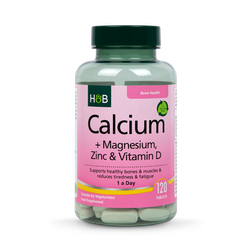
Holland & Barrett
€12.99
€0.11/1 Tablet
Do you need vitamin D in summer?
This is the big question – and the answer really depends on your lifestyle and exposure to sunlight. From late March or early April through to the end of September in the UK, most people can produce enough vitamin D through sunlight, as long as they’re spending some time outdoors.3 Short, regular periods of sun exposure on uncovered skin are often enough – but this varies depending on things like your skin tone and environmental conditions like UV levels.6
That said, it’s not a guarantee. Even in summer, not everyone gets enough and vitamin D deficiency can still occur. Maintaining adequate levels year-round may be more challenging if you:3,6
- spend most of your time indoors
- cover most of your skin outdoors
- live in an institution like a care home
- have darker skin
So, should you take vitamin D when it’s sunny?
It depends on your individual situation:
- if you’re getting regular sunlight exposure, you may be able to meet your needs without supplements3
- if you’re mostly indoors or not getting much sun, your intake may be lower3
UK guidance also advises that some groups should consider taking a daily supplement all year round, regardless of the season.3 If you’re unsure where you fall, it’s always worth speaking to a GP or healthcare professional.
How much sun do you actually need?
There’s no one-size-fits-all answer here. How much vitamin D your body produces depends on several factors, including:6,7
- skin tone
- age
- time of day
- UV index
- geographic location
In the UK, vitamin D production is usually possible between April and September, when sunlight is strong enough.3 It’s also worth knowing that your body naturally limits how much vitamin D it produces from sunlight. So, spending longer in the sun won’t necessarily increase your levels – plus excessive sun exposure increases skin cancer risk.6,8
Does sunscreen block vitamin D?
This is a common concern, but the evidence is reassuring. While sunscreen can theoretically reduce vitamin D production, in real-world use:6,9
- most people don’t apply enough to completely block UVB rays
- vitamin D synthesis can still occur with typical use
- protection against skin damage remains the priority
In short, using suncream as recommended is unlikely to prevent your body from producing vitamin D.
When should you take vitamin D supplements?
In the UK, guidance suggests that everyone should consider taking a daily vitamin D supplement during autumn and winter (October to early March).3 In spring and summer, whether you need supplements depends on how much sunlight you’re getting and your personal risk factors.
Vitamin D FAQs
Low vitamin D levels can be hard to spot, but they may be linked to symptoms like muscle weakness, bone or joint pain and a higher risk of fractures.10 If you suspect you have vitamin D deficiency, it’s important to consult a GP for testing and tailored advice.
Vitamin D3 (cholecalciferol) is generally considered more effective at raising and maintaining vitamin D levels compared to D2 (ergocalciferol), although both contribute to overall intake.11 If you’re considering a supplement, it’s worth understanding the differences between these forms and how they may support your needs. For more guidance, see our guide to the best vitamin D supplements.
It can be difficult to get enough vitamin D from diet alone, as only a small number of foods naturally contain it. While foods like oily fish, egg yolks and fortified products can contribute, sunlight remains the main source for most people during spring and summer.3
Taking a vitamin D supplement throughout the year is generally considered safe when you stay within recommended amounts. However, taking too much over time can be harmful, so it’s important to follow guidance or speak to a healthcare professional if you’re unsure.
The final say
So, do you need vitamin D in summer? For many people, regular sunlight exposure will cover your needs – but it’s not always guaranteed. If you’re spending a lot of time indoors, covering your skin or have other risk factors, your levels may still fall short. The simplest way to stay on track is to be mindful of your routine: aim for safe sun exposure where possible, include vitamin D-rich foods in your diet and consider a daily supplement if needed.3,6 If you’re unsure about your levels, it’s always better to check with your GP rather than guess – that way, you can make sure you’re getting the right support for your individual needs.
Looking for more ways to support your health this summer? Read our ultimate guide to SPF or our favourite products for joints, bones and muscles.
Disclaimer – This article provides informational advice and is not a substitute for medical care. Curated by experts for accuracy, we take great care to ensure the information is up-to-date and relevant. However, you should always consult your GP or healthcare professional before using supplements or alternative products, particularly if you have medical conditions or are under supervision.
1. DeLuca HF. Overview of general physiologic features and functions of vitamin D. Am J Clin Nutr. 2004 Dec;80(6 Suppl):1689S-96S. https://pubmed.ncbi.nlm.nih.gov/15585789/
2. Ciosek Ż, Kot K, Kosik-Bogacka D, Łanocha-Arendarczyk N, Rotter I. The Effects of Calcium, Magnesium, Phosphorus, Fluoride, and Lead on Bone Tissue. Biomolecules. 2021; 11(4):506. https://www.mdpi.com/2218- 273X/11/4/506
3. National Health Service (NHS). Vitamin D. NHS website. Published August 2017. Updated July 2022. https://www.nhs.uk/conditions/vitamins-and-minerals/vitamin-d/
4. Laird E, Ward M, McSorley E, Strain JJ, Wallace J. Vitamin D and bone health: potential mechanisms. Nutrients. 2010 Jul;2(7):693-724. https://pmc.ncbi.nlm.nih.gov/articles/PMC3257679/#sec5
5. Cardwell G, Bornman JF, James AP, Black LJ. A Review of Mushrooms as a Potential Source of Dietary Vitamin D. Nutrients. 2018 Oct 13;10(10):1498. https://pmc.ncbi.nlm.nih.gov/articles/PMC6213178/#abstract1
6. National Institute for Health and Care Excellence (NICE). Sunlight exposure: risks and benefits: supporting information for practitioners. NICE guideline NG34. Published February 9, 2016. https://www.nice.org.uk/guidance/ng34/chapter/supporting-information-for-practitioners
7. Gallagher JC. Vitamin D and aging. Endocrinol Metab Clin North Am. 2013 Jun;42(2):319- 32. https://pmc.ncbi.nlm.nih.gov/articles/PMC3782116/
8. Wacker M, Holick MF. Sunlight and Vitamin D: A global perspective for health. Dermatoendocrinol. 2013 Jan 1;5(1):51- 108. https://pmc.ncbi.nlm.nih.gov/articles/PMC3897598/#abstract1
9. Passeron T, Bouillon R, Callender V, Cestari T, Diepgen TL, Green AC, van der Pols JC, Bernard BA, Ly F, Bernerd F, Marrot L, Nielsen M, Verschoore M, Jablonski NG, Young AR. Sunscreen photoprotection and vitamin D status. Br J Dermatol. 2019 Nov;181(5):916-931. https://pmc.ncbi.nlm.nih.gov/articles/PMC6899926/
10. Holick MF, Chen TC. Vitamin D deficiency: a worldwide problem with health consequences. Am J Clin Nutr. 2008 Apr;87(4):1080S6S. https://pubmed.ncbi.nlm.nih.gov/18400738/
11. van den Heuvel EG, Lips P, Schoonmade LJ, Lanham-New SA, van Schoor NM. Comparison of the Effect of Daily Vitamin D2 and Vitamin D3 Supplementation on Serum 25-Hydroxyvitamin D Concentration (Total 25(OH)D, 25(OH)D2, and 25(OH)D3) and Importance of Body Mass Index: A Systematic Review and Meta-Analysis. Adv Nutr. 2024 Jan;15(1):100133. https://pubmed.ncbi.nlm.nih.gov/37865222/
Related to this article