20% off €45 or 15% off €35
 Track an order
 Manage account
 Buy It Again
 Favourites
 Rewards
 Find a store
Beyond the applicator: your complete guide to using tampons

Written byLaura Harcourt

Reviewed byHeeral Tomlinson
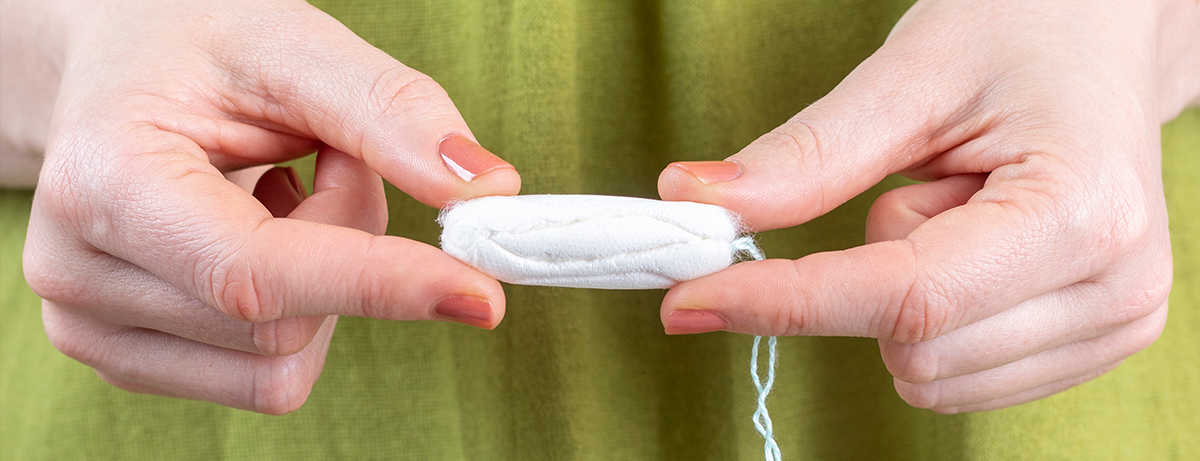
Whether you’re hitting the gym, diving into a swim session or just wearing your favourite pair of jeans, tampons can give you the confidence and freedom to feel secure during your period
Summary
1How do tampons work?
A tampon is a small, soft tube of cotton that you place inside your vagina to soak up menstrual blood during your period.
2What are the different types of tampons?
There are various types of tampons available, from different absorbency levels to different styles.
3How do you use a tampon?
Using a tampon is easier than you might think. Especially with our easy step-by-step guide.
Tired of bulky pads or period products that restrict your routine? Tampons offer discreet, comfortable protection that lets you stay active and feel confident, no matter what your period throws at you. Millions of people worldwide rely on them, but if you’re new to tampons or just curious about the different types, you likely have questions.1 Here, we’ll break down exactly how tampons work, how to use them and how to help you find the right type.
How do tampons work?
So, what exactly is a tampon? A tampon is a little, soft tube of cotton that you place inside your vagina to soak up menstrual blood during your period. Once inserted, it absorbs the blood and expands slightly to stay securely in place, so you don't have to worry about it moving around or falling out.
Every tampon has a string attached to the end that stays outside your body. When it's time to take your tampon out, all you have to do is give that string a gentle tug. After it's out, you can simply wrap it in a little toilet paper and toss it in the bin (or the sanitary bin in a public bathroom). Remember to never flush it down the toilet. And if the string ever breaks – it's very rare, but it can happen – don't panic... Just make sure your hands are clean and you can gently reach in with a finger to take it out.
What are the different types of tampons?
There are various types of tampons available, from different absorbency levels to different sizes and shapes. Here’s a little more on the types of tampons available.
Tampons with an applicator
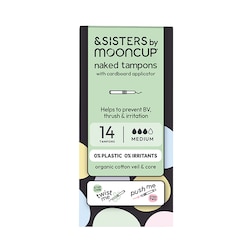
Some tampons have an outer applicator that helps you insert them and you may find these easier to use than tampons that you need to insert with your fingers. The tampon's applicator will usually be a plastic or cardboard tube that encases the tampon and it’ll be shown on the outer packaging, so you’ll know if your tampon has one.
Tampons for different flows
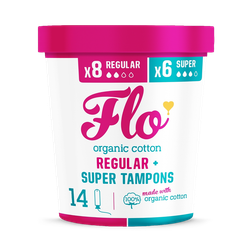
Tampons come in different absorbency levels, from light for lighter flows to super for heavier periods. It’ll always state on the box or packaging the level of absorbency, so you can choose the right one for you. Choosing the right absorbency is important but as your menstrual flow changes throughout your period, you might find you use a more absorbent tampon at the start of your period and a lighter one at the end.
From tampons with applicators to those without, shop our complete collection of tampons to find the right fit for you.
How to insert a tampon
Using a tampon is easier than you might think, so here's your step-by-step guide:
- take a breather: relaxing your muscles down there can make things smoother
- clean hands, clean start: wash your hands with soap and water – this is super important
- find your spot: there’s no right or wrong position here. Experiment with sitting on the toilet (knees apart), squatting or even standing with one leg on a step – find what feels comfortable for you
- line it up: unwrap your tampon and check the applicator (if it has one) to make sure it's all good. The vagina angles back a bit, so don't aim the tampon straight up. Instead, think of inserting it toward your tailbone
- be gentle: spread the outer folds of your skin (labia) with one hand. With your other hand, slowly insert the applicator with the rounded tip first
- push and release: once the applicator is comfortably inside (your fingers should touch your body), push the plunger to deposit the tampon. The applicator should then slide out easily, leaving the string dangling outside, which you should be able to feel. If not, gently pull the string to adjust the position
- bin it: toss the used applicator in the bin (not the toilet) and wash your hands again
When you insert your tampon correctly, you shouldn't be able to feel it, so you can go about your day without having to worry. But if you feel uncomfortable, you may not have it inserted correctly. Simply try to ease it into place with your fingers or remove the tampon and try again with a new one.
Tampons FAQs
You should change your tampon every four to six hours but it depends on you and your flow. If you have a heavier flow, you might want to change your tampon more frequently. Generally, it’s thought you can leave a tampon in for up to eight hours but always make sure to read the instructions on your product to confirm.2
Tampons, especially when worn for too long, are sometimes associated with toxic shock syndrome (TSS), an extremely rare but serious condition caused by bacteria.
Symptoms can include a high temperature, diarrhoea, feeling or being sick, a widespread rash and flu-like symptoms.3 If you feel unwell and have a combination of these symptoms, you must seek advice from a medical professional as soon as you can. Practising good menstrual hygiene, like making sure you wash your hands, choosing the right absorbency tampon for your flow and changing your tampon regularly, can help prevent TSS from happening.2
No... you should always dispose of your tampon in a bin and never flush one down the toilet. Sadly, it’s thought that 2.5 million tampons are flushed down the toilet in the UK every day, which is creating a big environmental issue.4 So, once you’ve taken your tampon out, wrap it up in some toilet paper and pop it in the bin. If there isn’t a bin available to dispose of your tampon safely, please don’t flush it and instead, wrap it in plenty of tissue paper and take it with you until you can safely dispose of it.
Yes, wearing a tampon to go swimming is a really great way to keep you leak-free and comfortable.5 The ability for tampons to catch and absorb menstrual blood before it leaves your body makes them a popular choice for doing any sport, like swimming, while on your period. Your tampon may absorb a little extra water if you wear it whilst swimming, so you may want to change it afterwards. Other period products, like a menstrual cup or period underwear, can also be great options for wearing while swimming, plus they're reusable so you can use them time and again.
Yes, you can definitely wear a tampon to bed but still try to stick to the eight hour rule. If you do wear a tampon overnight, don't forget to change it in the morning and try not to leave it in for longer than eight hours.
You absolutely can. Think of it like this: your body has different openings down there and they do different jobs. The one at the front is your urethra, which is where urine comes from. Then you have the vaginal opening, which is where you bleed from during your period and where the tampon goes. Since the tampon is in your vagina, and pee comes from a completely different opening, they don't get in each other's way. So you can just go to the bathroom like you normally would, without worrying about your tampon.
One little tip: the tampon string might get a little wet after urinating. It's no big deal but if it bothers you, you can just hold the string to the side with a finger while you're peeing. After you're done, you can just tuck the string back in place.
Yes, tampons do expire after a while and it’s thought to be after about five years. The main reason is that tampons are made of materials like cotton and rayon and even though they're packaged to be clean, they're not completely sterile. Over time, especially if they're in a warm, moist place (like your bathroom, where most of us keep them), mould and bacteria can start to grow. You might not even be able to see it but you definitely don't want to be putting that inside your body.
It’s best to check the box (some brands might put a use-by date on them), think about where they’ve been (we’re looking at you, lone tampon lurking in the bottom of your bag) and give your tampon a check before you use it. If it looks or smells funny, bin it.
The final say
Managing your period is all about finding what works for you. Tampons are the go-to choice for many people because they’re a discreet and reliable way to manage your period and go about your day with confidence. Plus, with different sizes and absorbencies to choose from, you’ll find a fit that’s just right for you and your flow.
New to your period? Don’t fret. We’ve got all the guides you need to help you understand your menstrual cycle, from decoding the different stages of your cycle to managing PMS.
Disclaimer –
This article provides informational advice and is not a substitute for medical care. Curated by experts for accuracy, we take great care to ensure the information is up-to-date and relevant. However, you should always consult your GP or healthcare professional before using supplements or alternative products, particularly if you have medical conditions or are under supervision.
1. Hochwalt AE, Abbinante-Nissen JM, Bohman LC, Hattersley AM, Hu P, Streicher-Scott JL, et al. The safety assessment of tampons: illustration of a comprehensive approach for four different products. Frontiers in Reproductive Health [Internet]. 2023 Jun 20 [cited 2025 Sep 9];5. Available from: https://pmc.ncbi.nlm.nih.gov/articles/PMC10319135/
2. Office. The Facts on Tampons—and How to Use Them Safely [Internet]. U.S. Food and Drug Administration. 2023 [cited 2024 May 8]. Available from: https://www.fda.gov/consumers/consumer-updates/facts-tampons-and-how-use-them-safely
3. NHS Choices. Toxic shock syndrome [Internet]. 2024 [cited 2024 May 8]. Available from: https://www.nhs.uk/conditions/toxic-shock-syndrome/
4. Environment Agency. Education initiative highlights the hidden plastic in period products [Internet]. GOV.UK. 2023 [cited 2025 Sep 9]. Available from: https://www.gov.uk/government/news/education-initiative-highlights-the-hidden-plastic-in-period-products
5. Can I swim if I’m wearing a tampon? – Center for Young Women’s Health [Internet]. Youngwomenshealth.org. 2010 [cited 2025 Sep 9]. Available from: https://youngwomenshealth.org/askus/tampons_and_swimming/
Related to this article