20% off €45 or 15% off €35
 Track an order
 Manage account
 Buy It Again
 Favourites
 Rewards
 Find a store


Do essential oils have benefits... or do they just smell nice? We’ll sniff out the facts and help you find your signature blend
Summary
1What are essential oils?
Essential oils are the concentrated ‘essence’ of a plant. They might come from their flowers, bark, roots or leaves...
2Could essential oils help you relax?
Some studies suggest lavender oil has the potential to ease feelings of low mood when used in aromatherapy...
3How to use essential oils safely
Always dilute essential oils with a carrier oil before using. The label on the essential oil should tell you how much to dilute it by...
You’ve stocked up those tiny essential oil bottles, most likely from Christmas hampers or long-forgotten spa days. Time to put them to good use? We’ll talk you through all things essential oils – what they’re actually for, how to use them and things to avoid.
What are essential oils?
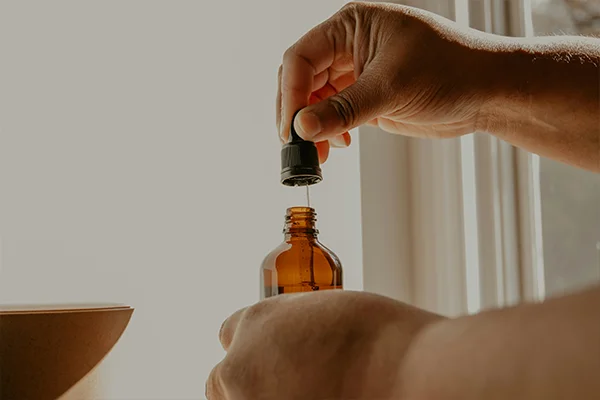
Essential oils are the concentrated ‘essence’ of a plant. They might come from their flowers, bark, roots or leaves. Since they’re extremely concentrated, they smell very strongly of the plant’s scent. It’s thought that certain essential oils might promote relaxation through aromatherapy. For example, zingy scents like lemon balm could help you feel more refreshed, while you might find lavender nostalgic and soothing.
What are carrier oils?
Before using an essential oil for aromatherapy or on your skin, you’ll need to dilute it with a carrier oil. Essential oils are far too strong to use alone and could be harmful if not diluted properly. Carrier oils are taken from a plant’s kernels, nuts or seeds and are fairly neutral in scent. This means they will make an essential oil less strong without changing the aroma too much. Examples include coconut, vegetable, olive and jojoba oil, but there are plenty more.
It’s always important to read product instructions and warnings provided on the product label or box before use. Essential and fragrance oils are highly concentrated and can cause skin or eye irritation, allergic reactions or environmental harm if not used correctly.
What are the potential benefits of essential oils?
There’s plenty of misinformation about essential oils out there. They can’t cure any conditions and more research is still needed before we can find any benefits for sure.
Could essential oils help you relax?
Some studies suggest lavender oil has the potential to ease feelings of low mood when used in aromatherapy – that’s one reason why you’ll find it in self-care products and home scents.1,2
Some NHS services acknowledge the use of certain essential oils to help relaxation.3
There’s still more to learn about any potential benefits, but why not try adding lavender oil to your diffuser or trying some pre-diluted oil in your bath?
Could essential oils help you sleep?
Again, no essential oil will have you snoozing in seconds, though lavender might play a part in a calmer night routine. A meta-analysis involving eleven studies and 628 participants concluded it may benefit sleep quality in adults, but more high-quality studies are needed.4 However, these studies varied in quality, so this shouldn’t be taken as hard evidence.
Another study on 73 postmenopausal women found that neroli oil improved sleep quality (measured by mental quality, sleep latency, duration, adequacy, sleep disturbances, use of sleeping pills and daily dysfunction) compared to a control almond oil.5 Curious? Try a lavender pillow spray or a night cream to enjoy this soothing scent as you head to bed.
How to use essential oils safely
As mentioned, you should always dilute essential oils with a carrier oil before using. The label on the essential oil should tell you how much to dilute it by – or just pick a pre-diluted oil to be sure. You should never rub undiluted essential oils onto your body or use diluted oils in places like the eyes or mouth. Take a patch test 48 hours before using any diluted essential oils on your body. Follow dilution and safety instructions on the label.
The final say
Ready to follow your nose into something new? It’s time to take a moment, wind down and find your signature scent for each mood. Or keep learning and discover our most popular essential oils or the ultimate guide to massage oils.
Disclaimer - This article provides informational advice and is not a substitute for medical care. Working with experts for accuracy, we take great care to ensure the information is up-to-date and relevant. However, you should always consult your GP or healthcare professional before using supplements or alternative products, particularly if you have medical conditions or are under supervision.
1. Kasper S et al. Lavender oil preparation Silexan is effective in generalized anxiety disorder--a randomized, double-blind comparison to placebo and paroxetine. Int J Neuropsychopharmacol [Internet]. 2014 Jun [cited 2025 Nov 10]; 17(6): 859-69. Available from: https://pubmed.ncbi.nlm.nih.gov/24456909/
2. Kang H, Nam ES, Lee Y, Kim M. How Strong is the Evidence for the Anxiolytic Efficacy of Lavender?: Systematic Review and Meta-analysis of Randomized Controlled Trials. Asian Nurs Res (Korean Soc Nurs Sci) [Internet]. 2019 Nov 16 [cited 2025 Nov 10]; 13(5): 295-305. Available from: https://pubmed.ncbi.nlm.nih.gov/31743795/
3. NHS – Gloucestershire Hospitals. The use of essential oils and massage to help with your labour [Internet]. NHS [cited 2025 Nov 10]. Available from: https://www.gloshospitals.nhs.uk/your-visit/patient-information-leaflets/the-use-of-essential-oils-and-massage-to-help-with-your-labour/
4. Shen H, Zhang L, Zhu W. The Sleep-Enhancing Effect of Lavender Essential Oil in Adults: A Systematic Review and Meta-Analysis. Holist Nurs Pract [Internet]. 2025 Jul 14 [cited 2025 Nov 10]. Available from: https://pubmed.ncbi.nlm.nih.gov/40600743/
5. Abbaspoor Z et al. The Effect of Citrus Aurantium Aroma on the Sleep Quality in Postmenopausal Women: A Randomized Controlled Trial. Int J Community Based Nurs Midwifery [Internet]. 2022 Apr [cited 2025 Nov 10]; 10(2): 86-95. Available from: https://pubmed.ncbi.nlm.nih.gov/35372632/ https://pubmed.ncbi.nlm.nih.gov/31743795/
Related to this article