20% off €45 or 15% off €35
 Track an order
 Manage account
 Buy It Again
 Favourites
 Rewards
 Find a store
The best moisturisers with SPF for everyday skin protection

Written byKatie Wright

Reviewed byHeeral Tomlinson
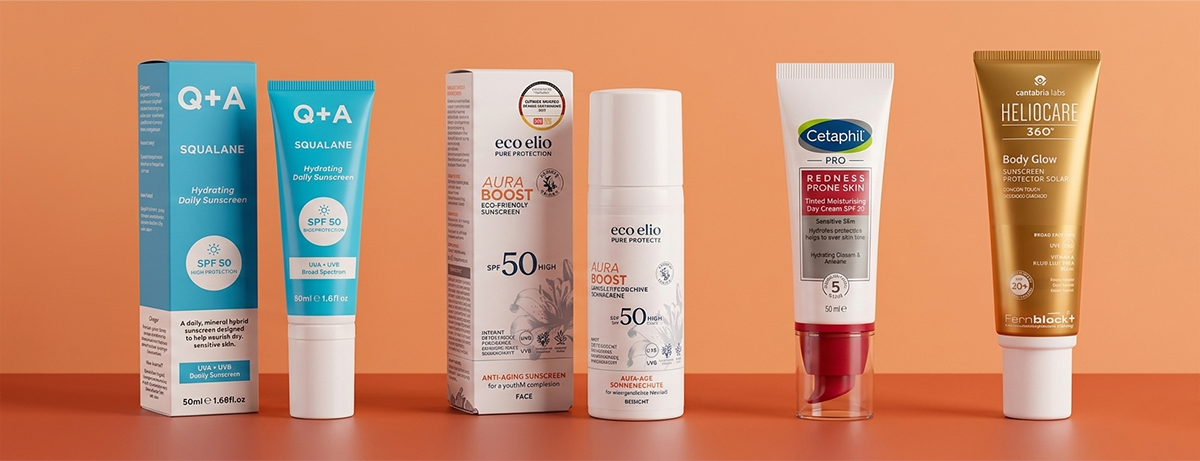
Are SPF moisturisers enough on their own? We get the lowdown, plus how to use them and our top picks
Moisturiser is a key step in any daily skincare routine – and in the morning, it’s important to make sure you’ve got sun protection in the mix too. Daily SPF is one of the most effective ways to care for your skin long term.1,3 But we know that some formulas can feel heavy or tricky under makeup. That’s where SPF moisturisers come in. Combining hydration with sun protection, they’re designed to slot easily into your routine. But do they offer enough protection on their own – and how should you actually use them? We spoke to consultant dermatologist and skin health educator Dr Zainab Laftah to find out.
What is an SPF moisturiser?
“Moisturisers with SPF are a hybrid formulation,” Dr Laftah says. “They combine a moisturising ingredient which hydrates the skin with a UV filter for convenience.”
Unlike traditional sunscreens, which are primarily designed for sun protection, SPF moisturisers often include additional skincare ingredients to support your skin day to day. They’re a popular choice if you’re looking to simplify your routine – especially if you want a moisturiser with SPF that layers well under makeup or fits easily into busy mornings.
Do SPF moisturisers offer enough protection?
A moisturiser with SPF can provide effective protection – but only if you apply enough. “You have to apply quite a large amount, otherwise you don't get sufficient amount of protection,” Dr Laftah explains. “Studies often demonstrate that most people apply less than what's expected on the bottle with sunscreen and even less when it comes to moisturisers.”2 To get the full benefit, she recommends using around two finger lengths of product (roughly half a teaspoon) for your face, neck and ears.
SPF moisturisers are great for everyday use – particularly on lower UV days or when you’re mostly indoors. As Dr Laftah explains, “If you're indoors most of the time but sitting next to a window, or you just have a short commute, an SPF30 moisturiser should be absolutely fine.” However, for longer periods outdoors, holidays (including festivals) or when the UV index is high, a dedicated sunscreen (SPF 30-50) is still recommended.1
Dr Laftah also notes that while UVB exposure is lower in winter, UVA rays can still penetrate through clouds and contribute to long-term skin damage. “We know that UVA contributes to fine lines and wrinkles forming. If you want to reduce that progression, wearing sunscreen is really important.” She adds that for those with delicate skin, pigmentation concerns or a family history of skin cancer, using a broad-spectrum sunscreen year-round may be the better option.
Finally, if your skin needs extra hydration, it can be worth separating the two steps. “If you feel like your skin requires extra hydration, then I would opt to separate the two. Have a really good moisturiser, then follow with sunscreen.”
SPF moisturiser vs sunscreen: do you need both?
It’s not always about choosing one or the other.
- SPF moisturiser = great for every day, low-effort protection
- Sunscreen (SPF 30-50) = offers higher protection and is better for strong sun or high UV levels. Regular reapplication is still needed
It's always recommended to reapply every two hours and after swimming or sweating, regardless of type of sunscreen or SPF moisturiser. As Dr Laftah explains, "If you’re indoors most of the time or just heading out briefly, an SPF moisturiser is often enough. But if you’re spending longer in direct sunlight, it’s worth switching to a dedicated sunscreen."
Where does SPF moisturiser fit in your routine?
SPF moisturiser is typically used in the morning as the last step in your skincare routine – after cleansing or serums (if that’s your thing). “If you're going to use a moisturiser with SPF, then you're basically combining your moisturiser and your sunscreen step together,” says Dr Laftah. If you’re layering with sunscreen, apply your SPF moisturiser first, followed by sunscreen. If you’re wearing makeup, let your moisturiser absorb fully before applying foundation or other products.
How to get the most out of your SPF moisturiser
To make sure your SPF moisturiser works as intended:
- apply generously – most people under-apply
- use it daily, even when it’s cloudy
- reapply if needed, especially if you’re outdoors for long periods
- layer with sunscreen when UV levels are higher
- reapply every two hours and after sweating, swimming or towel drying
Consistency is key – a product you use every day is often more effective than one you forget.
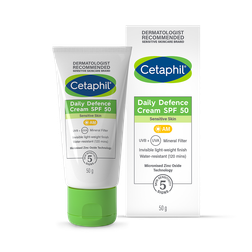
If you like your sunscreen high-powered but fuss-free, Cetaphil Daily Defence Cream SPF50+ Mineral Sunscreen ticks all the boxes. With broad-spectrum protection powered by zinc oxide, this silky mineral formula also contains hydrating ingredients to keep skin feeling smooth and supple throughout the day. Think of it as your everyday essential. It’s a gentle, hard-working layer that helps to shield while letting your natural glow shine through. Pop it on and you’re ready for whatever’s on your schedule.
Best for: anyone who loves mineral-based protection with a soft-touch finish.
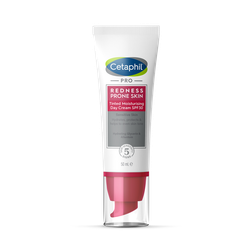
For days when you want a little more polish, Cetaphil Pro Redness Prone Skin Tinted Moisturising Day Cream SPF30 is the one to reach for. The lightweight tint helps even out your complexion while a blend of hydrating ingredients and broad-spectrum filters work in the background to help defend against the sun. It’s the perfect shortcut to that 'your skin but smoother' look all in a single step.
Best for: red-prone skin that benefits from a little extra love with daily SPF.
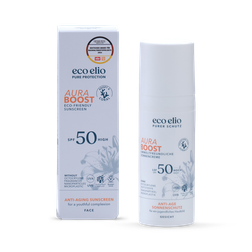
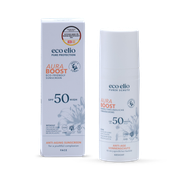
Looking for high protection that feels good on your skin too? Eco elio's Aura Boost SPF50 combines broad-spectrum sun protection with skin-loving ingredients like niacinamide and resveratrol to help support your skin barrier and maintain a healthy-looking glow. The ultra-light formula sinks in easily, making it ideal for everyday wear on your face and neck – no heaviness, no fuss. Plus, it’s free from fragrances, so it’s a great option if you prefer a more mindful approach to your skincare. Even better, it’s designed with sustainability in mind.
Best for: those who want daily SPF that feels light on skin and easy to wear.
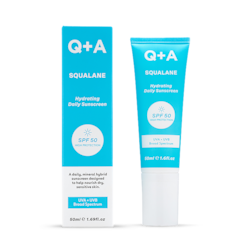
If you want high protection without compromising on comfort, Q+A’s SPF50 sunscreen delivers. Lightweight and fast-absorbing, it helps protect against UVA and UVB rays while keeping skin feeling soft, hydrated and balanced throughout the day. Powered by plant-based squalane, it works to lock in moisture and support a healthy-looking glow, while added antioxidants help care for your skin alongside sun protection. The non-greasy finish means it layers easily under makeup, making it an easy everyday go-to.
Best for: skin that needs hydration and protection without feeling heavy.
SPF moisturiser FAQs
It depends on your day. SPF moisturisers can be enough for short periods indoors or when UV levels are low, helping you build daily protection into your routine. However, if you’re spending longer outdoors or in stronger sunlight, the NHS recommends using a sunscreen with at least SPF30 for adequate protection.1 This is because people often don’t apply enough product to achieve the full SPF on the label.
If you’re relying on an SPF moisturiser for sun protection, it should be reapplied regularly when outdoors. The NHS advises reapplying sunscreen at least every two hours, and more often after sweating, swimming or towel drying, as this can reduce its effectiveness.1 For mostly indoor days, one morning application is often more realistic, but topping up can still help if you’re heading outside later.
SPF moisturisers make it easier to stay consistent with sun protection by combining hydration and SPF in one simple step. Instead of adding another product, they slot seamlessly into your morning routine, helping you protect your skin every day – even when you’re short on time. Over time, this consistency is key when it comes to supporting long-term skin health.
SPF stands for ‘Sun Protection Factor’ and is a measure of how well a sunscreen protects your skin from UVB rays, the type that cause sunburn.4 The higher the SPF, the greater the level of protection against sunburn compared to unprotected skin. It’s important to know that SPF doesn’t tell you how long you can stay in the sun – it reflects the level of protection, not time.4 To stay protected, applying enough sunscreen and reapplying regularly is just as important as the SPF you choose.
The final say
Finding an SPF that feels comfortable on your skin can make all the difference when it comes to building a daily habit. “The simplicity of having one product that does two things is very convenient, and most people can get away with using a moisturiser with sunscreen in the winter,” Dr Laftah says. But if in doubt, opt for a dedicated sunscreen – “there are some days that the sun is out in the winter and you can get caught out.”
Want to learn more about sun protection? Read our ultimate guide to SPF or our guide to sunbathing safely.
Disclaimer – This article provides informational advice and is not a substitute for medical care. Working with experts for accuracy, we take great care to ensure the information is up-to-date and relevant. However, you should always consult your GP or healthcare professional before using supplements or alternative products, particularly if you have medical conditions or are under supervision.
1. NHS. Sunscreen and sun safety [Internet]. nhs.uk. 2022. Available from: https://www.nhs.uk/live-well/seasonal-health/sunscreen-and-sun-safety/
2. Lourenco EAJ, Shaw L, Pratt H, Duffy GL, Czanner G, Zheng Y, et al. Application of SPF moisturisers is inferior to sunscreens in coverage of facial and eyelid regions. PLoS ONE [Internet]. 2019 Apr 3;14(4). Available from: https://www.ncbi.nlm.nih.gov/pmc/articles/PMC6447356/
3. ACS Omega. Sunscreen efficacy and photoprotection research. Available from: https://pubs.acs.org/doi/10.1021/acsomega.2c04424
4. Center for Drug Evaluation and Research. Sun Protection Factor (SPF). FDA [Internet]. 2018 Nov 3; Available from: https://www.fda.gov/about-fda/center-drug-evaluation-and-research-cder/sun-protection-factor-spf
Related to this article