Track an order
 Manage account
 Buy It Again
 Favourites
 Rewards
 Find a store


Summary
1Where do we get vitamin D from?
Spending time outdoors with your skin exposed to direct sunlight is one way to get vitamin D, alongside eating vitamin D-rich foods or take a vitamin.
2Can you have too much vitamin D?
Yes, taking too much vitamin D through supplements can lead to vitamin D toxicity, although you can’t get too much from sunlight.
3Recommended daily amounts of vitamin D
It’s recommended that adults and children over the age of one need 10 micrograms (μg) of vitamin D per day.
Vitamin D, commonly referred to as the ‘sunshine vitamin’, is an essential micronutrient that your body needs for healthy bones and muscle function. It also plays an important role in supporting your immune system, helping your body fight off bacteria and viruses.1 But when it comes to vitamin D, more isn’t always better.
You can’t get too much vitamin D from sunlight, and it’s very unlikely from food alone – but taking too much through supplements can lead to vitamin D toxicity. So, how much is too much and what signs should you look out for? Here's what you need to know.
Where do we get vitamin D from?
Most of our vitamin D comes courtesy of the sun. Spending time outdoors with your skin exposed to direct sunlight helps your body make the vitamin D it needs.2 That doesn’t mean skipping the sun protection, though – it’s still important to protect your skin from UV rays with an SPF of 30 or above.3
The catch? Here in the UK, sunshine isn’t always something we can rely on. Getting enough vitamin D can be tricky for some people even in the summer – and becomes particularly difficult during the darker winter months. That’s why the NHS recommends taking a daily vitamin D supplement between October and late March/early April.4
For some of us, a seasonal top-up might not be enough. You may need to take a supplement every day, not just during winter, if you’re at higher risk of vitamin D deficiency.2-5 This includes people who:
are housebound
have limited access to an outside space
wear clothes that cover their arms and legs
are pregnant or breastfeeding
have dark skin
As well as getting your vitamin D from sunlight and supplements, you can get around 10% of your daily requirement from vitamin D-rich foods.6,7 Foods that contain vitamin D include:2,4,8
oily, fatty fish, such as salmon, sardines, trout, herring and kippers
red meat, especially beef liver
eggs – in particular, the yolks
mushrooms
fortified products, including certain cereals, plant-based milks and margarines
Can you have too much vitamin D?
What’s the recommended daily dose for vitamin D?
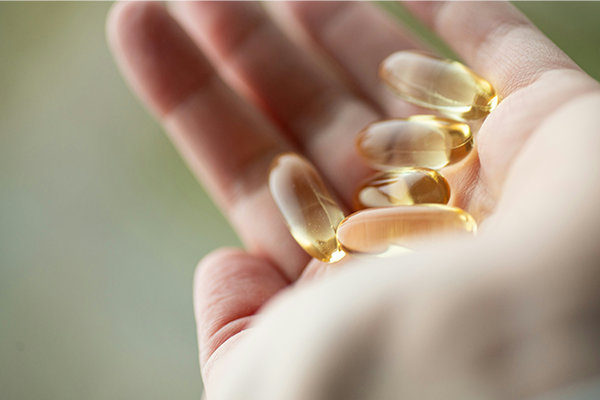
- 1μg = 40 IU
- 10μg = 400 IU
- 100μg = 4,000 IU 8
What are the symptoms of too much vitamin D?
- vomiting
- nausea
- stomach pain
- feeling weak
- fatigue
- constipation
- confusion
- frequent urination
- excessive thirst
- mood swings