20% off €45 or 15% off €35
 Track an order
 Manage account
 Buy It Again
 Favourites
 Rewards
 Find a store
Can you combine adaptogens? And why would you want to?

Written byEllie Hughes

Reviewed byMillicent Chapman
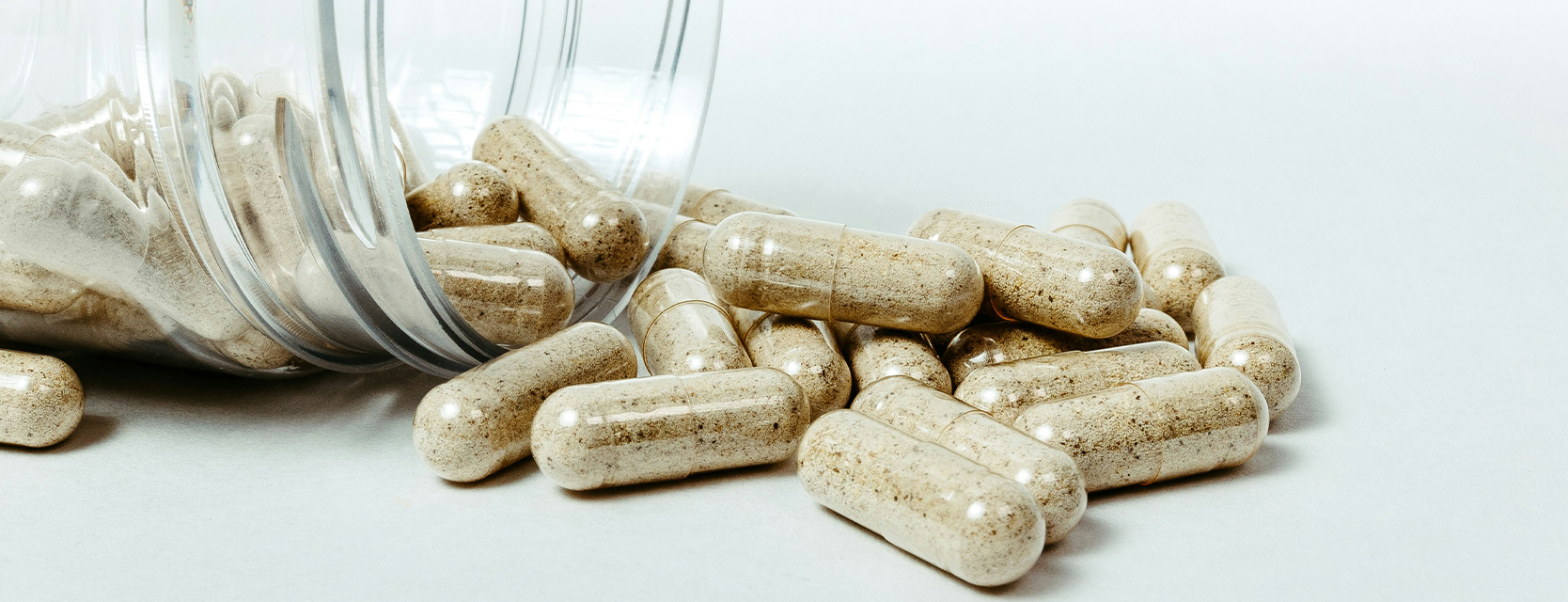
Adaptogens are known for helping with stress, but can combining them add extra pep to our personal goals too? We speak to an expert to find out
Summary
1Can you take adaptogens together?
Most adaptogens can be taken together, but it’s best to start slowly and introduce one ingredient at a time.
2Does timing matter when taking adaptogens?
Some adaptogens may suit mornings for focus, while others are better in the evening to support relaxation.
3What’s a good adaptogen starter routine?
Start with one adaptogen matched to your goal, then gradually build a simple routine that works for you.
Lions mane, ashwagandha, rhodiola and ginseng have been lighting up our social feeds for a while now, but the latest trend in adaptogens – the group of natural substances that can help our bodies to deal with stress – is how you combine them to support specific goals.
“It’s increasingly popular to gain a mix of benefits from different adaptogens to support overall health and wellbeing,” says Millicent Chapman, registered associate nutritionist at Holland & Barrett.
Given that a lot of us are reporting feeling more stressed, that sounds pretty good, right? So does the order you take adaptogens in matter and are some combinations better suited to certain goals than others? From timing your supplements to pairing ingredients strategically, here’s what to know about stacking adaptogens. Let’s get into how this could work for you.
What does each adaptogen do?
To start with, let’s take a quick look at some key adaptogens and what they do.
Ashwagandha
Ashwagandha is a small evergreen shrub found in India, the Middle East and Africa. Research suggests that ashwagandha extracts may lower stress, anxiety and cortisol levels. Smaller studies also suggest it may improve sleep, particularly with people who have insomnia.1
Rhodiola
Rhodiola is a flowering plant that grows in high-altitude regions in Europe and Asia. The active compounds are found in the root. Studies have shown that rhodiola can support cognitive functions and mental performance, including various symptoms of stress, fatigue and burnout. 2-4
Lion’s mane mushrooms
Lion’s mane mushrooms are large, white, shaggy mushrooms that resemble a lion’s mane. They grow on the trunks of dead hardwood trees across North America, Asia and Europe. Known as an adaptogenic mushroom, lion’s mane has traditionally been used to support digestive health and has more recently been studied for its potential effects on cognition.5
Korean Ginseng
Korean ginseng is the common name for Panax ginseng, a plant traditionally used in East Asian herbal practices. The root can be prepared as either white ginseng (simply dried) or red ginseng (steamed before drying). Although more large-scale clinical research is needed, the European Medicines Agency recognises Korean ginseng as a traditional herbal medicinal product for temporary symptoms of fatigue and weakness.6
Can you take adaptogens together?
The good news is that yes, it should be OK to take adaptogens together in most cases. “They're generally quite gentle and most of us don’t experience unwanted side effects with them”, says Millicent. “But it does depend on the adaptogens in question and your specific goals and personal needs,” she adds. More on that later.
Plus, adaptogens can work differently on different people. “So it’s a case of going slowly and seeing what works for you if you're combining adaptogens.”
Does order matter when combining adaptogens?
In short, no – if you’re taking more than two adaptogens together, it doesn’t matter which one you take first. But you’ll want to take energising adaptogens in the morning or early afternoon, and calming adaptogens in the evening or before bed. “Adaptogens can have different effects depending on what time of the day you take them,” adds Millicent.
And consistency is key – take them at the same time each day and give them time for their effects to build up.
What is a good adaptogens starter routine when combining them?
A good starter routine will depend on what you’re taking them for, says Millicent. This is one where the research is still very much still evolving. “There isn’t clear scientific evidence to recommend when you should take adaptogens or what dose works best,” Millicent explains.
“With any new supplements, we would recommend starting with one product before gradually adding more one by one, so you can see how that particular product benefits and impacts you,” Millicent adds.
Here are a few examples of possible adaptogen starter routines.
Morning energy combination: rhodiola and Korean ginseng
If you’re waking up feeling sluggish, combining rhodiola and Korean (Panax) ginseng could be worth considering for a morning energy boost.
“In small doses, for some people this can be a useful combination, promoting physical and mental balance,” says Millicent. “It may also help support mental performance and energy levels.”
As with any herbal supplement combination, it’s important to follow the recommended dosage guidelines and speak to a healthcare professional if you’re unsure whether it’s suitable for you.
Exam season focus combination: Korean ginseng and caffeine
If you’re looking for focus and alertness during long study sessions, combining Korean ginseng with caffeine could be worth considering.
“Korean ginseng has traditionally been used to support mental and physical performance, while caffeine is well known for promoting alertness and concentration,” says Millicent. “For some people, combining the two may help support focus and stamina during demanding periods such as exam season.”

Some research also suggests that combining Panax ginseng with caffeine may have complementary effects on performance and endurance, although more studies are needed to better understand how they work together cognitively. As with any supplement, it’s important to follow dosage guidance and consider your individual tolerance to caffeine.7,8
Stressful work period combination: ashwagandha and magnesium
“Ashwagandha and magnesium could be a useful combination to try during a stressful period in your life, perhaps due to work,” says Millicent.
“That’s because ashwagandha is a traditional adaptogenic herb, which can support the body through physiological and psychological stress, whereas magnesium is an essential micronutrient which can support muscle function and energy balance,” she adds.
So it makes sense that they could work together. “Through supporting muscle function, magnesium can promote muscular relaxation, which can support the body in feeling more physically relaxed which can then also promote mental relaxation,” Millicent says.
If your key aim is relaxation, then the best time to take this combination is in the evening.
Preparing for travel: chaga and ashwagandha
Ashwagandha and chaga could help you deal with the less fun parts of travel – like the stress of being in a new place, or getting sick when you’re away.
“Ashwagandha could be beneficial for some people to help manage stress, reduce anxiety, and improve sleep quality when coping with flight stress, time zone changes and jet lag,” says Millicent. "Meanwhile, reishi is known for its supportive properties. Reishi is an adaptogenic fungus that contains beta-glucans and other bioactive molecules. It has emerging evidence into its use to support a healthy immune system."
When not to combine adaptogens
“Typically, we wouldn’t recommend combining adaptogens that could have a similar focus or risk of side effects,” says Millicent. “For example, with adaptogens that might have sedative effects, we wouldn’t recommend mixing these with other adaptogens that could also have sedative effects. The combination could increase the risk for adverse effects.”
FAQs about combining adaptogens
While adaptogens are generally considered safe and typically well tolerated when used appropriately, they have some potential side effects. These can include headaches and digestive problems.
There is no standard medical guidance to say that you need to take a break from adaptogens –
so called ‘cycling’. It’s up to you.
“Before using any new supplements, we would always recommend seeking some advice from your healthcare provider, to ensure that it is the most safe and suitable option on a personal level considering any medications or health conditions,” says Millicent. People on blood thinners, hormone therapies, pregnant and breastfeeding women should always consult a doctor first.
The final say
While we wait for the research to catch up, combining adaptogens should be safe – and straightforward – for most people. When you’re experimenting, just remember to go gently and introduce them one at a time so you can see what effect it’s having. And if you’re curious about where to start, our guides to ashwagandha supplements and mushroom coffee explore some of the most popular ways people are adding adaptogens into their routines.
Disclaimer – This article provides informational advice and is not a substitute for medical care. Working with experts for accuracy, we take great care to ensure the information is up-to-date and relevant. However, you should always consult your GP or healthcare professional before using supplements or alternative products, particularly if you have medical conditions or are under supervision.
1. National Institutes of Health Office of Dietary Supplements. Ashwagandha: is it helpful for stress, anxiety, or sleep? – Health Professional Fact Sheet [Internet]. Bethesda (MD): NIH Office of Dietary Supplements; 2024 [cited 2026 May 14]. Available from: https://ods.od.nih.gov/factsheets/Ashwagandha-HealthProfessional/ (Office of Dietary Supplements)
2. Panossian A, Wikman G, Sarris J. The effectiveness of Rhodiola rosea L. preparations in alleviating various aspects of life-stress symptoms and stress-induced conditions. Molecules. 2022;27(12):3902. Available from: https://pmc.ncbi.nlm.nih.gov/articles/PMC9228580/
3. Darbinyan V, Aslanyan G, Amroyan E, Gabrielyan E, Malmström C, Panossian A. Clinical trial of Rhodiola rosea L. extract SHR-5 in the treatment of mild to moderate depression. Nord J Psychiatry. 2007;61(5):343-8.
4. Ishaque S, Shamseer L, Bukutu C, Vohra S. Rhodiola rosea for physical and mental fatigue: a systematic review. BMC Complement Altern Med. 2012;12:70. Available from: https://pmc.ncbi.nlm.nih.gov/articles/PMC3541197/
5. Lopresti AL, Drummond PD. Efficacy of rhodiola rosea extracts in reducing stress and improving mood: a systematic review. Herbs. 2025;4(2):—. Available from: https://pmc.ncbi.nlm.nih.gov/articles/PMC12030463/
6. European Medicines Agency. Ginseng radix [Internet]. Amsterdam: European Medicines Agency; [cited 2026 May 14]. Available from: https://www.ema.europa.eu/en/medicines/herbal/ginseng-radix
7. de Oliveira MR. The effects of Panax ginseng on age-related mitochondrial dysfunction: a mini-review. Clin Phytosci. 2020;6:83. Available from: https://pubmed.ncbi.nlm.nih.gov/32610481/
8. Reay JL, Scholey AB, Kennedy DO. Panax ginseng in human health: a systematic review of cognitive and mood effects. J Ginseng Res. 2015;39(4):—. Available from: https://pubmed.ncbi.nlm.nih.gov/25665208/
Related to this article