20% off €45 or 15% off €35
 Track an order
 Manage account
 Buy It Again
 Favourites
 Rewards
 Find a store
What’s shatavari? A complete guide to this traditional herb

Written byH&B editorial team

Reviewed byMarion Mackonochie, BSc (Hons), MSc, MCPP
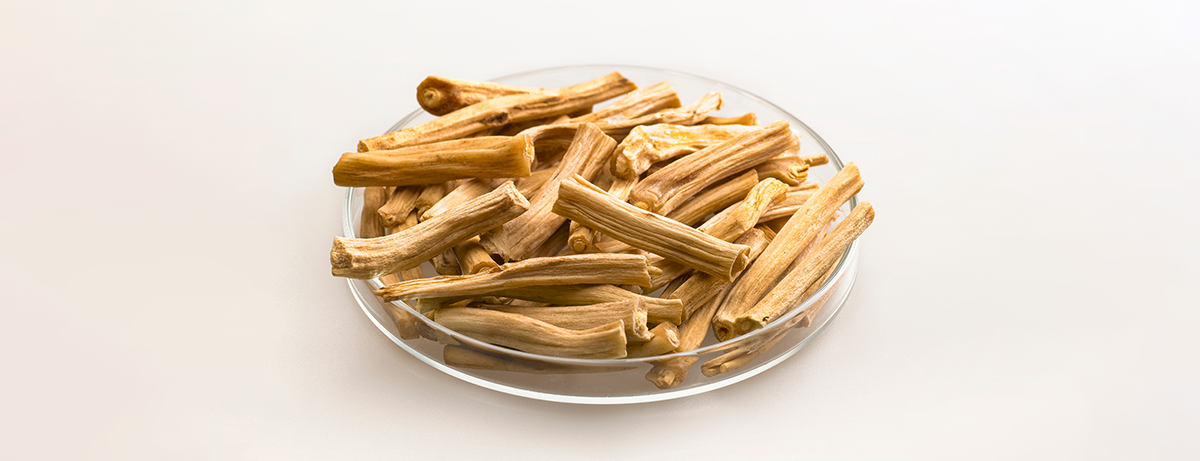
‘The plant with a hundred roots’ has been used for centuries. But does modern science match up? We dig deeper into shatavari with help from an expert
Summary
1What’s shatavari?
Shatavari is a herb that’s been used for hundreds of years in Indian Ayurvedic medicine and is a member of the asparagus family...
2What are shatavari’s potential benefits?
There’s been a flurry of clinical research in the last few years to suggest that this root may improve muscle strength and endurance...
3How much shatavari’s safe to take?
There’s no official safe or recommended dose. Always take your doctor’s advice and follow the instructions on the packaging...
If we say ‘asparagus’, chances are you think of the veg that goes with your pie and mash. But did you know there’s a two-metre tall variety that’s used in holistic health? Enter shatavari, a herb used in ancient Indian medicine.1 You might have spotted it on social media claiming benefits from women’s health to mood support – but what’s actually backed by research? With insight from H&B Science Consultant Marion Mackonochie, we’ll uncover more about this holistic herb and its potential...
What’s shatavari?
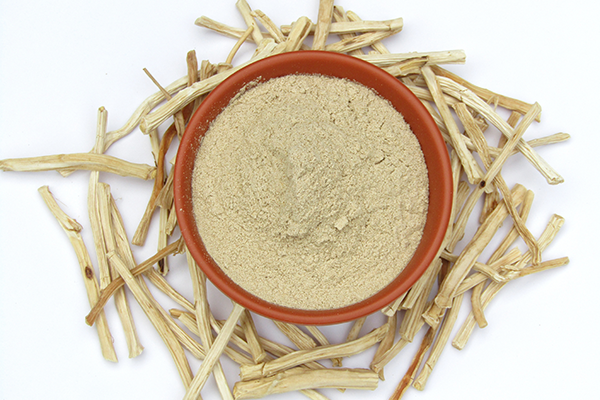
Shatavari, though it might not look like it, is a member of the asparagus family. “Shatavari is a herb used traditionally in Ayurvedic medicine to help support women’s health generally but promising evidence is emerging in some specific areas,” explains Marion. It’s the thick root that’s used for its potential health benefits: traditionally, shatavari root has been used as a rasayana (rejuvenative) herb by those looking to promote general wellbeing and restore balance to the body and mind.1
In modern research, scientists are mainly looking into its potential for topics like menopausal health, stress support and muscle strength (we’ll go into these below). You can find it in supplement form, usually in capsules or powder. Oh, and fun fact: its name translates to ‘plant with a hundred roots’ or ‘she who has a hundred husbands’.
Shatavari: evidence vs tradition
Shatavari’s got a long history of use in Ayurveda, but just because something’s been used for a long time, it doesn’t automatically make it safe and effective – or the opposite. Before we get onto the emerging science behind shatavari, it’s important to note that there’s not enough strong clinical evidence to confirm many of its traditionally spoken-about benefits. Modern studies are still early – especially human ones – so it’s worth bearing this in mind if you're thinking about taking shatavari.
What are shatavari’s potential benefits?
As we’ve mentioned, strong clinical, human evidence is still in the early stages. But what have scientists found so far? “There’s been a flurry of clinical research in the last few years to suggest that this root may improve muscle strength and endurance in postmenopausal women and be beneficial during perimenopause,” Marion says. So, let’s get to the root of the matter...
1. Shatavari and women’s health
Some people turn to natural remedies when they first notice menopause symptoms. Shatavari possibly contributes to a reduction in perimenopause and menopause symptoms, when between 50-500mg is taken for eight to 24 weeks in perimenopausal women.2,3
One study on 123 postmenopausal women found an improvement in vascular dysfunction (responsible for hot flashes and night sweats) and estrogen deficiency-related symptoms (which may include signs like vaginal dryness or mood changes) when taking shatavari for 24 weeks versus a placebo.3 Another trial, involving 70 pre- and postmenopausal women, reported improvements in insomnia and vaginal dryness when taking 500mg shatavari per day for eight weeks.2 So, some early evidence suggests it may help with certain menopausal symptoms, but more (and better) human studies are still needed.
2. Shatavari and muscle strength
Protein powders, creatine, pre-workout... it seems like gym lovers are spoiled for choice when it comes to new, sporty ingredients. But could shatavari make the list? Well, we’re not yet sure. There’s some evidence to suggest that shatavari might contribute to muscle strength and endurance in older women when taking 1000mg (1g) for six to eight weeks.
Shatavari improved hand grip strength, but not knee strength, in one study of 20 postmenopausal women.4 Another study found a decrease in certain proteins related to muscle contraction in older women (but not younger women), suggesting the potential for muscle strength benefits in older women.5 However, this study has several important limitations and more research is needed to say for sure whether shatavari impacts muscle strength. Research on men was less promising – one trial found 500mg daily shatavari was unlikely to contribute to muscle strength or endurance.6
3. Shatavari and stress management
Another study, also on postmenopausal women, showed a reduction in self-reported stress against a placebo four weeks and eight weeks after taking 300mg shatavari every day.7 Traditionally, it’s been used a bit like an adaptogen – a plant that reduces the body’s response to stress. Shatavari itself isn’t an adaptogen, but with further research on humans we’ll be closer to understanding whether it can affect our mood in a similar way.
Shatavari FAQs
There’s no official safe or recommended dose. Always take your doctor’s advice and follow the instructions on the packaging if you’re taking shatavari.
Anyone considering shatavari should speak to their GP before taking it. But you shouldn’t take it at all if:
- you're pregnant, breastfeeding or trying to conceive
- you have a condition related to blood sugar
- you’re allergic to asparagus (as shatavari is a member of the asparagus family)
- you have health conditions related to your kidneys or heart
- you take certain medications, such as diuretics
There’s no set answer – and it depends on what you expect the effects to be. The studies we talked about lasted anywhere between six and 24 weeks. Any potential benefits are likely to be gradual, so it’s best to listen to your body if you’re taking shatavari and check up regularly with your GP, especially if you have any other health conditions.
As we’ve talked about, there’s no certain evidence to say that shatavari’s safe to take. But the supplements you can find in shops are usually designed to be taken every day rather than as a one-off.
The final say
There’s far more to learn about asparagus’ Ayurvedic cousin, but hopefully you feel a bit more in the know. With its potential use in supporting menopause and stress symptoms, it's an exciting ingredient to keep an eye on.
Want more advice on menopausal health? Learn when to consider HRT or discover our menopause must-have products...
Disclaimer – This article provides informational advice and is not a substitute for medical care. Working with experts for accuracy, we take great care to ensure the information is up-to-date and relevant. However, you should always consult your GP or healthcare professional before using supplements or alternative products, particularly if you have medical conditions or are under supervision.
1. Salve R, Daud R, Wadhave A, Pathare S. "Shatavari in Traditional and Modern Medicine: A Review of Its Applications". International Journal of Pharmaceutical Research and Applications [Internet]. 2024 July-Aug [cited 2026 Jan 6]; 9: 1749-54. Available from: https://ijprajournal.com/issue_dcp/Shatavari%20in%20Traditional%20and%20Modern%20Medicine%20A%20Review%20of%20Its%20Applications.pdf
2. Gudise VS, Dasari MP, Kuricheti SSK. Efficacy and Safety of Shatavari Root Extract for the Management of Menopausal Symptoms: A Double-Blind, Multicenter, Randomized Controlled Trial. Cureus [Internet]. 2024 Apr 8 [cited 2026 Jan 6]; 16(4): e57879. Available from: https://pmc.ncbi.nlm.nih.gov/articles/PMC11079574/
3. Pingali U, Nutalapati C, Wang Y. Ashwagandha and Shatavari Extracts Dose-Dependently Reduce Menopause Symptoms, Vascular Dysfunction, and Bone Resorption in Postmenopausal Women: A Randomized, Double-Blind, Placebo-Controlled Study. Journal of Menopausal Medicine [Internet]. 2025 [cited 2026 Jan 6]; 31: 21-34. Available from: https://e-jmm.org/pdf/10.6118/jmm.24025
4. O’Leary MF et al. Shatavari Supplementation in Postmenopausal Women Improves Handgrip Strength and Increases Vastus lateralis Myosin Regulatory Light Chain Phosphorylation but Does Not Alter Markers of Bone Turnover. Nutrients [Internet]; 2021 Nov 27 [cited 2026 Jan 6]; 4282. Available from: https://pmc.ncbi.nlm.nih.gov/articles/PMC8708006/
5. Greed E et al. Shatavari supplementation during eight weeks of resistance training increases training load, enhances skeletal muscle contractility and alters the skeletal muscle proteome in older women. Front Nutr [Internet]. 2025 Jan 6 [cited 2026 Jan 6]; 11: 1498674. Available from: https://pmc.ncbi.nlm.nih.gov/articles/PMC11743497/
6. Anders JPV et al. The Effects of Asparagus Racemosus Supplementation Plus 8 Weeks of Resistance Training on Muscular Strength and Endurance. J Funct Morphol Kinesiol [Internet]. 2020 Jan 17 [cited 2026 Jan 6]; 5(1): 4. Available from: https://pmc.ncbi.nlm.nih.gov/articles/PMC7739404/
7. Mahajan S, Avad P, Langade J. Efficacy and Safety of Shatavari (Asparagus racemosus) Root Extract for Perimenopause: Randomized, Double-Blind, Placebo-Controlled Study. 2025 Nov 3 [cited 2026 Jan 6]; 17: 4057-73. Available from: https://pmc.ncbi.nlm.nih.gov/articles/PMC12593836/