Track an order
 Manage account
 Buy It Again
 Favourites
 Rewards
 Find a store

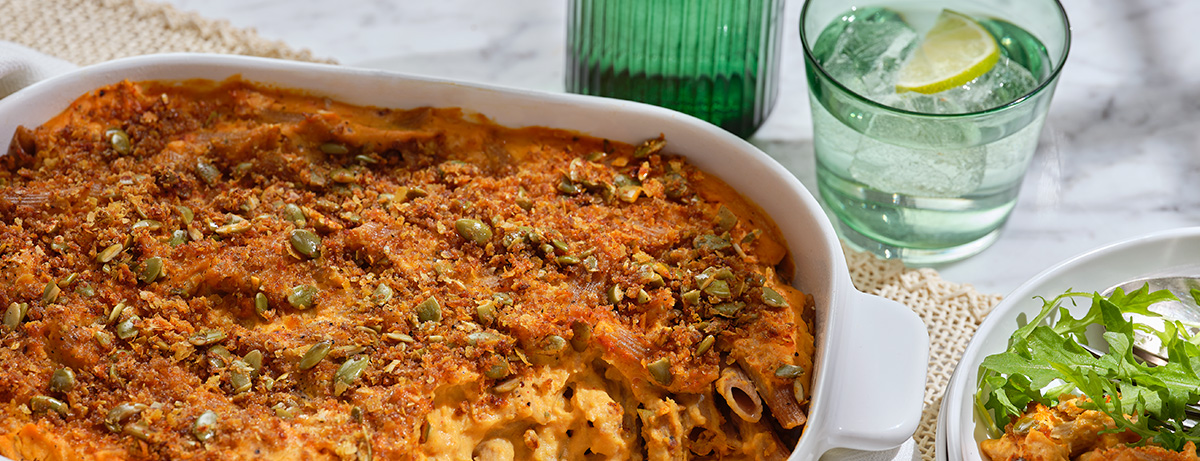
Our plant-based butternut squash macaroni cheese puts a wholesome twist on a comfort-food favourite, combining wholegrain spelt pasta with a velvety sauce made from roasted butternut squash, cannellini beans and plant-based cream cheese.
Roasting the squash, onion and garlic brings out their natural sweetness and adds depth of flavour, while nutritional yeast, Dijon mustard and smoked paprika bring that classic savoury, cheesy taste. A squeeze of lemon helps brighten the sauce.
Finished with a golden crunch of wholegrain breadcrumbs, pumpkin seeds and nutritional yeast, it’s a warming pasta bake made for chilly evenings – and a good source of protein and fibre.
| Per | Serving (404g) |
|---|---|
| Energy (kcal) | 623 kcal |
| Fat | 18g |
| of which saturates | 7g |
| Carbohydrates | 82g |
| of which sugars | 15g |
| Fibre | 17g |
| Protein | 25g |
Ingredients
300g wholegrain spelt pasta
500g butternut squash, peeled and cubed
1 small onion, roughly chopped
3 garlic cloves
1 tbsp H&B olive oil
150g cannellini beans, drained and rinsed
150ml unsweetened plant milk (like oat, soya or almond)
150ml vegetable stock
100g plant-based cream cheese
35g nutritional yeast
1 tsp Dijon mustard
1 tsp smoked paprika
½ tsp dried thyme
¼ tsp ground nutmeg
1 tbsp lemon juice
Salt and black pepper
Topping
30g wholegrain breadcrumbs
25g H&B pumpkin seeds, roughly chopped
10g nutritional yeast
1 tsp H&B olive oil
½ tsp smoked paprika
Pinch of salt
Black pepper
Step 1
Preheat the oven to 200°C fan.
Step 2
Place the butternut squash, chopped onion and garlic cloves on a baking tray. Drizzle with the olive oil and roast for 25–30 minutes, until the vegetables are completely tender and lightly caramelised.
Step 3
Meanwhile, cook the wholegrain spelt pasta for two to three minutes less than the packet instructions so the pasta remains al dente. Drain, reserving a little of the pasta water.
Step 4
Add the roasted butternut squash, onion and garlic to a blender, along with the cannellini beans, plant milk, plant-based cream cheese and vegetable stock. Add the nutritional yeast, Dijon mustard, smoked paprika, dried thyme, nutmeg and lemon juice.
Step 5
Blend on high until completely smooth and creamy. If the sauce is too thick, gradually add a little of the reserved pasta water until you reach a smooth, pourable consistency.
Step 6
Pour the sauce over the cooked pasta and stir well to combine. Season with salt and black pepper.
Step 7
For the topping, mix the breadcrumbs, chopped pumpkin seeds, nutritional yeast, olive oil, smoked paprika, salt and black pepper.
Step 8
Transfer the macaroni cheese to a baking dish and scatter the breadcrumb and pumpkin seed topping evenly over the top.
Step 9
Bake at 200°C fan for 10–15 minutes, until golden and bubbling.
Step 10
Leave to stand for five minutes before serving. Serve with a crisp green salad dressed with a little olive oil and balsamic vinegar, if you like, to balance the rich, creamy flavours.
Butternut squash mac & cheese FAQs
Absolutely – if you’re not vegan, you can swap the plant-based ingredients for dairy equivalents. Cow’s milk and full-fat cream cheese would work well, or you could add a little grated mature cheddar for an extra cheesy flavour.
Yes, pumpkin works beautifully in this recipe as it has a naturally sweet, creamy flavour that works well here. Simply swap it for the butternut squash in the same quantity and don’t forget the seeds – scoop them out, rinse and toast them for your crunchy topping.
Yes – swap the wholegrain spelt pasta for your favourite gluten-free pasta and use gluten-free breadcrumbs for the topping. The other ingredients are naturally gluten-free or widely available in gluten-free versions, but always check the labels, particularly if you’re cooking for someone who’s gluten intolerant or coeliac.