


Thinking about investing in a red light mask and want to know if they live up to the hype? We asked an expert to shine a light on the science
Summary
1What is a red light mask?
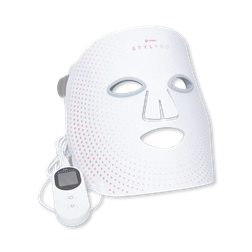
It’s an at-home device that uses LED technology to deliver specific wavelengths of visible red light to the skin.
2How does red light therapy work?
Light energy is absorbed by skin cells that can stimulate cellular activity in the skin.
3The potential benefits of red light therapy
Clinical studies suggest red light therapy may help improve the appearance of fine lines and enhance overall skin texture.
If you’re into skincare and looking naturally youthful, you’ll have come across red light face masks. Growing interest in these non-invasive devices – which look like something out of a futuristic science fiction movie and can cost up to hundreds of pounds – means they’re becoming ever-more popular (so much so that the global market for them is predicted to more than double between 2025 and 2033).
But should you get in on the trend and buy one? We talked to an expert, Dr Nora Jaafar, dermatological and aesthetic doctor, to find out.
STYLPRO
What is a red light mask?
“A red light mask is an at-home device that uses LED (light emitting diode) technology to deliver specific wavelengths of visible red light to the skin,” says Dr Jaafar. They’re usually full-face masks made of silicone or plastic, with LEDs set into the side facing your skin. Although, some types only cover the crow’s feet area around your eyes, for example, while others cover your whole face and neck.
The number of LEDs, how the mask is shaped and how you attach it varies from brand to brand. “In general, the differences between the masks you can buy yourself compared to medical-grade devices used by dermatologists is the strength of the LEDs, the number of bulbs and how close they sit to the skin’s surface,” she explains.1
How does red light therapy work?
“Red light therapy works through a process called photobiomodulation,” says Dr Jaafar.2 “In simple terms, light energy is absorbed by mitochondria within skin cells (the parts of your cells that make energy).3 This extra energy can stimulate cellular activity in the skin.” As well as red light there’s also near-infrared light, which isn’t visible to the naked eye and the two work differently. “In skincare, red wavelengths, typically around 630 to 660 nanometres, are used because they penetrate the skin more deeply than blue light and are associated with supporting overall skin quality,” she adds.4
“While red light generally acts within the superficial and mid-dermis, near infrared wavelengths, around 800 to 900 nanometres, penetrate deeper into tissue and are often used to support circulation. Many devices combine both wavelengths to target multiple layers of the skin,” Dr Jaafar explains.
What are the potential benefits of red light therapy?
“Clinical studies suggest red light therapy may help improve the appearance of fine lines and enhance overall skin texture by stimulating fibroblast activity,” explains Dr Jaafar.5 “Increased cellular energy and improved microcirculation can contribute to smoother looking skin and a more even tone over time.”5 The important thing to note is that any benefits won’t happen straight away. “Results tend to be gradual and depend on consistent use over several weeks,” she explains.
Are there side effects of red light masks?
“Potential downsides of red light masks include skin irritation, temporary redness or eye discomfort if proper protection isn’t used,” says Dr Jaafar.6 “However, red light therapy is generally considered safe when used as directed, particularly because it doesn’t involve UV radiation (the kind you get from the sun and tanning beds). Another potential downside is that it’s hard to give precise, consistent advice around how to use them or the benefits. “This is because results can vary widely depending on device quality, treatment consistency and individual skin biology,” she adds.
Who are red light therapy masks suitable for?
“Red light masks are generally suitable for most skin types, including delicate skin, because they’re non-thermal and non-invasive,” says Dr Jaafar. “However, people who are taking photosensitising medications (which can include certain antibiotics and antidepressants), have certain skin conditions or are prone to light triggered reactions should seek medical advice before use.”7
If you have very reactive skin, she suggests patch testing. Try the mask on a small area of skin on your arm. If you don’t experience any adverse reactions you can proceed to using it on your face. You need to think about your eye health, too. “LEDs are bright and prolonged exposure can cause discomfort, so protecting your eyes is important. Many masks include built-in eye shields or protective goggles, which should always be used.” Whoever’s using it, her key advice remains the same. “Follow manufacturer guidelines closely, including recommended treatment time, frequency of use and device maintenance, to ensure both safety and effectiveness.”
Looking for the best red light mask? Here’s what to look for
“If you’re thinking about buying a red light mask, look for devices that specify clinically studied wavelength ranges, typically around 630 to 660 nm for red light and sometimes 800 to 900 nm for near infrared,” says Dr Jaafar.8
“You’ll also want adequate light intensity,” she says. Which means the more LED bulbs the better to ensure the strength of the wavelengths your mask emits, plus the better the mask fits you, the more effective it’s likely to be. “Medical grade safety certifications and clearly stated treatment times are also important,” she adds. “Comfort, full facial coverage and purchasing from a reputable manufacturer with transparent technical specifications can help ensure the device delivers consistent and safe light output.”
Can red light masks fit into an evening routine?
“Many people incorporate using a red light mask into their evening routine,” says Dr Jaafar. “As the treatment is non-invasive, it can be used as part of a wind-down skincare ritual before applying your usual serums or moisturiser.” The specific instructions will vary from model to model but as she explains: “Most red light masks are used on clean skin for around 10 to 20 minutes per session, several times per week, depending on the device instructions.” Many people report finding that using red light masks naturally form an enjoyable part of their evening skincare routine.
Are red light masks worth it?
“When used consistently and when the device is well designed, red light masks can be a useful adjunct to a skincare routine,” says Dr Jaafar. “They’re unlikely to replace clinic treatments but may provide gradual improvements in skin texture, tone and the appearance of fine lines over time.”
Ultimately, whether they are worth it or not is an individual decision. You should consider how often you’re likely to use it, the benefits you’re looking for and offset the purchase price against any saved costs of professional treatments. “As with most skincare technologies, realistic expectations and regular use are key to seeing benefits,” she adds.
The final say
If you’re able to commit to regular usage and you have the rest of your skincare routine nailed, then a red light mask could help you to see further improvements to your skin. Plus it can be a nice thing to use, to help you wind down at the end of your day. Looking to deepen your beauty know-how? Discover why retinol continues to earn its cult status.
Red light therapy FAQs
As yet, the science is unclear. While there are unlikely to be any issues, there may not be any benefits either. The best advice is to follow the manufacturer’s instructions on frequency and length of use.
While red light LED5 helps with collagen production and fine lines, blue light LED9 has a different wavelength that targets blemish-prone skin for a clearer complexion.
As always, follow the manufacturer’s instructions. Most masks are designed to be used with clean skin and no products. You may like to follow use with a complementing ingredient such as vitamin C, which helps brighten skin tone.10
Disclaimer – This article provides informational advice and is not a substitute for medical care. Working with experts for accuracy, we take great care to ensure the information is up-to-date and relevant. However, you should always consult your GP or healthcare professional before using supplements or alternative products, particularly if you have medical conditions or are under supervision.
1. Guo Z, Yuan K. The Application of Light Emitting Diode (LED) in Cosmetic Dermatology. Photodermatology Photoimmunology & Photomedicine. 2025 Aug 2;41(5).
2. Maria Luisa Hernández-Bule, Naharro-Rodríguez J, Bacci S, Montserrat Fernández-Guarino. Unlocking the Power of Light on the Skin: A Comprehensive Review on Photobiomodulation. International journal of molecular sciences. 2024 Apr 19;25(8):4483–3.
3. Dompe C, Moncrieff L, Matys J, Grzech-Leśniak K, Kocherova I, Bryja A, et al. Photobiomodulation—Underlying mechanism and clinical applications. Journal of Clinical Medicine. 2020 Jun 1;9(6):1724.
4. Setchfield K, Gorman A, Simpson W, Somekh MG, Wright AJ. Effect of skin color on optical properties and the implications for medical optical technologies: a review. Journal of Biomedical Optics [Internet]. 2024 Jan 24;29(01). Available from: https://www.ncbi.nlm.nih.gov/pmc/articles/PMC10807857/
5. Virginie Couturaud, Marie Le Fur, Pelletier M, Granotier F. Reverse skin aging signs by red light photobiomodulation. Skin Research and Technology. 2023 Jun 30;29(7).
6. Park SH, Park SO, Jung JA. Clinical study to evaluate the efficacy and safety of home-used LED and IRED mask for crow’s feet: A multi-center, randomized, double-blind, sham-controlled study. Medicine [Internet]. 2025 Feb 14;104(7):e41596–6. Available from: https://journals.lww.com/md-journal/fulltext/2025/02140/clinical_study_to_evaluate_the_efficacy_and_safety.27.aspx
7. Montgomery S, Worswick S. Photosensitizing drug reactions. Clinics in Dermatology. 2022 Jan;40(1):57–63.
8. Yadav A, Gupta A. Noninvasive red and near-infrared wavelength-induced photobiomodulation: promoting impaired cutaneous wound healing. Photodermatology, Photoimmunology & Photomedicine. 2017 Jan;33(1):4–13.
9. Lodi G, Cassalia F, Sannino M, Cannarozzo G, Baroni A, Amato S, et al. Blue Light Therapy in Dermatological Practice: A Review. Cosmetics. 2025 Feb 18;12(1):30.
10. Boo YC. Ascorbic Acid (Vitamin C) as a Cosmeceutical to Increase Dermal Collagen for Skin Antiaging Purposes: Emerging Combination Therapies. Antioxidants. 2022 Aug 26;11(9):1663.
Related to this article