20% off €45 or 15% off €35
 Track an order
 Manage account
 Buy It Again
 Favourites
 Rewards
 Find a store
How long does jet lag last? Tips to help you feel normal again

Written byJodi M Johnson

Reviewed byHeeral Tomlinson

Tired of jet lag ruining your travel buzz? These simple tips may help you adjust faster, sleep better and make the most of your trip – no matter where in the world you land
Summary
1What is jet lag?
Jet lag happens when you travel quickly across three or more time zones and your body's internal clock is still running on your home time.
2How long does jet lag last?
Symptoms may start as soon as you arrive or a day or two later, but they usually improve within a few days as your body clock adjusts to the new time
3Is it jet lag or fatigue?
Although they can feel similar, jet lag and travel fatigue aren't the same thing. Travel fatigue is the tiredness that comes from the journey itself.
Travelling abroad is all fun and excitement until you find yourself staring at the ceiling at 3am or nodding off mid-sightseeing. Yep, we’re talking about jet lag. That sneaky side effect of crossing time zones that can turn your dream trip into a sleepy blur.
So, what’s going on? Our bodies run on internal clocks (called the circadian rhythm) that tell us when to sleep, eat and feel alert. They’re synced to our home time zone, like a built-in schedule. When we hop on a plane and head to a new destination, that rhythm can get thrown off. Suddenly, your body thinks it's bedtime when the sun is high in the sky.1,2,3 Jet lag can make you feel tired, groggy, moody or even a bit off your game – but it doesn't last forever. Most people adjust within a few days and we’ve got some tips to help minimise its impact.4
What is jet lag and what does it feel like?
Jet lag: the travel souvenir nobody wants. Unfortunately, there’s no magic fix but the good news is you usually don’t need medicine or a trip to the doctor. Jet lag happens when you travel quickly across three or more time zones, and your body's internal clock is still running on your home time. While the local clock says it's time to sleep or be awake, your body hasn't caught up yet, making it difficult to adjust.5 It can feel like your body and brain are out of sync. Some jet lag symptoms you might experience are:5
- feeling unusually tired or sleepy during the day
- struggling to fall asleep at night or wake up much earlier than you'd like
- finding it harder to concentrate, think clearly or remember things
- feeling irritable, sluggish or generally ‘off’
- experiencing digestive issues, such as changes in appetite or an unsettled stomach (this may also be caused by something else, so check with your doctor if these are lasting more than a few days or causing concern)
How long does jet lag last?
For some people, the symptoms of jet lag start as soon as they arrive, while others notice them a day or two later. The good news is that jet lag is temporary. As your internal clock gradually adjusts to the new time zone, the symptoms usually ease over the following days.5
What is the fastest way to get over jet lag?
Most people bounce back within a few days as their body clock syncs naturally. That said, there are some simple tricks to help ease the transition and get your sleep back on track a little faster.
Pre-flight tips to help you avoid jet lag
Prepare your body and your mind by resting up before you fly. Tempted to stay up late so you’ll snooze on the plane? Skip that strategy. Starting your trip already tired usually backfires (but we'll go into this more below). Instead, give your body a head start by slowly shifting your slumber schedule – go to bed and wake up an hour earlier or later each day in the weeks leading up to your trip (depending on where you’re heading). It’s like gently nudging your body clock in the right direction before take-off.4
Jet lag tips for during your flight
Hydration is your best friend
Planes are often super dehydrating (due to their low humidity levels), so fill your water bottle up or grab water at duty-free and sip regularly to keep your body and brain happy. If you’re on a really long flight, it’s worth taking an electrolyte or hydration sachets on the plane too.4
Nap smart
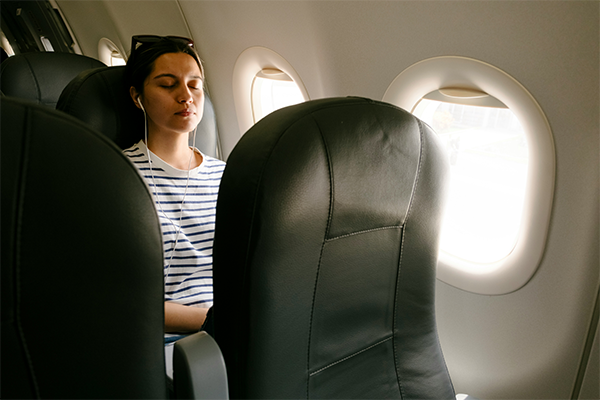
Feeling drowsy? If you’re nodding, a quick power nap may help more than a long sleep – especially on shorter flights. Keep it short and sweet, around 20-30 minutes max. Pop on an eye mask, throw in some earplugs and block out the world – anything that helps you catch some Zs while you fly is a win against jet lag.5
Get up and move around
A quick stretch or a walk up the aisle every now and then can help keep your blood flowing and fight off that sluggish jet lag feeling.4
Post-flight jet lag tips
Get into local time mode ASAP
Once you land, start living like a local. That means going to bed when it’s nighttime, even if your body’s still stuck in another time zone. Not feeling sleepy? No problem, just wind down like you normally would. Keep the lights low, put your phone away and do all the things that help signal bedtime to your brain.
Soak up the sunshine
Natural light is one of the most powerful tools for resetting your internal clock. Head outside during the day, especially in the morning, to help your body sync up with your new schedule.5
Skip the extra caffeine and booze
As tempting as that double espresso or glass of wine might be, both can mess with your shuteye and make jet lag stick around longer. Stick to water and let your body recalibrate more smoothly.4
What makes jet lag worse?
Jet lag doesn’t play fair – some people breeze through it, while others feel totally wiped. We don’t know exactly why but certain factors can definitely make it hit harder:4,5
- the further you fly – which includes the more time zones you cross too making it tougher to adjust. Direction matters also: travelling east (say, from New York to Paris) tends to be harder on the body than going west (like, London to Los Angeles)
- burning the candle at both ends – if you're doing this before take-off, you’re more likely to feel the effects of jet lag. A well-rested body adapts more easily
- high stress – this can mess with your rest, which in turn makes jet lag tougher to deal with. A calm mind = a smoother transition
- dehydration – being even mildly dehydrated can amplify those foggy, sluggish jet lag symptoms. Water is your secret weapon here
- alcohol and caffeine – these may seem like quick fixes but they can mess with your sleep and dehydrate you, making it even harder for your body to rejig
Should you sleep on the plane?
It depends on what time it'll be when you arrive and how long your flight is. If you’re travelling for 24 hours and landing in the morning, you should try and get some sleep. Though for shorter flights where you'll be landing in the morning or daytime, it's usually better to stay awake if you can. This can help you feel sleepier at the local bedtime, making it easier for your body clock to adjust.
Try to avoid long daytime sleeps, especially after you arrive, as they can make it harder to fall asleep at the local bedtime and may delay your adjustment to the new time zone. The key is to use sleep strategically, aiming to match your rest with the schedule of your destination rather than your departure location.
Is it jet lag or fatigue?
Although they can feel similar, jet lag and travel fatigue aren't the same thing. Travel fatigue is the tiredness that comes from the journey itself. Long hours sitting still, disrupted sleep, airport stress, dehydration and cramped conditions can all leave you feeling exhausted. It can happen after any long trip – even if you haven't crossed any time zones. The good news is that travel fatigue usually improves after a good night's sleep.
Jet lag, on the other hand, happens when you cross multiple time zones and your body's internal clock is out of sync with the local time. As well as feeling tired, you may struggle to sleep at the right times, feel sleepy during the day, have difficulty concentrating or notice changes in your mood or appetite. These jet lag symptoms can last for several days while your body adjusts to the new time zone. In short:
- travel fatigue = tired from the journey
- jet lag = your body clock is out of sync with the local time
It's also worth remembering that you can experience both at the same time. After a long-haul flight across several time zones, the immediate tiredness from travelling may fade after you've rested, while the effects of jet lag can continue until your body clock has caught up.
Bonus jet lag hacks you’ll be glad you packed
Taking time to reset isn’t a luxury – it’s a must, especially when jet lag’s thrown your body into chaos. Relaxation techniques like breathwork can work wonders here. Not only do they calm your nervous system and reduce stress6,7 (which can make jet lag feel worse), but they also help signal to your body that it’s safe to unwind and ease into a snooze – even when your internal clock says otherwise. Once you're home, the need to recharge doesn't end.
If all else fails… there’s always a good old cuppa. Think calming blends like chamomile, valerian or lavender to help you unwind and drift off, even when your internal clock says it’s lunchtime. Whether you need to relax, recharge or just feel a bit more human, there's a tea for that.
Managing jet lag isn’t just about eye masks and herbal tea – there are apps for that, too. One standout is Timeshifter, designed with science-backed strategies used by astronauts and elite athletes. Cool, right? It helps you adjust your sleep, light exposure, caffeine and more, all based on your specific flight and destination. It’s like having a personal jet lag coach in your pocket.
Jet lag FAQs
Many people find that jet lag is worse when traveling east than it is when traveling west.8 This could be because you lose time and need to go to bed and wake up earlier than your body expects. Since our internal body clock naturally finds it easier to stay up later than fall asleep earlier, adjusting to eastward travel might take longer than travelling west.5
Jet lag can feel worse coming home because your body has already adjusted to your destination's time zone and now has to adapt all over again. How difficult it feels can also depend on the direction of travel.
Yes – children can get jet lag just like adults, especially after travelling across several time zones. They may become more tired than usual, have trouble sleeping at the local bedtime, wake up very early or seem more irritable or unsettled. Most children adjust within a few days as their body clock adapts to the new time zone – and keeping to local meal and bedtime routines can help the process.
The final say
Jet lag might be an unavoidable part of crossing time zones, but with the right prep, a little patience and a few clever tricks up your sleeve, you can dodge the worst of it and get back to feeling like yourself fast.
Whether it’s syncing up your sleep, soaking up the sunshine, sipping herbal tea or just giving yourself permission to rest, every little bit helps. So go ahead, book that long-haul trip – and let jet lag know it’s not invited. And while you’re at it, check out our holiday beauty packing list and post-holiday hair and skin saviours – because a well-packed trip and a refreshed glow are the perfect travel companions.
Disclaimer – This article provides informational advice and is not a substitute for medical care. Curated by experts for accuracy, we take great care to ensure the information is up-to-date and relevant. However, you should always consult your GP or healthcare professional before using supplements or alternative products, particularly if you have medical conditions or are under supervision.
1. Bryan L, Guo L. What Is Circadian Rhythm? [Internet]. Sleep Foundation. 2024. Available from: https://www.sleepfoundation.org/circadian-rhythm
2. Reddy S, Sharma S, Reddy V. Physiology, Circadian Rhythm [Internet]. Nih.gov. StatPearls Publishing; 2023. Available from: https://www.ncbi.nlm.nih.gov/books/NBK519507/
3. CDC. Jet Lag | Travelers’ Health | CDC [Internet]. wwwnc.cdc.gov. 2022. Available from: https://wwwnc.cdc.gov/travel/page/jet-lag
4. NHS Choices. Jet lag [Internet]. NHS. 2019. Available from: https://www.nhs.uk/conditions/jet-lag/
5. Suni E. Jet Lag: Symptoms: Causes, and How to Cope | Sleep Foundation [Internet]. Sleep Foundation. 2021 Feb [cited 2026 July 30]. Available from: https://www.sleepfoundation.org/travel-and-sleep/jet-lag
6. Bentley TGK, D’Andrea-Penna G, Rakic M, Arce N, LaFaille M, Berman R, et al. Breathing practices for stress and anxiety reduction: Conceptual framework of implementation guidelines based on a systematic review of the published literature. Brain Sciences [Internet]. 2023 Nov 21 [cited 2026 July 30];13(12):1612. Available from: https://pmc.ncbi.nlm.nih.gov/articles/PMC10741869/
7. NHS. Breathing exercises for stress [Internet]. nhs.uk. 2021 Feb [cited 2026 July 30]. Available from: https://www.nhs.uk/mental-health/self-help/guides-tools-and-activities/breathing-exercises-for-stress/8. Eastman, C. I., & Burgess, H. J. (2009). How to travel the world without jet lag. Sleep Medicine Clinics, 4(2), 241–255. https://pubmed.ncbi.nlm.nih.gov/20204161/