Track an order
 Manage account
 Buy It Again
 Favourites
 Rewards
 Find a store

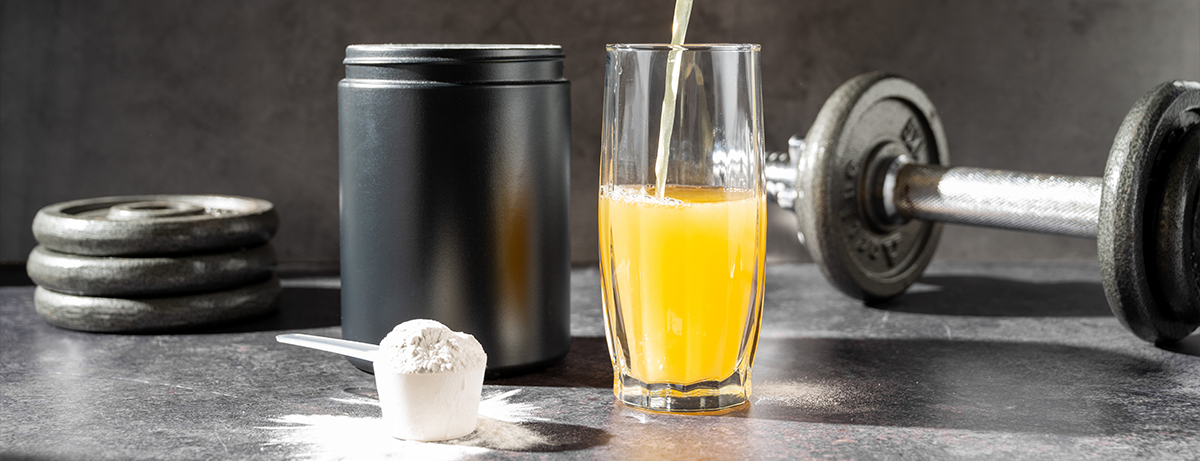
Wondering if creatine causes weight gain? We ask an expert how creatine affects muscle weight, fat loss and strength – plus the best way to take it with protein for flex-worthy results
Summary
1Does creatine make you gain weight?
Yes, creatine can make you weigh a little more – but that’s a strength, not a setback. The slight increase usually comes from extra water...
2What are the benefits of creatine?
It helps your muscles work harder for longer, can boost strength and power and may help with recovery, making it a go-to for gym lovers...
3Does creatine make you bloated?
The answer’s usually no – or at least, not for long. Creatine pulls a bit of water into your muscle cells, which can make them look fuller...
It’s one of the most talked-about sports supps right now – but what’s all the fuss about creatine? Praised by gym-goers, puzzled over by beginners, it’s got a rep for boosting strength, stamina and maybe even… the scales.
According to nutritionist Holly Pullen, “Creatine monohydrate can cause a small increase in body weight, especially in the first few weeks, mainly because it helps your muscles hold more water as creatine draws fluid into the muscle cells.”1 With Holly’s expert insight, it’s time to bulk up on the facts.
Does creatine make you gain weight?
The short answer: yes, creatine can make you weigh a little more – but that’s a strength, not a setback. The slight increase usually comes from extra water in your muscles or new lean muscle growth, not fat.1,2 Over time, creatine can help you build more muscle mass when paired with a decent resistance training routine.2,3
As Holly explains, “Creatine won’t build muscle on its own – it’s more like tuning an instrument. It helps you perform better, but you still have to play the notes.” So, while creatine is very unlikely to add fat, it does support lean muscle growth and overall strength.1,4 Let’s explore how it can help you flex your strength from the inside out.
What are the benefits of creatine?
Creatine’s one of the most researched supplements out there and for good reason – it helps your muscles work harder for longer.5 It can boost strength and power and may help with recovery, making it a go-to for gym lovers and athletes alike.6 It’s a compound your body naturally makes from amino acids – the building blocks of protein – and you’ll also find it in foods like meat and fish or in supplement form for an extra lift.7
Your liver, pancreas and kidneys create around 1-2 g of creatine each day. Around 95% of it is stored in your muscles as creatine phosphate, where it helps produce energy during exercise.8 When creatine joins up with another molecule called ADP, it helps make ATP – the main energy your body uses to move and lift.8
What's the nutritional make-up of creatine?
Creatine is made from three amino acids – methionine, arginine and glycine – which your body already uses.7 One scoop of creatine (around 5g) has very few calories and no fat, so it’s easy to add into your routine if you’re focused on fitness or muscle maintenance. It helps your muscles store more creatine, which helps support energy so you can push harder in your workouts and may help with recovery quicker.5,8 Over time, that can lead to more muscle mass and strength – big gym wins if you’re aiming to feel stronger or perform better.6
Does creatine make you bloated?
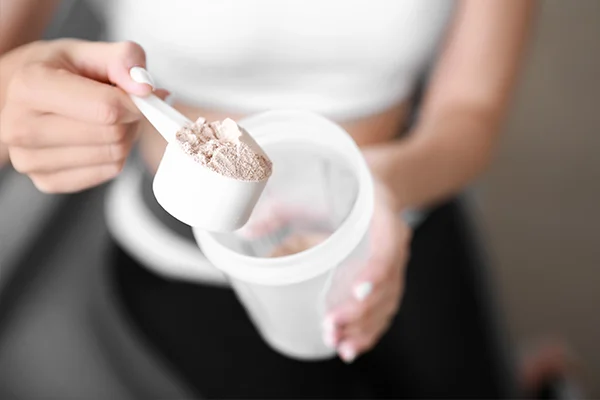
This is one of the most common worries but the answer’s usually no – or at least, not for long. Creatine pulls a bit of water into your muscle cells, which can make them look fuller and more defined.1 You might gain 1-2 % of your body weight when you first start taking creatine, mainly due to that extra water your muscles are holding, but this tends to settle down after a couple of weeks.2
If your goal’s to get stronger, that small amount of water weight isn’t a bad thing – it’s actually a sign your muscles are getting the energy they need to perform and grow.5
Can creatine help you gain muscle weight?
Yes – and that’s where creatine really shines. Studies show it can support muscle growth, increase strength and help your body produce more energy during exercise.1,3,6
Here’s how it works: creatine helps your body make adenosine triphosphate (ATP) – the main energy source your muscles use for short, powerful movements like sprinting or lifting weights.8 The more ATP you have, the longer you can push through intense sets, which over time can lead to stronger, bigger muscles.5,6 Research suggests that people who supplement with creatine alongside resistance training can gain around 1–2 kg more lean muscle over four to 12 weeks than those who train without it.2,3
So, if you’re combining creatine with resistance training and eating enough calories (especially protein) to fuel your workouts, you’re giving your body the perfect recipe for lean muscle gain.1 As for women, particularly after menopause, research shows creatine can help increase muscle size and strength, proving it’s not just for bodybuilders – it’s for anyone who wants to feel stronger and more energised.6
What’s creatine loading?
Creatine loading is a short phase some athletes use to boost their muscle creatine stores quickly – usually before a competition or an intense training block.2 The idea is to take around 20g of creatine each day for five to seven days to 'load up' your muscles, then drop to a smaller daily dose of 3g to maintain those levels.2
It’s not essential but it can help you feel the benefits faster if you’re just getting started. Many people also mix their creatine into a protein shake. While it’s not proven to supercharge results, it’s a convenient way to get both creatine and protein in one go.1,4 Thinking of carb loading? We’ve got the lowdown on that too.
The final say
Creatine can make you gain a bit of weight, but it’s mostly from water or muscle, not fat1,2. It’s one of the best researched supplements for improving strength and performance and can help you look and feel stronger over time.1,3,5
If you’re thinking of adding it to your routine, check out our guide on the best time to take creatine and explore our range of creatine supplements to find one that works for you.
Disclaimer – This article provides informational advice and is not a substitute for medical care. Working with experts for accuracy, we take great care to ensure the information is up-to-date and relevant. However, you should always consult your GP or healthcare professional before using supplements or alternative products, particularly if you have medical conditions or are under supervision.
1. Kreider RB, Kalman DS, Antonio J, Ziegenfuss TN, Wildman R, Collins R, et al. International Society of Sports Nutrition position stand: safety and efficacy of creatine supplementation in exercise, sport, and medicine. J Int Soc Sports Nutr. 2017;14:18.
2. Branch JD. Effect of creatine supplementation on body composition and performance: a meta-analysis. Int J Sport Nutr Exerc Metab. 2003;13(2):198–226.
3. Chilibeck PD, Kaviani M, Candow DG, Zello GA. Effect of creatine supplementation during resistance training on lean tissue mass and muscular strength: a meta-analysis. J Strength Cond Res. 2017;31(6):1680–1692.
4. Forbes SC, Candow DG, Ostojic SM, Roberts MD, Kerksick CM. Creatine supplementation and exercise performance: recent findings and safety update. Open Access J Sports Med. 2018;9:67–84.
5. Cooper R, Naclerio F, Allgrove J, Jimenez A. Creatine supplementation with specific view to exercise/sports performance: an update. J Int Soc Sports Nutr. 2012;9(1):33.
6. Candow DG, Chilibeck PD, Forbes SC. Creatine supplementation and aging musculoskeletal health. Front Nutr. 2019;6:75.
7. Wyss M, Kaddurah-Daouk R. Creatine and creatinine metabolism. Physiol Rev. 2000;80(3):1107–1213.
8. Brosnan JT, Brosnan ME. Creatine: endogenous metabolite, dietary, and therapeutic aspects. Annu Rev Nutr. 2007;27:241–261.
Related to this article