Track an order
 Manage account
 Buy It Again
 Favourites
 Rewards
 Find a store

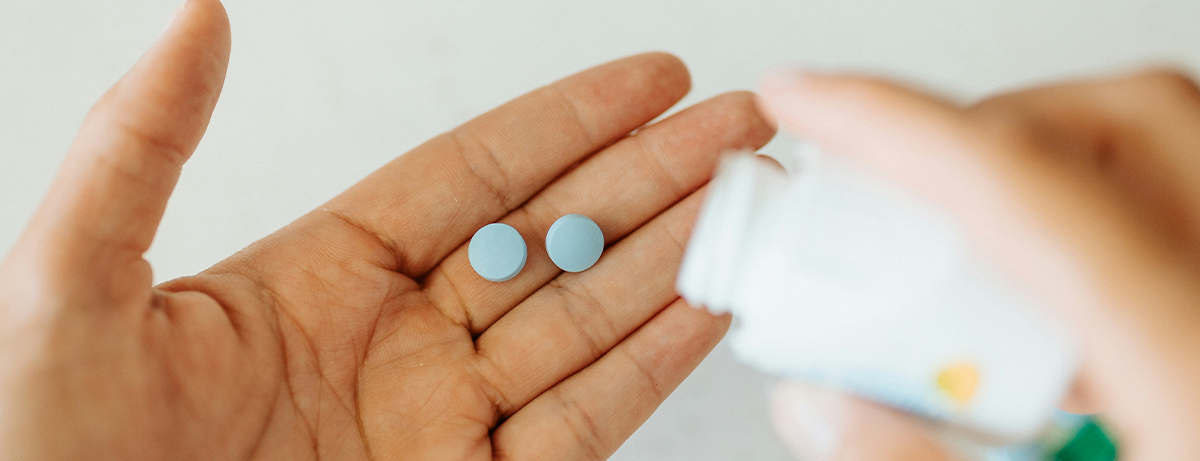
Curious about appetite suppressants? Our expert helps you understand how appetite really works and what may help you feel fuller
Summary
1What are appetite suppressants?
A broad term for medicines, supplements or foods that may help reduce hunger or support feeling fuller for longer.
2Can food naturally help you feel fuller?
Yes. Protein- and fibre-rich meals are among the most reliable ways to support fullness and help regulate appetite naturally.
3Do appetite suppressant supplements actually work
Some ingredients may slightly influence fullness, but results are modest and everyday habits usually have a bigger impact.
Appetite suppressants are often mentioned alongside weight loss tablets and supplements, but appetite is more complex than simply ‘switching off’ hunger. If you’ve ever wondered whether these products actually work or if they’re something you should try – you’re not alone. To get a clearer picture, we asked Registered Nutritionist Laura Jennings what the evidence really says and what to consider before trying anything that claims to curb cravings.
What are appetite suppressants?
“It’s actually a broad, non-medical term,” explains Laura. “Generally, it describes anything that may help reduce feelings of hunger or help you feel fuller for longer.”1 This could include prescription medicines, over-the-counter supplements or simply certain foods and nutrients that naturally support fullness.1,4, 8, 12-13,18
It’s also worth remembering that appetite isn’t something the body gets wrong.
It’s a built-in signal that helps you know when you need fuel – and when you’ve had enough.2,3 “Instead of trying to fight your appetite through strict restriction, which can leave you with a ‘hungry brain’ that’s preoccupied with food, it’s often more helpful to focus on regular, protein-rich meals that support satiety. These help you feel fuller for longer, rather than relying on quick fixes,” notes Laura.3-5
How does appetite work in the body?
Your appetite is guided by a constant conversation between your brain, gut and hormones.2
“Hormones like ghrelin tell you when you’re hungry, while leptin helps signal fullness,” explains Laura. “Your gut also releases hormones after meals that tell the brain you’ve eaten enough.”2 Blood sugar levels, digestion and even how stretched your stomach feels after eating all play a role. That’s why what you eat – and how you eat – can make such a difference to how full you feel after a meal.2
Research suggests that habitual poor sleep can increase ghrelin and reduce leptin, which may leave you feeling hungrier the next day. However, the underlying biology isn’t fully understood and more research is needed to confirm these effects.6 Ongoing stress can also influence appetite through cortisol, sometimes increasing cravings for quick, energy-dense foods.7 All of this highlights an important point: appetite isn’t simply about willpower. It’s biology, constantly changing in response to factors like sleep, stress and hormones.2,6,7
Can food naturally help you feel fuller?
Yes – and this is where some of the strongest evidence sits. “Meals that are rich in protein and fibre tend to be more satisfying, reduce the likelihood of overeating and snacking on unhealthy food between meals,” says Laura.4,8 Larger portions of high-fibre foods, like fruits, vegetables and legumes, also often have a lower energy density. This means they can help you feel fuller on fewer calories and support natural appetite regulation.8 “In most cases, everyday eating habits have a greater influence on appetite than any single supplement.”

Laura recommends:4,8-10
- protein-rich foods like eggs, yoghurt, tofu or beans
- fibre from vegetables, whole grains and pulses
- healthy fats such as avocado, nuts, seeds or olive oil
- staying well hydrated throughout the day
By contrast, highly processed foods that are lower in fibre and protein may not feel as filling, which can make it easier to feel hungry again soon after eating.11
What about ‘natural appetite suppressant’ supplements?
You might see ingredients like glucomannan (a soluble fibre), green tea extract or caffeine marketed as appetite suppressants or weight loss aids.12-14 “Some research suggests these ingredients may influence fullness or energy intake slightly,” says Laura. “However, the effects are usually modest and can vary widely between people.” Studies also tend to be small or short-term, and results aren’t always consistent.12-14 That doesn’t mean supplements are unsafe – it simply means that claims about appetite suppression should be approached with some caution.
Are prescription appetite suppressants different?
Yes, they’re quite different. “Prescription medicines are used under medical supervision and closely monitored by healthcare professionals,” explains Laura. “They’re typically recommended for specific health needs and are backed by more robust research than most over-the-counter supplements. If someone is considering prescription options, it’s always best to have that conversation with their healthcare practitioner first,” she adds.
Are appetite suppressants safe for everyone?
Not necessarily. Some supplements or ingredients may not be suitable if you:
- are pregnant or breastfeeding
- take medication
- have an underlying health condition
- are sensitive to caffeine or stimulants
If you’re unsure, it’s sensible to check with a healthcare professional first.
What are the side effects of appetite suppressants?
High-fibre ingredients can sometimes cause digestive discomfort like bloating or cramps, while stimulant-based products containing caffeine may lead to increased anxiety, jitteriness or disrupted sleep.15-17 Prescription medicines can have additional effects and should always be used under medical supervision. “Just because something is labelled ‘natural’ doesn’t always mean it’s right for everyone,” says Laura.
So, do appetite suppressants actually work?
The short answer is: it’s rarely that simple. There isn’t one ingredient that reliably ‘switches off’ hunger for everyone, and even prescription medications work within a complex mix of biology and behaviour. For many people, everyday habits like balanced meals, regular eating, good sleep and managing stress tend to have a bigger impact than any single supplement.2,4-7
Appetite suppressant FAQs
Safety depends on the product and the individual. Foods and balanced eating patterns are generally low risk, while supplements and medications should be used thoughtfully and discussed with a healthcare professional.
Hormones, sleep, stress and meal composition all play a role.2,4,6-8 Meals that include protein, fibre and regular eating patterns are often linked with feeling fuller for longer.4-5,8
There isn’t one approach that works for everyone. Supplements alone rarely lead to meaningful, long-term changes.12-14 If you’re unsure, speaking with a healthcare professional can help you explore options that suit your needs.
The final say
So, what’s the takeaway when it comes to appetite suppressants? They can mean lots of different things, from prescription medicines to simple food choices that help you feel fuller. While some products may play a small role, the effects tend to be modest and the evidence is mixed.12-14 Building meals around protein and fibre is often more effective than chasing quick fixes.4,8 “If something promises dramatic appetite suppression, it’s worth being sceptical,” says Laura. “Sustainable habits usually make the biggest difference.” Want to learn more? Take a look at our guide to gut health and weight loss, or explore the benefits of habit stacking.
Disclaimer – This article provides informational advice and is not a substitute for medical care. Working with experts for accuracy, we take great care to ensure the information is up-to-date and relevant. However, you should always consult your GP or healthcare professional before using supplements or alternative products, particularly if you have medical conditions or are under supervision.
1. Hansen TT, Mead BR, García-Gavilán JF, Korndal SK, Harrold JA, Camacho-Barcía L, Ritz C, Christiansen P, Salas-Salvadó J, Hjorth MF, Blundell J, Bulló M, Halford JCG, Sjödin A. Is reduction in appetite beneficial for body weight management in the context of overweight and obesity? Yes, according to the SATIN (Satiety Innovation) study. J Nutr Sci. 2019; 27;8:e39. https://pmc.ncbi.nlm.nih.gov/articles/PMC6984007/
2. Holliday A, Horner K, Johnson KO, Dagbasi A, Crabtree DR. Appetite-related Gut Hormone Responses to Feeding Across the Life Course. J Endocr Soc. 2025 Jan 6;9(2):bvae223. https://pmc.ncbi.nlm.nih.gov/articles/PMC11702868/
3. Zheng H, Lenard NR, Shin AC, Berthoud HR. Appetite control and energy balance regulation in the modern world: reward-driven brain overrides repletion signals. Int J Obes (Lond). 2009 Jun;33 Suppl 2(Suppl 2):S8-13. https://pmc.ncbi.nlm.nih.gov/articles/PMC2838178/
4. Moris JM, Heinold C, Blades A, Koh Y. Nutrient-Based Appetite Regulation. J Obes Metab Syndr. 2022 Jun 30;31(2):161-168. https://pmc.ncbi.nlm.nih.gov/articles/PMC9284573/
5. Leidy HJ, Campbell WW. The effect of eating frequency on appetite control and food intake: brief synopsis of controlled feeding studies. J Nutr. 2011 Jan;141(1):154-7. https://pubmed.ncbi.nlm.nih.gov/21123467/
6. Cooper CB, Neufeld EV, Dolezal BA, Martin JL. Sleep deprivation and obesity in adults: a brief narrative review. BMJ Open Sport & Exercise Medicine. 2018;4:e000392. https://bmjopensem.bmj.com/content/4/1/e000392#sec-17
7. Chao AM, Jastreboff AM, White MA, Grilo CM, Sinha R. Stress, cortisol, and other appetite-related hormones: Prospective prediction of 6-month changes in food cravings and weight. Obesity (Silver Spring). 2017;25(4):713-720. https://pmc.ncbi.nlm.nih.gov/articles/PMC5373497/
8. Suresh, A., Shobna, Salaria, M., Morya, S., Khalid, W., Afzal, F. A., … Mukonzo Kasongo, E. L. (2024). Dietary fiber: an unmatched food component for sustainable health. Food and Agricultural Immunology, 35(1). https://www.tandfonline.com/doi/full/10.1080/09540105.2024.2384420#abstract
9. Maljaars J, Romeyn EA, Haddeman E, Peters HP, Masclee AA. Effect of fat saturation on satiety, hormone release, and food intake. Am J Clin Nutr. 2009 Apr;89(4):1019-24. https://pubmed.ncbi.nlm.nih.gov/19225118/
11. Forde CG. Beyond ultra-processed: considering the future role of food processing in human health. Proceedings of the Nutrition Society. 2023;82(3):406-418. https://www.cambridge.org/core/journals/proceedings-of-the-nutrition-society/article/beyond-ultraprocessed-considering-the-future-role-of-food-processing-in-human-health/F0C80692DBC8871DE4BC4ED1AACF7D8F
12. Watanabe M, Risi R, Masi D, Caputi A, Balena A, Rossini G, Tuccinardi D, Mariani S, Basciani S, Manfrini S, Gnessi L, Lubrano C. Current Evidence to Propose Different Food Supplements for Weight Loss: A Comprehensive Review. Nutrients. 2020; 20;12(9):2873. https://pmc.ncbi.nlm.nih.gov/articles/PMC7551574/?utm_source=chatgpt.com
13. Stuby J, Gravestock I, Wolfram E, Pichierri G, Steurer J, Burgstaller JM. Appetite-Suppressing and Satiety-Increasing Bioactive Phytochemicals: A Systematic Review. Nutrients. 2019; 17;11(9):2238. https://pmc.ncbi.nlm.nih.gov/articles/PMC6769678/?utm_source=chatgpt.com
14. Mah E, Chen O, Liska DJ, Blumberg JB. Dietary Supplements for Weight Management: A Narrative Review of Safety and Metabolic Health Benefits. Nutrients. 2022 Apr 24;14(9):1787. https://pmc.ncbi.nlm.nih.gov/articles/PMC9099655/?utm_source=chatgpt.com
15. Keithley J, Swanson B. Glucomannan and obesity: a critical review. Altern Ther Health Med. 2005 Nov-Dec;11(6):30-4. PMID: 16320857. https://pubmed.ncbi.nlm.nih.gov/16320857/
16. Smith A. Effects of caffeine on human behavior. Food Chem Toxicol. 2002 Sep;40(9):1243-55. https://pubmed.ncbi.nlm.nih.gov/12204388/
17. Institute of Medicine (US) Committee on Military Nutrition Research; Marriott BM, editor. Food Components to Enhance Performance: An Evaluation of Potential Performance-Enhancing Food Components for Operational Rations. Washington (DC): National Academies Press (US); 1994. 20, Effects of Caffeine on Cognitive Performance, Mood, and Alertness in Sleep-Deprived Humans. https://www.ncbi.nlm.nih.gov/books/NBK209050/
18. Moiz A, Filion KB, Tsoukas MA, Yu OH, Peters TM, Eisenberg MJ. Mechanisms of GLP-1 Receptor Agonist-Induced Weight Loss: A Review of Central and Peripheral Pathways in Appetite and Energy Regulation. Am J Med. 2025; 138(6):934-940. https://pubmed.ncbi.nlm.nih.gov/39892489/