20% off €45 or 15% off €35
 Track an order
 Manage account
 Buy It Again
 Favourites
 Rewards
 Find a store
Green powders explained: what to look for and which to choose

Written byJodi M Johnson

Reviewed byHeeral Tomlinson
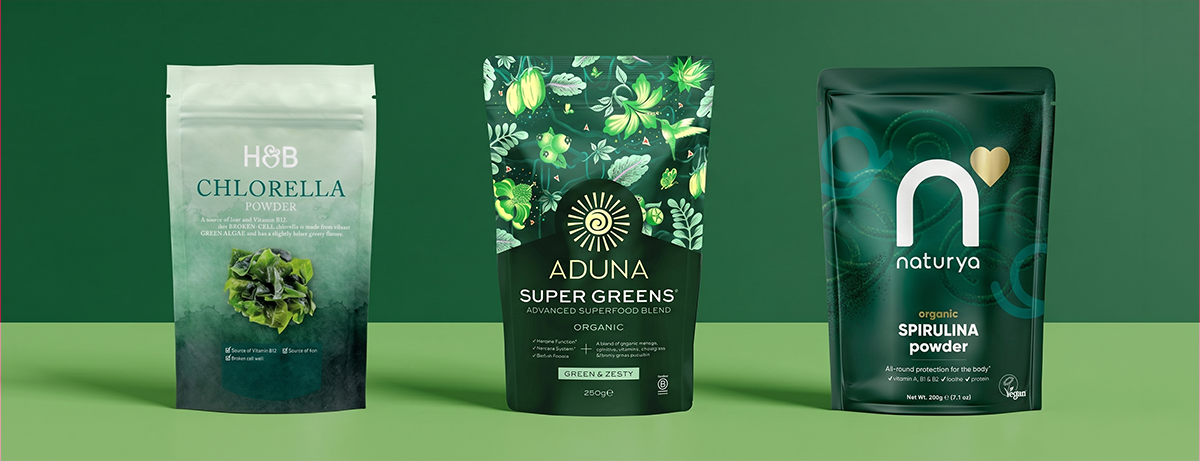
Green powders are everywhere right now – but are they worth it? From spirulina to matcha, discover what’s inside, how to choose one and whether they deserve a place in your routine
Our top picks
For single-ingredient options
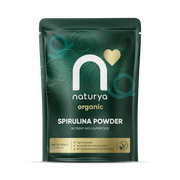
Naturya
Naturya Organic Spirulina Powder 200g
€12.29
For a supergreens wellness blend
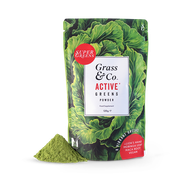
Grass & Co.
Grass & Co ACTIVE Super Greens Powder 120g
€36.99
From busy mornings to wellness routines, green powders have become a go-to for people looking to pack more plant goodness into their day without the prep. So, what exactly are they, and how do you choose the right one for you? We’ve explored what goes into green powders, their differences and how they can fit into a real, everyday lifestyle.
What is a green powder?
Green powders are exactly what they sound like – finely milled plant ingredients like leafy greens, algae and grasses, all in one easy-to-use form. Some focus on a single ingredient, while others are blends that combine several greens into one scoop. The idea isn’t that they’re some miraculous health solution, but rather that they can be a simple way to support your intake of plant nutrients.
Many people enjoy green powders because they’re versatile – you can stir them into water, smoothies or even mix them into breakfast bowls. They’re a practical option for adding more variety to your diet without much fuss. Essentially, they’re about convenience and helping you fill gaps, rather than a magic fix.
How to choose the best green powder for you
They all have one thing in common – they’re green. But beyond the colour, what are they actually for? When it comes to picking a green powder, it often comes down to what feels right for your lifestyle. Flavour can vary a lot too, so finding one you enjoy drinking is worth considering. It’s also helpful to look at things like how the powder is processed and whether it’s free from additives you don’t want.
Many people reach for a green powder in the morning to kickstart the day with some plant-based nutrients. Others use it as part of an everyday routine, aiming for consistent support from a variety of greens.
“A blended formula combines several super greens to give you a broader mix in one scoop”
When it comes to formulas, there’s a choice between single-ingredient powders and blended options. A single ingredient might focus on one star plant, like spirulina or wheatgrass, while a blended formula combines several super greens to give you a broader mix in one scoop. You’ll also find green powders in different formats. Some come as loose powders, while others are packaged as capsules for convenience. Both do the same job of bringing more plants into your day.
Spirulina
Spirulina is a type of blue-green algae (a cyanobacterium), usually classified as Arthrospira, that became famous after it was successfully used by NASA and astronauts – thanks to it being high in protein and vitamin A.1 It’s a good source of nutrients and may offer health benefits, like supporting the immune system and skin health.1
Naturya
€12.29
€6.15/100 g
Chlorella
Chlorella is a type of freshwater algae (similar idea to pond algae, but purified and safe). It’s known for being rich in nutrients – like protein, essential amino acids and key fatty acids including omega-3 – supporting overall health.2 Research suggests chlorella may support blood sugar control at 4g per day and may also have an effect on high blood pressure.2 Folate and iron are present in notable amounts compared to other plant sources too, so it may be good for those with low iron intake or anyone at risk of iron deficiency, including pregnant women.2
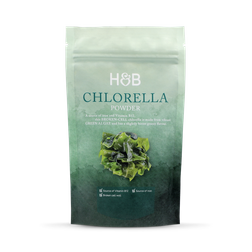
Holland & Barrett
€9.10
€6.25
€6.25/100 g
Moringa
Moringa is a plant widely utilised for both nutrition and traditional cultural practices, valued for its many beneficial compounds that may support health. It can be used as a nutrient-rich food, with different parts of the plant contributing to its overall benefits.3 It’s high in protein and fibre, which can help keep you feeling satisfied and support digestion. It also provides important minerals like calcium, potassium, magnesium and iron – helping to support gut health, muscle function, steady energy levels and immune system function.3
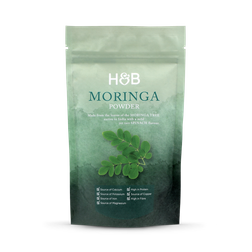
Holland & Barrett
€9.10
€9.10/100 g
Super greens blends
A green powder is a concentrated blend of plant-based ingredients, designed to make it easier to get a variety of greens in one convenient scoop. They often include things like algae, grasses, leafy greens and sometimes other plant extracts. Different greens bring different vitamins, minerals and plant compounds, so a blend can help cover more bases.
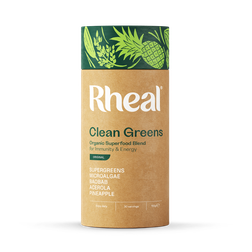
Rheal
€32.00
€21.33/100 g
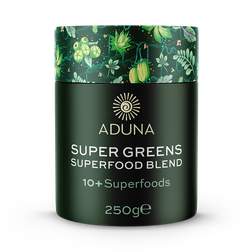
Aduna
€28.49
€11.40/100 g
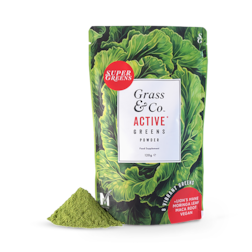
Grass & Co.
€36.99
€30.83/100 g
Wheatgrass
Wheatgrass is the young, tender shoots of the wheat plant (Triticum aestivum), harvested when they’re still very early in growth (usually under 15 days old).4 It’s considered a microgreen and is commonly consumed as a functional food – often in juice or powder form – because it contains vitamins, minerals and other compounds. Wheatgrass is often high in iron, which contributes to normal cognitive function and energy.4
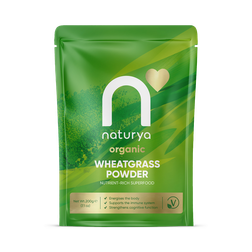
Naturya
€12.99
€6.50/100 g
Matcha
Matcha is a finely ground green tea powder made from specially grown and processed tea leaves (Camellia sinensis). Unlike regular green tea – where you steep and discard the leaf – matcha involves consuming the whole leaf in powdered form, which means it contains a higher concentration of its bioactive compounds.5
“Matcha may help reduce stress and support cognitive function, including attention and memory”
Matcha has been linked to several potential health benefits.5 While green tea is grown in the sun during cultivation, tea leaves used to make matcha are covered with bamboo mats for around 20 days to block the sunlight.5 This process increases the bioactive compounds and amino acid content, particularly theanine.5 The higher amount of theanine gives matcha its ‘umami’ taste, which can decrease the bitter taste of tea that is caused by catechins.5 As well as theanine, the other bioactive components of matcha consist of caffeine and polyphenols.5 Fancy making a matcha latte at home? Shop our best powders.
Green powder FAQs
While green powders are a handy way to support your nutrient intake, they don’t count towards your 5-a-day – and they’re not a swap for the real thing. Veggies offer fibre, texture and a wide range of compounds that are hard to capture in a powder. If you’re busy or struggling to get enough greens, they can be a helpful supplement – but it’s still worth aiming for real vegetables when you can.
You can usually take green powders every day, but it’s a good idea to follow the serving guidance and listen to your body. They’re meant to complement your diet, not replace balanced meals. If you have any health conditions or take medications, it’s worth checking with your GP just to be safe.
Some green powders might help support your energy levels, especially if they’re filling a gap in your nutrition, but they’re not a quick fix like caffeine. Any support tends to be subtle and more about overall wellbeing than an instant lift. Think of them as a small support to your routine rather than a guaranteed energy source.
There isn’t a strict ‘best’ time – most people take green powders in the morning just because it’s easy to build into a routine. You can also have them between meals or whenever it fits your day. The main thing is consistency and finding a time that feels good for you.
The final say
Green powders are simply another tool to support your routine, not a shortcut or a substitute for real food. Whether you’re curious about spirulina, chlorella, moringa, wheatgrass or matcha, the best choice is the one that fits naturally into your lifestyle. Keep it simple, stay consistent and focus on what makes you feel good.
Sometimes the simplest shifts deliver the biggest wellbeing wins – so if you’re looking for more ways to nourish your body or how you can make healthier habits stick, we’re here to help you on your journey.
Disclaimer – This article provides informational advice and is not a substitute for medical care. Curated by experts for accuracy, we take great care to ensure the information is up-to-date and relevant. However, you should always consult your GP or healthcare professional before using supplements or alternative products, particularly if you have medical conditions or are under supervision.
1. Karkos PD, Leong SC, Karkos CD, Sivaji N, Assimakopoulos DA. Spirulina in Clinical Practice: Evidence-Based Human Applications. Evidence-Based Complementary and Alternative Medicine [Internet]. 2011;2011:1–4. Available from: https://www.ncbi.nlm.nih.gov/pmc/articles/PMC3136577/
2. Bito T, Okumura E, Fujishima M, Watanabe F. Potential of Chlorella as a Dietary Supplement to Promote Human Health. Nutrients [Internet]. 2020 Aug 20;12(9):2524. Available from: https://www.ncbi.nlm.nih.gov/pmc/articles/PMC7551956/
3. Pareek A, Pant M, Gupta MM, Kashania P, Ratan Y, Jain V, et al. Moringa oleifera: An Updated Comprehensive Review of Its Pharmacological Activities, Ethnomedicinal, Phytopharmaceutical Formulation, Clinical, Phytochemical, and Toxicological Aspects. International Journal of Molecular Sciences [Internet]. 2023 Jan 20;24(3):2098. Available from: https://www.ncbi.nlm.nih.gov/pmc/articles/PMC9916933/
4. Mishra N, Tripathi R, Pandey D, Shah K, Chauhan NS. Wheatgrass (Triticum aestivum): a miraculous microgreen: an overview. Journal of Future Foods. 2025 May;5(3):239–47.
5. Sokary S, Al-Asmakh M, Zakaria Z, Bawadi H. The therapeutic potential of matcha tea: A critical review on human and animal studies. Current Research in Food Science. 2023;6:100396.
Related to this article