20% off €45 or 15% off €35
 Track an order
 Manage account
 Buy It Again
 Favourites
 Rewards
 Find a store

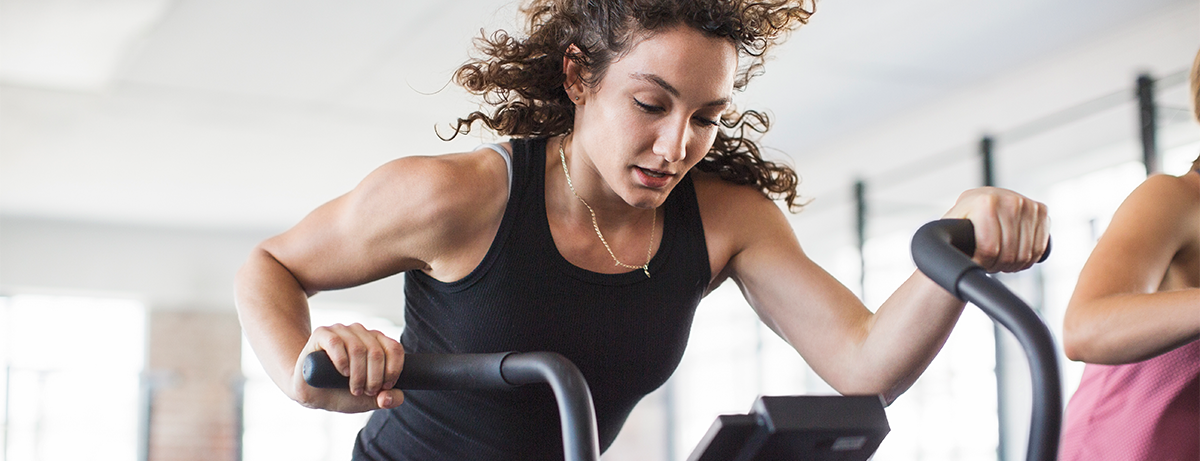
Have you ever wondered why we actually need to exercise regularly? While it might sometimes feel like a chore, moving your body in some way each day has some really powerful benefits
Summary
1What does exercise mean?
While any physical activity is great, if we’re being formal, exercise is a type of physical activity which...
2Why is exercising important?
The benefits of exercise are vast. It can improve stability, help manage your weight and improve your...
3What are the different types of exercise?
There are three main types of exercise: aerobic, muscle-strengthening and balance...
We all know we should be exercising regularly, especially as most of us spend more time sitting than we do on our feet, but why is exercise so important for our health and wellbeing? Moving your body is a cornerstone of healthy living, providing profound benefits for both your body and mind. Whether it’s getting your steps in, lifting weights in the gym or gently stretching after sitting at your desk all day, moving daily can help keep your heart healthy, your mind clear and your mood uplifted.
What’s exercise?
Going for a walk on your lunch break, relaxing into a yoga class or running with a run club? Well, that’s exercise. It doesn’t have to look glamorous, and chances are you probably do some form of it in your weekly routine. While any physical activity is great, if we’re being formal, exercise is a type of physical activity which is planned, structured and repetitive.1
Why do we need to exercise?
Regular exercise supports your health in many ways, including:2
- improving stability
- managing your weight
- improving your self-esteem
- better sleep
- lowering stress levels
- reducing anxiety symptoms
- supporting your muscles
Plus, doing regular exercise can help lower your risk of strokes, certain cancers, falls, depression, dementia, type 2 diabetes and joint conditions like osteoarthritis.2 Exercise is important at every stage of life. For children and teenagers, doing regular exercise can help to support healthy growth, bone health, mental health, cognitive development and fitness levels.2 If you’re pregnant or postpartum, exercise can help to reduce your risk of gestational diabetes, postpartum depression, delivery complications and pre-eclampsia.2
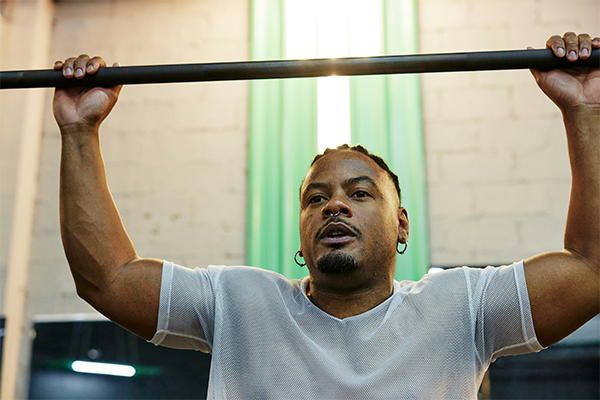
What are the different types of exercise?
There are three main types of exercise: aerobic, muscle-strengthening and balance, with research showing that adults should be doing a mixture of all three.3
Aerobic exercise
You may be more familiar with this as cardio, think treadmill runs, sunny bike rides or even long walks, anything that gets your heart pumping faster and requires more oxygen for your muscles.4
What’s aerobic exercise good for?
- Heart health and circulatory system
Muscle-strengthening exercise
Don’t be fooled, muscle-strengthening isn’t just for bodybuilders – it’s important for everyone, especially older adults who lose muscle mass as they age.5 More commonly known as strength training, this type of exercise is typically done in sets and involves lifting heavy weights.5
What are muscle-strengthening exercises good for?
- Preventing falls in older adults and independence as you age
Balance exercises
Last but by no means least, don’t forget to balance. Think exercises like yoga, tai chi and Pilates all support stability, and using wobble boards or a tightrope can help improve your balance even further.
What are balancing exercises good for?
- Preventing falls or injuries related to falls and staying stable while moving around
So, balance, muscle strength and aerobic exercise are the golden trio – if you’re only doing one of these, why not try adding another one to your gym session this week?
How much exercise do you need?
It’s thought that 31% of people don’t do enough exercise, so how much should you be aiming for?6 Well, exercise isn’t a one-size-fits-all approach and the amount you should be doing may depend on your life stage and/or existing health issues. In general, here’s a guide to the recommended amount of exercise depending on your age.7,8,9
- 30 minutes of tummy time per day
- Encourage them to be active, as well as crawling, they can reach, pull, push and move their limbs during supervised play
- At least 180 minutes of light movement per day, e.g. standing, moving, rolling around, skipping, hopping and more
- 180 minutes per day, including a minimum of one hour of moderate to intense physical activity
- Under fives shouldn't be stationary for too long unless sleeping
- The more movement the better, this can include walking, dancing, playing and even games like hide-and-seek
- At least 60 minutes of moderate or vigorous exercise a day throughout the week6
- Think activities you liked doing at this age: skateboarding, rollerblading, walking the dog, jumping, martial arts – it all counts
- 150 minutes of moderate activity per week or 75 minutes of intense activity a week
- Strength exercises at least twice a week
- Aim to move every day, even if it’s just a little (we understand it might be harder as you age). Light activity is still worthwhile, which can even include everyday tasks like housework or making a cup of tea
- 150 minutes of moderate activity per week or 75 minutes of intense activity a week
The final say
You don’t need to be an athlete or spend hours at the gym to reap the rewards of physical activity – any amount of movement can make a difference. From a brisk walk to a dance party in your living room, moving regularly is one of the most powerful things you can do for your body and mind, regardless of your age or fitness level.
Make sure you warm up before exercise and fuel your body with the right foods afterwards – this can make a real difference to how you feel and perform. Check out our top tips on what to eat after your workout, as well as how to properly stretch before exercising.
Disclaimer – This article provides informational advice and is not a substitute for medical care. Curated by experts for accuracy, we take great care to ensure the information is up-to-date and relevant. However, you should always consult your GP or healthcare professional before using supplements or alternative products, particularly if you have medical conditions or are under supervision.
1. Caspersen CJ, Powell KE, Christenson GM. Physical activity, exercise, and physical fitness: definitions and distinctions for health-related research. Public Health Reports [Internet]. 2025 [cited 2025 Sep 1];100(2):126. Available from: https://pmc.ncbi.nlm.nih.gov/articles/PMC1424733/
2. NHS. Benefits of exercise [Internet]. nhs.uk. 2022 [cited 2025 Sep 9]. Available from: https://www.nhs.uk/live-well/exercise/exercise-health-benefits/
3. NIH Aging. Three Types of Exercise Can Improve Your Health and Physical Ability [Internet]. National Institute on Aging. 2025 [cited 2025 Sep 2]. Available from: https://www.nia.nih.gov/health/exercise-and-physical-activity/three-types-exercise-can-improve-your-health-and-physical
4. British Heart Foundation. Exercises heart health [Internet]. British Heart Foundation. 2025 [cited 2025 Sep 2]. Available from: https://www.bhf.org.uk/informationsupport/heart-matters-magazine/activity/exercises-heart-health
5. Wilkinson DJ, Piasecki M, Atherton PJ. The age-related loss of skeletal muscle mass and function: Measurement and physiology of muscle fibre atrophy and muscle fibre loss in humans. Ageing Research Reviews [Internet]. 2018 Jul 23 [cited 2025 Sep 2];47:123–32. Available from: https://pmc.ncbi.nlm.nih.gov/articles/PMC6202460/
6. WHO. Physical activity [Internet]. Who.int. World Health Organization: WHO; 2024 [cited 2025 Sep 9]. Available from: https://www.who.int/news-room/fact-sheets/detail/physical-activity
7. NHS. Physical activity guidelines for children (under 5 years) [Internet]. nhs.uk. 2022 [cited 2025 Sep 9]. Available from: https://www.nhs.uk/live-well/exercise/physical-activity-guidelines-children-under-five-years/
8. NHS. Physical activity guidelines for children and young people [Internet]. nhs.uk. 2022 [cited 2025 Sep 9]. Available from: https://www.nhs.uk/live-well/exercise/physical-activity-guidelines-children-and-young-people/
9. NHS. Physical activity guidelines for older adults [Internet]. nhs.uk. 2022 [cited 2025 Sep 9]. Available from: https://www.nhs.uk/live-well/exercise/physical-activity-guidelines-older-adults/