20% off €45 or 15% off €35
 Track an order
 Manage account
 Buy It Again
 Favourites
 Rewards
 Find a store

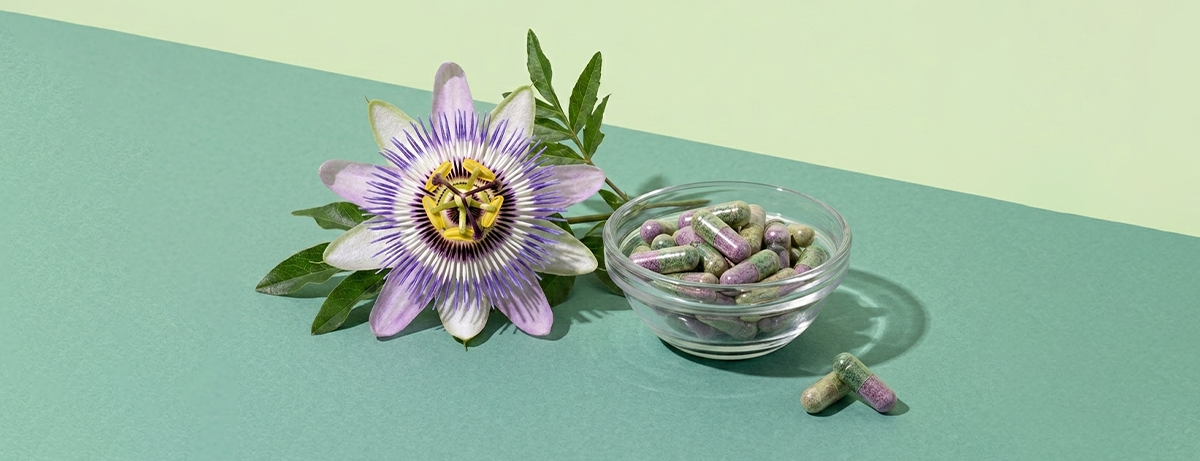
Passionflower is everywhere right now – but can this calming botanical really support relaxation and better sleep? From tablets to tinctures, we look at the science
Summary
1What is passionflower?
Passionflower is a flowering plant commonly used in supplements designed to support relaxation, stress and sleep.
2Passionflower tablets vs tinctures
Tablets are convenient and pre-measured, while tinctures offer flexible dosing and can feel like a calming part of your evening routine.
3When should you take passionflower?
Most studies looked at passionflower in the evening, often around an hour before bedtime as part of a wind-down routine.
From ashwagandha drinks to turmeric lattes and ginger shots, herbal wellness has become part of many people’s everyday routines – and passionflower is one of the latest botanicals getting attention for its calming reputation.
Not heard of it yet? This climbing plant has long been used in traditional herbal practices and is now finding its way into sleep and relaxation supplements. But what does the science actually say about passionflower and its potential to support stress, anxiety and sleep? We asked H&B nutritionist Patille Joy Madaghjian to break it down.
What is passionflower?
Passionflower is the name for a group of flowering climbing plants, known for their striking purple flowers. Native to parts of Central and South America, passionflower is now commonly used as a dietary supplement for anxiety, sleep problems, stress and relaxation.1 “The flower petals, leaves and stems of the passionflower plant are all harvested for supplements, as they contain flavonoids and alkaloids,” Patille explains.
What are the benefits of passionflower for sleep and anxiety?

With insomnia estimated to affect as many as one in three people in the UK,2 it’s no surprise passionflower is becoming increasingly popular in sleep and relaxation supplements. Much of the interest centres around its potential ability to help people wind down and relax more easily before bed. Neurologically speaking, it’s thought to increase levels of GABA (gamma-aminobutyric acid) in the brain – a neurotransmitter associated with calming nervous system activity.3
But what does the research on passionflower actually say?
“While the science is still in its early stages, the findings so far are interesting,” says Patille. On the stress and anxiety front, a randomised controlled trial on 44 Japanese men and women struggling with burnout found that taking a daily passionflower extract for 12 weeks made them feel better mentally.4 The participants also saw noticeable improvements to their energy levels and ability to work, compared to those taking a placebo.
“More recently, a 2024 study on 65 people who were dealing with a combination of stress and sleep problems found that passionflower improved how relaxed they felt day-to-day.5 Four weeks of taking passionflower was associated with improvements in their daytime functioning, with many reporting positive effects on their mood, concentration and ability to knuckle down at work.”
Research into sleep is still developing too. “A small 2011 study found that people who drank a cup of passionflower tea before bed felt they’d slept better compared to those who didn't.6 And a 2020 study that tracked participants' sleep overnight using technology that monitors brain waves mapped positive changes in people with insomnia.”7 While the findings are promising, Patille says it’s important to keep expectations realistic – “most of the studies collected have been relatively small, so larger, longer trials are needed before we can draw firm conclusions.”
Passionflower tablets vs tinctures: what’s the difference?
If you’ve looked at passionflower supplements already, you’ve probably noticed there are a few different formats available. The two most common are tablets and tinctures (liquid form) – but which is best? “Research hasn't found one form to be definitively better than another and studies have tended to use different forms for different groups of people rather than comparing them head-to-head,” says Patille. “What seems to matter more is the quality of the product and the dose.” Here’s a quick breakdown of how they compare…
Passionflower tablets:
- pre-measured and convenient
- easy to add into an existing supplement routine
- tasteless and portable
Passionflower tinctures:
- concentrated liquid extracts dropped under the tongue, but need measuring
- distinct earthy flavour
- flexible dosing
- can feel more enjoyable as part of a wind-down routine
Ultimately, the best option comes down to personal preference and the routine you’re most likely to stick to. You can choose tablets if you want something simple and portable or you can choose a tincture if you struggle to swallow tablets or prefer a flexible dose. Whatever you pick, just remember to follow guidance on the label.
When is the best time to take passionflower for sleep?
“Most sleep studies had participants take passionflower in the evening before bed, with some specifying around an hour beforehand,” says Patille. If you’re using passionflower as part of your evening routine, taking it while winding down for the night may be a practical approach. As always, it’s important to follow the instructions on the product you’re using and check with a healthcare professional if you’re unsure.
Can passionflower be combined with other natural sleep aids?
Passionflower is often paired with other calming ingredients in sleep supplements and herbal blends. It's frequently paired with other herbs like valerian, lemon balm and chamomile, as well as sleep supporting nutrients like magnesium. While the research on these combinations is still fairly early-stage, the pairing makes sense intuitively and you'll find plenty of sleep and relaxation supplements on the market that bring several of these ingredients together.
Who should avoid passionflower?
For most healthy adults, passionflower is generally considered well tolerated, but it isn’t suitable for everyone. “Some people may experience side effects like drowsiness, dizziness, nausea or confusion,” says Patille. It’s also been linked to increased uterine contractions, which means it should be avoided during pregnancy. Passionflower may also interact with certain medications, particularly sedatives and blood pressure medications, so it’s important to speak to your GP or pharmacist before taking it alongside other treatments.
Passionflower FAQS
Early research is promising. Some studies suggest passionflower may help improve sleep quality, particularly in people with insomnia. That said, the evidence is still emerging, and larger, longer-term studies are needed before firm conclusions can be drawn.
Research hasn’t found one form to be better than the other. It usually comes down to personal preference, lifestyle and which format you’re most likely to stick to consistently.
Passionflower is commonly combined with calming herbs like valerian, lemon balm and chamomile, and is often included alongside magnesium in sleep and relaxation supplements. However, if you’re taking multiple separate supplements containing herbal sleep ingredients, it’s a good idea to check with your doctor or pharmacist first, as some ingredients may not be suitable to take together or could lead to higher combined doses than intended.
The final say
Passionflower isn’t a guaranteed fix for restless nights, but early research suggests it may be worth exploring if stress or racing thoughts are making it difficult to switch off. As with many herbal supplements, consistency, quality and realistic expectations matter – and it’s always important to check whether a product is suitable for you before adding it to your routine.
Still searching for better sleep support? Explore our products to help you unwind. Or if you fancy learning about a different herb, understand why echinacea is a modern wellness favourite.
Disclaimer – This article provides informational advice and is not a substitute for medical care. Working with experts for accuracy, we take great care to ensure the information is up-to-date and relevant. However, you should always consult your GP or healthcare professional before using supplements or alternative products, particularly if you have medical conditions or are under supervision.
1. NCCIH. Passionflower [Internet]. NCCIH. 2020. Available from: https://www.nccih.nih.gov/health/passionflower
2. NHS inform. Insomnia [Internet]. www.nhsinform.scot. 2023. Available from: https://www.nhsinform.scot/illnesses-and-conditions/mental-health/insomnia/
3. Elsas SM ., Rossi DJ, Raber J, White G, Seeley CA ., Gregory WL, et al. Passiflora incarnata L. (Passionflower) extracts elicit GABA currents in hippocampal neurons in vitro, and show anxiogenic and anticonvulsant effects in vivo, varying with extraction method. Phytomedicine. 2010 Oct;17(12):940–9.
4. Takara T, Yamamoto K, Suzuki N, Hirano M, Shimizu N, Shimoda H. Passionflower Extract Improves Diurnal Quality of Life in Japanese Subjects with Anxiety: A Randomized, Placebo-controlled, Double-blind Trial. Functional Foods in Health and Disease. 2019 May 30;9(5):312.
5. Mahesh Kumar Harit, Narendra Mundhe, Sanjay Tamoli, Pawar V, Vedvati Bhapkar, Ganesh Kolhe, et al. Randomized, Double-Blind, Placebo-Controlled, Clinical Study of Passiflora incarnata in Participants With Stress and Sleep Problems. Curēus. 2024 Mar 20;
6. Ngan A, Conduit R. A double-blind, placebo-controlled investigation of the effects of Passiflora incarnata (passionflower) herbal tea on subjective sleep quality. Phytotherapy research : PTR [Internet]. 2011;25(8):1153–9. Available from: https://www.ncbi.nlm.nih.gov/pubmed/21294203
7. Lee J, Jung HY, Lee SI, Choi JH, Kim SG. Effects of Passiflora incarnata Linnaeus on polysomnographic sleep parameters in subjects with insomnia disorder. International Clinical Psychopharmacology. 2020 Jan;35(1):29–35.