Track an order
 Manage account
 Buy It Again
 Favourites
 Rewards
 Find a store
Benefits of cashew nuts: from nutrition and protein to healthy fats

Written byEloise Wright

Reviewed byHeeral Tomlinson
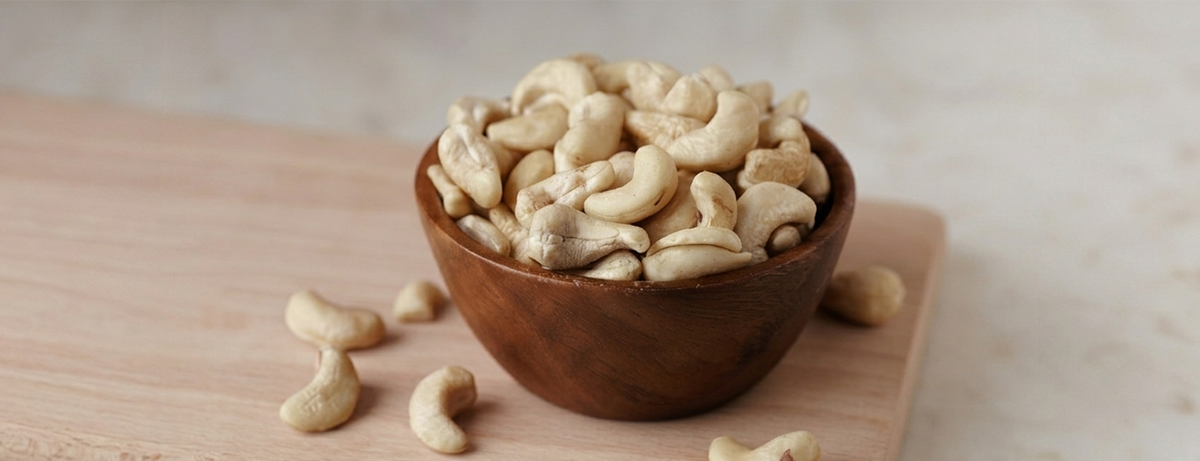
What’s creamy, crunchy and surprisingly nutritious? Cashews, of course. Here’s why they deserve a spot in your snack rotation
Summary
1Small in size, big on goodness
Cashews may be small, but they bring more to the table than crunch – think plant protein, unsaturated fats and minerals like magnesium and zinc.
2Easy ways to add more taste and texture
Keep them in the kitchen for easy upgrades: sprinkle over stir-fries, blend into creamy sauces or add to breakfast bowls when they need more bite.
3A handful a day goes a long way
Cashews are energy-dense, so portion size matters. A small handful is usually enough, and plain, unsalted cashews are the best everyday choice.
Cashew nuts are naturally sweet and packed with useful nutrients, including plant protein, unsaturated fats, magnesium, potassium, iron, zinc and copper.1 They’re not a miracle food – no single food is – but cashews can be a simple, satisfying addition to a balanced diet. Toss them into stir-fries, curries, salads and breakfast bowls, or blend them into sauces for a little extra creaminess. Like all nuts, cashews are energy-dense, so portion size matters. A small handful is usually enough to get the crunch, flavour and nutrients without going overboard.
What are cashew nuts?
Cashews are kidney-shaped nuts that grow from the cashew tree, Anacardium occidentale. They have a mild, buttery flavour and a softer crunch than many other nuts, which makes them easy to use in both sweet and savoury dishes. Technically, cashews are seeds from the cashew apple, even though we usually talk about them as nuts. Nutritionally, they behave much like other nuts – they’re rich in unsaturated fats (also known as ‘good’ fats), contain plant protein and provide a range of minerals.1
What is the nutritional value of cashew nuts?
Cashews provide a mix of plant protein, carbohydrates, unsaturated fats and minerals. Research on raw cashew kernels shows they contain important micronutrients including magnesium, potassium, iron, zinc and copper.¹ They’re also energy-dense, which means a small portion can provide a relatively high number of calories. This isn’t a bad thing, but it does mean portion size matters – especially if you’re eating them as a snack rather than adding a measured amount to a meal. Plain, unsalted cashews are usually the best everyday choice. Salted, honey-roasted or coated cashews can contain extra salt, sugar or fat, so they’re better kept as an occasional option.
Are cashew nuts high in protein?
As we’ve mentioned above, cashews are indeed a source of plant protein, but think of them as an enjoyable protein supporting act rather than the whole show. They do your body the most good alongside a balanced diet with other sources of unsaturated fats and minerals, making them a good addition to meals and snacks rather than a complete protein solution on their own.¹
Are cashew nuts good for you? 6 potential benefits of eating cashew nuts
- They contain heart-friendly unsaturated fats
Containing mostly unsaturated fats, cashews can fit into a heart health-friendly diet. Research into nuts more broadly has linked nut consumption with positive health outcomes, although results vary depending on the type of nut, portion size and overall diet.2 The key is context. Cashews can be part of a healthy diet, but they won’t cancel out an otherwise unbalanced one or replace medical advice for heart health. - They provide useful minerals
Cashews are small but they come with a useful mineral mix. They provide magnesium, potassium, iron, zinc and copper, which play different roles in the body, from energy metabolism to normal immune function and the maintenance of healthy tissues.1 This makes cashews a simple way to add more nutritional variety to your diet. They’re especially handy if you want plant-based foods that bring both flavour and micronutrients. - They can make meals more satisfying
A sprinkle of cashews can do a lot for a meal. Their mix of protein and fat can help snacks and dishes feel more satisfying, while their crunch adds interest to softer foods like porridge, yoghurt, curries and noodle bowls. They’re easy to overindulge in though. If you tend to snack straight from the bag, portioning out a small handful can help you enjoy them without accidentally eating much more than planned. - They may support balanced blood sugar as part of a healthy diet
Cashews have a relatively low glycaemic index (GI), which means they’re digested and absorbed more slowly than higher-GI foods and are less likely to cause a sharp rise in blood sugar. Plus, they only a small amount of naturally occurring sugar, making them a more balanced snack choice than sweet, ultra-processed options. - They’re a useful plant-based ingredient
As they can be blended into creamy sauces, dips and dressings, cashews are especially useful in plant-based cooking. Their mild flavour means they work well with spices, herbs, citrus, garlic and nutritional yeast. They’re also an easy way to add richness to meals without relying on cream or cheese. Just remember that cashews are still calorie-dense, so the overall portion size still matters. - They’re easy to add to everyday meals
One of the best things about cashews is how easy they are to use. You can add them to salads, stir-fries, curries, porridge, yoghurt, homemade granola or trail mix. For a more balanced snack, try pairing cashews with fruit or adding them to yoghurt rather than eating them alone. This gives you a wider mix of nutrients and can make the snack feel more complete.
How many cashew nuts should you eat a day?
A small handful is a sensible portion for most people. This gives you the flavour, crunch and nutrients of cashews without overdoing it. If you’re managing your weight, following a specific nutrition plan or have a medical condition, it may be worth paying closer attention to portion size. Cashews can still fit into your diet, but the best amount depends on your overall intake and nutritional needs.
Anyone with a cashew allergy should avoid cashews completely. People with other tree nut allergies should speak to an allergy specialist about whether they also need to avoid cashews, as this can vary between individuals. Nut allergies can sometimes cause severe allergic reactions.5,6 If you think you may have a nut allergy, speak to a healthcare professional before eating nuts. It’s important not to test a possible nut allergy yourself at home, particularly if you’ve previously had symptoms after eating nuts.6
Cashew nuts FAQs
The cashew kernels sold in shops are safe to eat. However, the cashew nut’s shell has liquid contains irritating compounds, which is why cashews are still somewhat processed before being sold for eating.4 This is also why you don’t usually see cashews sold in their shells. Commercial processing removes the risk linked to the shell and makes the kernel suitable to eat.
Cashews don’t directly lower blood sugar. They can be part of a balanced diet, but they shouldn’t be used as a treatment for high blood sugar or diabetes. As cashews contain protein and fat, they may be a steadier snack than sugary foods. However, research on nuts and blood sugar markers is mixed, so it’s best to frame this as a balanced-diet benefit rather than a proven cashew-specific effect.3
No, cashews contain some fibre, but they’re not especially high in it. They can contribute a small amount to your daily intake, but they shouldn’t be your main fibre source.1 For fibre, look to foods like beans, lentils, wholegrains, fruit and vegetables. Cashews can sit alongside these foods as part of a varied diet.
No food is a ‘weight-loss food’, but they can fit into a balanced diet. Their protein and fat content may help make snacks feel more satisfying, but portion size is important because they’re energy-dense. If you’re trying to lose weight, try measuring out a small serving rather than eating from the bag. This makes it easier to enjoy cashews while keeping an eye on your overall intake.
Yes, many people can eat cashews every day as part of a balanced diet. The key is to keep portions sensible and choose plain, unsalted cashews most often. It’s also a good idea to vary the nuts and seeds you eat. Different types provide different nutrients, so variety is more useful than relying on one option every day.
Cashews can be a heart-friendly snack as part of a balanced diet. They contain mostly unsaturated fats, which can help support healthy cholesterol levels when eaten in place of foods high in saturated fat, plus they also provide magnesium, which supports normal heart and muscle function. That said, no single food is 'good for cholesterol' on its own – your overall diet matters most, including plenty of fibre-rich foods like oats, beans, fruit and vegetables alongside healthy fats from nuts, seeds and olive oil. Cashews are energy-dense too, so stick to a small handful – around 30g – and choose unsalted or lightly salted varieties where possible.
The final say
Cashews might be small, but they work hard for your body (and in the kitchen). The trick is to treat them like a little upgrade, not a free-for-all. Choose plain, unsalted cashews most of the time, keep portions sensible and let them add that buttery bite wherever your meals need a bit more texture.
Want more cashew goodness? Read our guide to cashew butter, or discover more healthy protein snacks for satisfying snack ideas.
Disclaimer – This article provides informational advice and is not a substitute for medical care. Working with experts for accuracy, we take great care to ensure the information is up-to-date and relevant. However, you should always consult your GP or healthcare professional before using supplements or alternative products, particularly if you have medical conditions or are under supervision.
1. Rico R, Bulló M, Salas-Salvadó J. Nutritional composition of raw fresh cashew (Anacardium occidentale L.) kernels from different origin. Food Sci Nutr. 2016;4(2):329-338. doi:10.1002/fsn3.294.
2. de Souza RGM, Schincaglia RM, Pimentel GD, Mota JF. Nuts and human health outcomes: a systematic review. Nutrients. 2017;9(12):1311. doi:10.3390/nu9121311.
3. Tindall AM, Petersen KS, Skulas-Ray AC, Richter CK, Proctor DN, Kris-Etherton PM. The effect of nuts on markers of glycemic control: a systematic review and meta-analysis of randomized controlled trials. Am J Clin Nutr. 2019;109(2):297-314. doi:10.1093/ajcn/nqy236.
4. Kumar PP, Paramasivam S. Cashew nut shell liquid poisoning. Indian J Crit Care Med. 2016;20(1):57-58. doi:10.4103/0972-5229.173696.
5. Weinberger T, Sicherer S. Current perspectives on tree nut allergy: a review. J Asthma Allergy. 2018;11:41-51. doi:10.2147/JAA.S141636.
6. Advice on nut avoidance [Internet]. Cambridge University Hospitals. 2025. Available from: https://www.cuh.nhs.uk/patient-information/advice-on-nut-avoidance/
Related to this article